From Sand Dollars to AI Glasses: Meta’s Joshua To on Designing the Future of Wearables
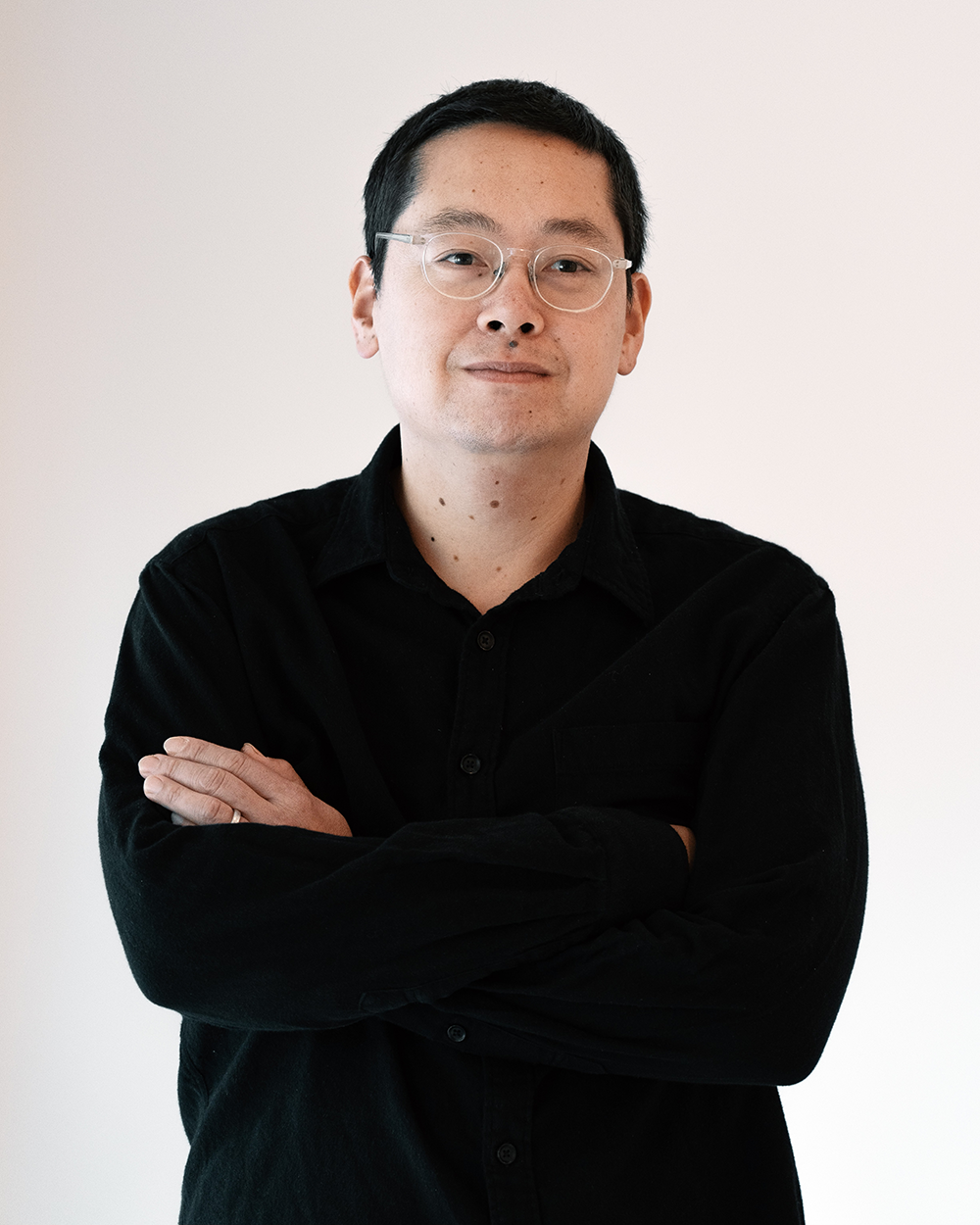
Joshua To’s highest-order motivation is helping to bring good, new things to exist in the world. Photo c/o Meta.
Joshua To’s journey to becoming Meta’s VP, Product Design for wearables began in a bedroom that doubled as a furrier’s showroom. Growing up in a San Francisco immigrant household, he was surrounded by makers, from his grandfather who hand-retouched black-and-white photos to parents who spent their days tailoring fur coats. This early immersion in creative problem-solving fueled an entrepreneurial spirit that saw him selling T-shirts in middle school and running an international clothing brand by college.
But his path to the top of the tech world was anything but linear. He broke into Google not as a designer, but as a contractor proofreading text ads, eventually proving his value by designing improvements to the literal spacing on the Google search homepage. After leaving to launch his own consultancy and venture fund, he returned to Google, and then moved to Meta to lead the teams behind some of the most ambitious hardware on the planet.
Today, he is at the center of Meta’s evolution from social software to agentic hardware, supporting the team on breakout successes like Meta Ray-Ban AI glasses from his role in the new Meta Design Studio. In this conversation, To shares how he balances the “move-fast” DNA of Meta with the hard reality of physical products, and why he views his role not as a traditional executive, but as an orchestra conductor for the world’s best design talent and partners.
The Most Useful Peer Network for Creative Professionals
Creative Factory is a private, highly-vetted leadership community for brand leaders. Join peers from Netflix, Meta, Amazon, Roblox, and more.
If you look back to the start of your career, is this where you envisioned you would be today?
Definitely not. It’s an incredible opportunity. But I probably don't take enough time to reflect and practice gratitude about it because the job is not easy, either. I’m not someone who has 10-year career goals, let alone five-year or even one-year goals. I have some immediate one-year milestones, but prefer to keep long-range plans open and lean into the product roadmap’s vision.
Is that because you’re entirely focused on the present or is it a byproduct of being so busy building the next thing?
It comes down to being an entrepreneur at heart, even though design is where I spike. My highest-order motivation is helping to bring good, new things to exist in the world. A lot of that is my conviction and activation energy. It helps to catalyze an idea and get the best people excited about it. As a result, I’m much more of a 0-to-1 or 1-to-2 person rather than 2-to-100. Because of how I’m wired, I tend to focus on the here and now.
The one exception is that I deeply recognize that the 0-to-1 things we are doing right now at Meta are laying the foundation for how billions of people will interact with technology in the future. That is a massive responsibility. When it comes to privacy, health, and well-being, that is where thinking ahead and having a meticulous plan matters most. I make sure to surround myself with really good people who have a different temperament than me to play that role.
Is being a maker something that is wired into your DNA?
Yes, I grew up in a family of makers and creative problem solvers. We lived in San Francisco, quite poor, in a classic immigrant setting with 14 people in a three-bedroom house.
My grandfather on my mom’s side ran a photography studio in China and figured out how to build a successful business entirely on his own. Back in the day, photos were strictly black and white, and one of the premium add-ons for customers was to manually retouch the prints so they appeared in color. One of my mom’s jobs growing up was doing that photo retouching. My uncle was a calligrapher who was incredible with lettering, and I grew up watching him build a sign company from scratch.
When my mom and dad fled the Chinese Revolution, they lived in Hong Kong for a number of years before making it to the U.S. The trade apprenticeships available to them at the time were for my dad to become a furrier and my mom to be a seamstress. They ended up becoming a powerful duo, making and altering fur coats. The bedroom I lived in actually doubled as the fur coat alteration workspace and showroom. I used to do my homework on a giant wooden board resting on sawhorses that was wrapped in craft paper. There were always sewing needles, thread, pieces of fur, patterns, and marking chalk everywhere.
My grandfather was also incredibly handy. He would take metal coat hangers and turn them into useful things around the house. I still remember the rat trap he built out of coat hangers, and our bathroom toothbrush holders were just hangers he had bent into shape. Creative problem solving and making things by hand were deeply appreciated in our home. When I was a kid living in the Sunset District near the ocean, I used to collect sand dollars, color them in with colored pencils, and give them to my relatives and family friends. I loved the act of creation from a young age.
The Professional Path
How did you make the turn from that childhood to a professional design path?
It started in the '80s and '90s when Stüssy was popular. In middle school, while the teachers were lecturing, I would sit there drawing the Stüssy logo perfectly freehand. Because we were poor and I didn't have the clothes my classmates had, I was drawn to apparel and clothing design in a unique way. By middle school, a buddy and I were designing, printing, and selling T-shirts to our classmates.
At one point, I designed a number of Stüssy-inspired T-shirts, went to the library to find their corporate address, and mailed the designs directly to the company. One of the most motivating moments of my youth was when they actually wrote back with a letter that said, "Thanks for submitting these. Keep up the good work."
They enclosed an autographed hat and a T-shirt, and offered to stay in touch. Getting free gear and validation from Stüssy in middle school made me feel on top of the world. That kept me on the path. Later, living in the Bay Area through the pre- and post-dot-com eras, we were all playing with Photoshop, Illustrator, and web design. That’s how I transitioned into digital spaces.
You then built and ran your first company, the streetwear brand, RESONANCE. How did that go?
Our tagline was "clothing people love, messages society needs." Our unique angle was that you should wear clothes that you love and look great, but your clothing is also an empty canvas for you to express your opinion and support causes. We sold our line in 50 different stores internationally. A subsidiary of Newsweek even named me one of the top 15 college students in the country based on that work. That era was when I became passionate about social causes, wanting to bring design, entrepreneurship, and social impact together.
After college, I ran the brand for a year, but it was tough. Despite doing well creatively, we only made enough money to invest right back into the next season's line and fund the trade show circuit. I couldn't make a serious living out of it. I wasn't connected enough and lacked the business acumen to realize the value of the assets we had built. If I could do it over again, I probably would have sold the brand, but that wasn't even on my radar. I simply didn’t have the right mentors for the business.
Eventually, a buddy told me Google was hiring and asked if I was interested. It’s funny looking back because at the time I was a die-hard Yahoo fan. I told him Google was cool, but I use Yahoo. It wasn't until I used Gmail for the first time that I became a Google fan and realized they were building technology differently.
What was your entry point at Google?
My first job at Google couldn't have been further from design. I was hired as a contractor to proofread text ads that went on the search engine. They trained us using a six-inch-thick binder outlining strict policies regarding punctuation, spelling, grammar, and spacing. Our job was to manually review these text ads, match them against keywords, and approve them if they met the criteria. It was a high-stress environment because they tracked exactly how many ads you processed per hour and did quality audits once a week.
During my first quality audit, they found two mistakes. I remember thinking, “twelve weeks ago I was named one of the top college students in the country, and now I’m making mistakes in a high-stakes contract role that could impact my likelihood of getting a full-time offer.”
I feel anxious just listening to you.
Despite the stress, I wanted to do well and convert to a full-time employee. My buddy and I figured out a system: we would furiously approve ads for 45 minutes out of every hour, and then spend the remaining 15 minutes brainstorming product improvements for Google. We started with the internal tools to review the ads, but over the months, I began pitching user-facing changes that eventually made it onto google.com.
One of the biggest changes I drove as a contractor came from pure design frustration. In the early days of Google, you had the logo, the big search bar, and then the "Search" and "I'm Feeling Lucky" buttons underneath. It bothered me that the padding between the text bar and those buttons was uneven. I told them they should fix the spacing. They didn’t initially see the need to do that because the company was growing rapidly. But they famously ran A/B tests on everything, and they compared the original layout to the one with my corrected spacing. It turned out that ad revenue meaningfully increased simply because the search page looked more balanced and cleaner.
How did you finally land a full-time design role at Google?
Through all of this, I wanted to be a core product designer, which is what I had studied in school. Unfortunately, at the time, Google viewed design through a narrow lens. Unless you went to Carnegie Mellon or Stanford for human-computer interaction, they didn't think you had the right background to be a designer at Google. So, I ultimately chose to leave and start my own design consultancy and venture capital fund, ran it successfully for a number of years, and then Google unexpectedly came knocking to acquire the design group.
When I returned to Google through that acquisition, I finally got the design lead role I wanted. And it happened right as design was exploding across tech.
Leading Design at Meta
How is design viewed at Meta, especially regarding your team’s role in building hardware and wearables?
We are undergoing a massive transition. Design has always been deeply valued at Meta, but the historical DNA of the company is rooted in "move fast and break things," growth hacking, and the belief that perfect is the enemy of the good. Hardware requires a fundamentally different temperament. Atoms take much longer to move than bits. If you get a physical product wrong, you get it wrong forever, whereas software always has over-the-air updates to fix mistakes.
Meta is still relatively new to the hardware game, but we’ve gotten quite good. Balancing the software DNA of moving fast with the unyielding realities of physical manufacturing is the big transition we are navigating right now.
About six months ago, we hired two of the best design leaders from Apple to join us. We’ve joined forces to form a centralized Meta Design Studio, giving us a highly elevated, unified role within the company. I can’t wait for the world to see the fruits of that setup.
The Ray-Ban Meta AI Glasses are a major hit, with over 7 million units sold.
They have been a breakout success. When you couple AI with a pair of glasses that just look great and then layer on excellent audio and microphones, people absolutely love it. One of the things I am most proud of is how widely they’ve been embraced. I know many people over the age of 65 who rave about them. The blind, low-vision, and deaf and hard-of-hearing communities have embraced them because the glasses help them navigate their day in ways they simply couldn't before. In addition, our users represent a wide range of customers. There is something for everyone.
How far in the future are you looking for your multi-year roadmap for wearables?
We have a deep pipeline. One of the areas I have the privilege to run is our Discovery Team. It’s a design-led process where we work closely with our product, hardware systems, architecture, and New Technology Introduction teams. When we identify a form factor or product concept we are excited about, we run a full-stack exploration – including prototyping, evaluating user value, and mapping out the end-to-end experience – before deciding whether to officially add it to our roadmap.
We have sizable research teams doing bleeding-edge work in displays, optics, audio, and silicon. The entire trick of our job is identifying the exact moment where a product concept and its core use cases perfectly intersect with the readiness of the technology we’ve been incubating.
At what point do the technology, the form factor, and the user experience align at a price point that will succeed in the market — and with a spin that is “uniquely Meta”? We run that evaluation constantly. While the precision in product definition for products planned far out on the horizon is naturally lower, our next few years are incredibly well mapped out.
With a team of hundreds, how do you divide your time between high-level management and hands-on building?
If you had asked me this question six months ago, I would have given you a beautifully structured answer about my direct reports and organizational frameworks. But I have to tell you, we are going through the most fascinating period of our careers right now because of AI. Everything is changing at an exponential pace. I used to focus on maintaining six or seven direct reports and managing through layers, but we are experimenting wildly now; I wouldn't be surprised if the structural reality looks completely different six months from now.
The amount of hands-on work I am doing today is exponentially higher than it was just two quarters ago. I am actively back in the tools, whether using Claude, writing code, or moving pixels, experimenting directly far more than before.
What is your leadership philosophy?
My overarching leadership philosophy has always been to hire an incredible bench of people whom I would genuinely have no problem working for myself if the roles were reversed. I am entirely comfortable hiring leaders who are far better than me across multiple dimensions. I purposefully look to augment my own deficiencies and shadow sides. Because I am natively a 0-to-1 creator, I make it a priority to surround myself with incremental optimizers. These are people who genuinely thrive on building long-range operational plans.
I have the muscle to spark an idea, build conviction, and get a team moving, so I build the rest of the ecosystem around me to sustain it. I view my role less as a traditional executive and more as an orchestra conductor. To make a masterpiece, you have to find the absolute best violinist, the best cellist, and the best flutist, and give them the space to play.
What do you like to make outside of work?
I definitely have my “creative side quests," though I have to admit they are happening at a much slower pace than they used to. Between work and raising four kids, life is just incredibly full. One project I’ve been tinkering with is building a chair. It’s such a key part of a home, especially for my family that loves to read, so it felt like a great place to start. I wanted to experience the challenge to understand how involved it was to build something physically large.
I’ve found that these side projects are actually the best way to help my kids understand what I do. Because we homeschool, I try to involve them in the process so they can see the “maker” part of my work. It’s important to me that they don’t just see “dad going to an office" or “dad on another video call.” Instead, I want them to see what it means to prototype, sketch, and iterate. It turns my work into a shared family value of curiosity. If I’m going to be working all day at Meta, I want them to understand the power of craft. It helps them understand the reason behind the time I spend away from them.

Join more than 50 leaders from top organizations, including Amazon, Netflix, Meta, Shake Shack, NASA, Hearst, Roblox, United Airlines, and Instacart.