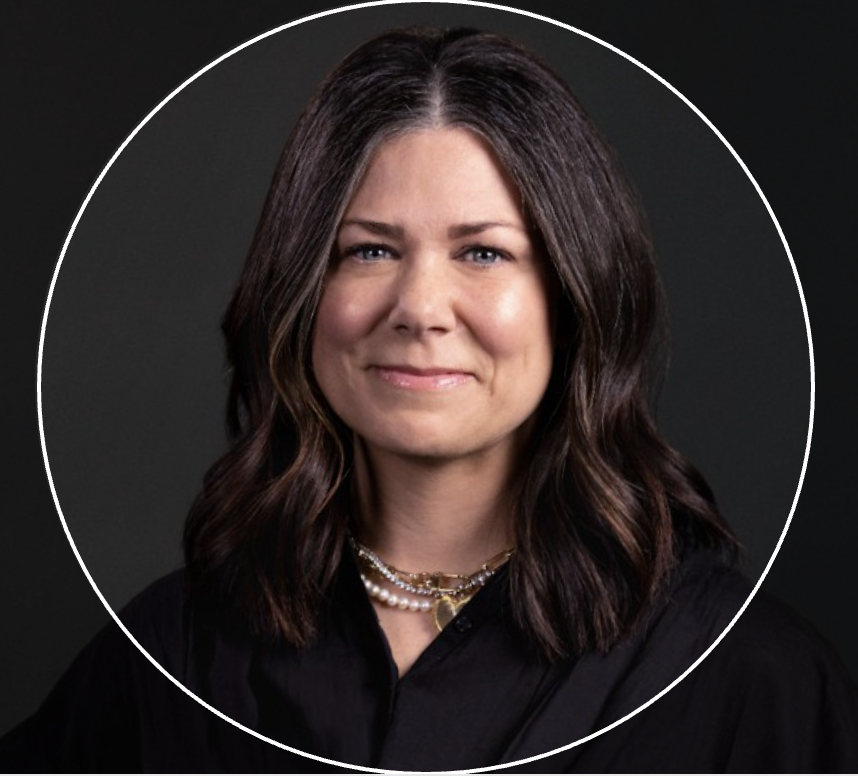
Danielle Trivisonno Hawley brought her soccer instincts from SMU to Uber and now to OpenAI, where she’s hiring “creative athletes”. Photo courtesy of Trivisonno Hawley.
The Most Useful Peer Network for Creative Professionals
Creative Factory is a private, highly vetted leadership community for brand leaders. Join peers from Netflix, Meta, Apple, Stripe, and more.
Danielle Trivisonno Hawley is scouting for “creative athletes.” The former Division I soccer player led brand at Uber before joining OpenAI. Now she’s looking for people who can change course when deadlines move and keep their composure when an idea gets dropped.
Her job is to help OpenAI’s B2B audience understand what its AI technology makes possible for their businesses. “I know how to connect with an audience, and make complex information feel simple,” she says. “If small business owners all the way up to enterprises get the power of this technology in their hands, they have the opportunity to change the world in an exponential way.”
Here, she breaks down what she learned from college soccer, how to get the C-suite on board with creative ideas, and why experience is underrated.
Take us back to the beginning. What first made you want to tell stories?
My brother’s comic books. I loved the Nightcrawler, so at age six I wrote a story about how his skin turned blue – he ate too many blue lollipops.
My friend illustrated it, and my mom helped me type it on thin, parchment-like paper. We used wallpaper for the cover, and I won a young authors competition. I can’t remember a time when I didn’t love telling stories.
Zooming out to the present, you’re about six weeks into your new role at OpenAI. How are you building your team?
It’s a full-service, in-house group, with thinkers and makers across strategy, creative direction, writing, design, motion, digital experiences, and production. We operate at a massive scale but still think like a startup. I want people with the stamina to keep going when plans change or an idea they love gets cut. Nobody’s handing out trophies at this stage. You have to love the sport.
What did playing soccer at SMU teach you about leading a team?
I look for people who can step up under pressure without getting rattled. You don’t have to be best friends with everyone, but you do have to show up for them. I think about those 80-yard recovery runs in soccer. You have to read the play and know when you have to hustle back and cover.
What did you have to learn when you moved into executive leadership?
Being a female creative director coming up in this business, I had sharp elbows to make sure my voice was heard. But there comes a point as a leader where those sharp elbows can start to look like righteousness, and what feels like passion can come across as reckless. You can’t inspire loyalty or respect if you’re seen as a loose cannon.
I had to learn when to speak up and when to make room for someone else. Leading client meetings and selling ideas calls for a different skill set than running a group of 50, 60, or 100 people. I can understand why it’s tough for many creatives to make that transition.
How do you define the line between making great creative and driving commercial results?
There’s always been a debate in our industry about performance versus creativity. I’m interested in the overlap: How do you entertain people and still give them a reason to act? That’s a sweet spot that’s hard to do and incredibly powerful when you nail it.
I’m an artist, but when I walk through the doors to my job, I’m there to serve the business. The best work can be beautiful, and resonant. But it’s only iconic if it persuades someone to do something.
When did you start thinking as much about business strategy as the work itself?
When I moved in-house. Thomas Ranese, then Uber’s global chief marketing officer, took a bet on me coming from an agency. I had to learn to ask different questions.
In-house, you’re much closer to decision-making. The era of the ad agency being this outside voice that CEOs and boards defer to is over. If you aren’t prepared to make room for good ideas inside the organization and understand what that takes, you’re doing a disservice to your internal creative teams and outside partners. Building a culture of creativity goes beyond the creative department and that’s critical to establish – otherwise, it’s difficult to get great work pushed through. That all starts with proving that you put the business first and can speak the language of the room.
How do you talk to the C-suite about what your group can do for the business?
You talk to them like people. You have to understand what matters to the person in front of you, whether that’s a customer or someone in the boardroom.
You can’t wax on and expect people to change because you’re the expert. A teacher in portfolio school used to tell me our job was to create a world the audience didn’t know about and now can’t live without. I take that to heart because it’s all about inspiring people – we should be really good at that!
Early on at Uber, I’d take on small jobs a typical creative director might skip. I asked our investor relations team if we could make one of their decks easier to read. Our presentation designers cleaned up the charts and layouts. The IR team loved it, and other groups started to see where we could help them, too.
Does this kind of communication need to go both ways?
Yes. The C-suite needs to see what we can do, and our designers need to know how the company runs. At Uber we held sessions called “Who’s Who and What’s What.” We went beyond the org chart: Who owns what? How do they make decisions? Where can we help?
We did that often because org structures shift. Just knowing who owns product design, autonomous vehicles, or delivery gives the team crucial context. Otherwise, creatives feel like they are making work and throwing it into the ether without knowing who the stakeholders reviewing it actually are and if you don’t know who is behind the work it’s like a flashing sign to the business that you’re operating on an island.
As you step into this new frontier at OpenAI, do you have a set playbook for what you want to build, or are you writing it as you go?
When you start with a blank slate, the instinct is to hire star conceptual creative talent right away. This time, I’m building the spine first.
I’m starting with a managing director partner who can turn my vision into an operation that runs smoothly. It’s like running an agency inside a tech company. I’m putting business partners, ops people, and producers in place to make the work possible. Making space for great work is the only way great work happens.
Second, I’m looking for people I trust. I want colleagues who will tell me when they disagree and commit once we’ve made a decision. I’m looking for world-class talent, and I care just as much about how people treat each other. It’s not a compromise you have to make, it just takes digging in on values in addition to creative approach.
When you evaluate the talent landscape today for those roles, what’s something you value in candidates that standard corporate hiring requirements often miss?
I’ve noticed that there are senior leadership jobs asking for 12 to 15 years of experience. And I’ve thought, What about 25? Being a woman in creative leadership was rare when I was coming up, but today there’s a strong cohort of veteran women leaders in tech and advertising, and I’m proud to be one of them. In an industry that often fetishizes youth, speed, and new tech, I lean into the fact that I’ve seen a lot of cycles. Not getting rattled under pressure is an essential skill set that I’m glad I’ve built over my career and it’s something I look for in our candidates, regardless of tenure.
On another note, who is your creative spirit animal?
I related to a lot of fictional characters - and the writers behind their behavior. Think about Christopher Robin. A lovable bear brought his lessons about friendship and how to treat people to life. It’s a bit like advertising to kids: you want them to buy into a set of values. A character they love gives them a reason to care.
If you had 48 hours to create something for your enjoyment by hand – raw materials only, no high tech – what would you make?
At the end of the day, my heart is with food. When I’m stuck on a complex problem, I can step away and make a 15-minute pasta carbonara that knocks everyone’s socks off. I’ve always loved improvising in the kitchen and the comfort a good meal brings people.
The Most Useful Peer Network for Creative Professionals
Creative Factory is a private, highly vetted leadership community for brand leaders. Join peers from Netflix, Meta, Apple, Roblox, and more.
If you’d like to read more from Creative Factor, find our latest stories here.