Liz Danzico’s Curiosity-Driven, Non-Linear Path to Executive Design at Microsoft
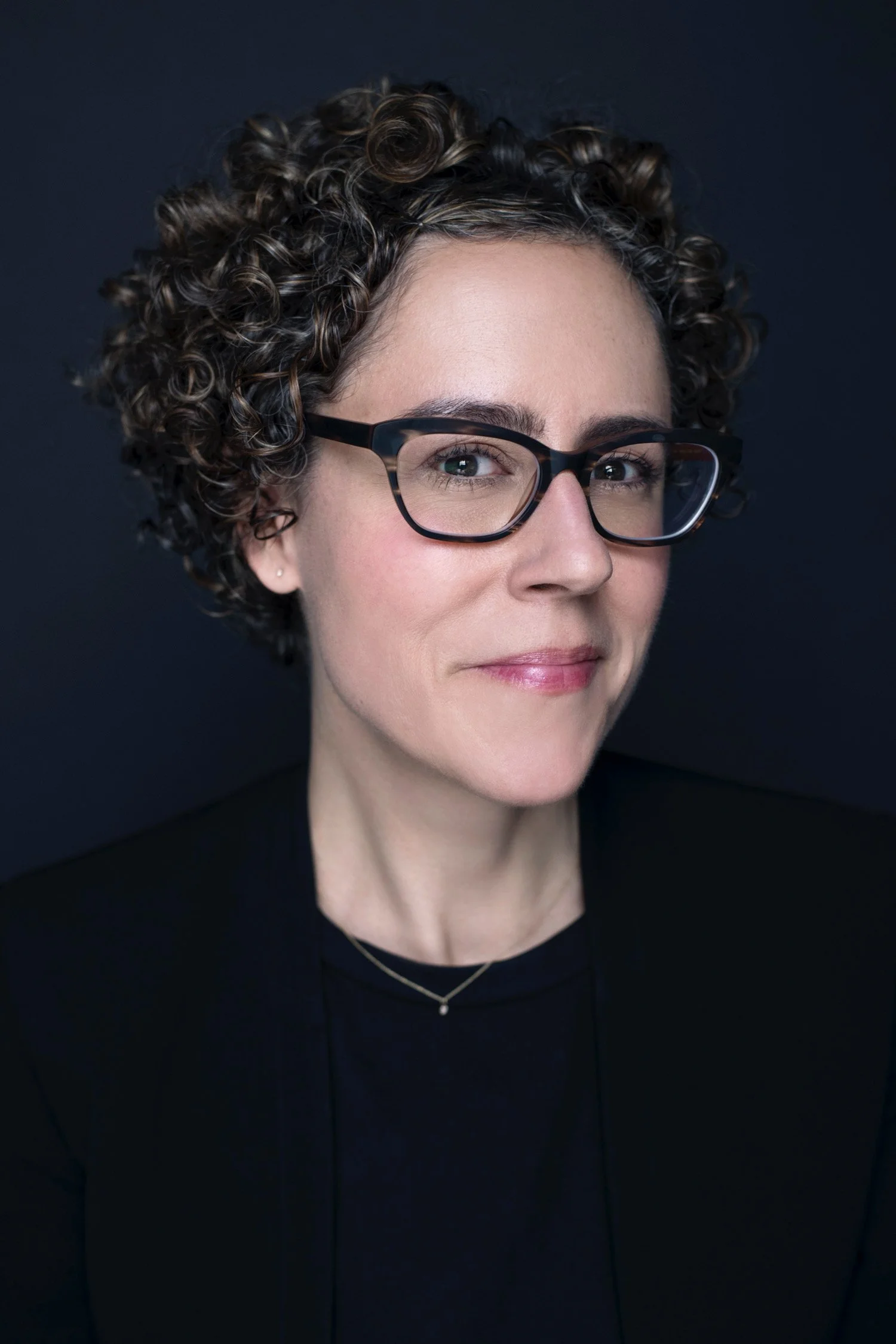
Liz Danzico has always been a writer, editor, educator, and designer simultaneously – and has woven them together in her design roles. Images courtesy of Danzico.
The Most Useful Peer Network for Creative Professionals
Creative Factory is a private, highly vetted leadership community for brand leaders. Join peers from Netflix, Meta, Apple, Stripe, and more.
Long before Liz Danzico was shaping consumer AI experiences at Microsoft, she was a seven-year-old in Scranton, Pennsylvania, hand-lettering calligraphy mastheads for her neighborhood newspaper, The Green Ridge Gazette. She interviewed her neighbors, photocopied the pages, and sold them back to her sources for a quarter a pop.
Today, as VP of Design for Microsoft AI Experiences, her work reaches a few more people – anywhere from one to eight billion daily. But that same curiosity, hands-on crafting, and love for community still drive how she leads.
In this conversation, Danzico reflects on how she embraced her non-linear path – which includes 17 years as founding chair at the School of Visual Arts and leading design at NPR – as a source of creative clarity. She also breaks down her shift from consensus-heavy corporate culture to real-time executive decision-making, how she continues to develop her judgment, and why the best leaders design teams that adapt as fast as the work itself.
What sparked your joy and love for design, art, and creating?
It was my family. I was raised by parents who demonstrated that civic life and the community around us were open to change. That everything around us was an opportunity to make something better. They showed us that through their actions and the opportunities they created.
Growing up in Scranton, Pennsylvania – the beautiful creative hub of the Northeast! – our family didn’t fit the shape of the typical families around us, so I think my parents worked harder to create those opportunities. Outside of their main work running their own company, a property management business, they were always doing side projects.
Like what?
My dad ran a cable access TV show at our local public library for years, interviewing local politicians on the hot topics of the week. He was also on the board of the local zoo to help improve the habitats, among many, many other things. My mom started the first soccer league for girls in our area because, as I remember it, she needed a sports team for my sister to join and there was no where else at the time. She also played the violin, performed in the orchestra and chorus, and started different organizations to give people access to arts and music.
Wherever there was an opportunity to build something, they made new things.
What was the first thing you remember making together?
When I was seven, my dad and I took calligraphy lessons together – or rather, he took them and brought me along. My parents had the idea that I should start a newspaper, so I interviewed all my neighbors for stories. I wasn’t allowed to cross the street, so I had to walk around our block and interview just that section of houses. It was a monthly edition, and each neighbor got a story (best I remember!).
The paper was called The Green Ridge Gazette, and I created a masthead using calligraphy and illustrated each story, though I wrote them all myself. I outsourced the comic section – an extensive two-page spread – to my friend across the street because he could draw and loved comics, so it seemed like a match.
What fascinated me most was the technology. I loved selecting the paper, using the Xerox machine, replicating the pages, and then distributing them. I even sold the paper back to the people I had interviewed. They each “bought” a copy for a quarter or so, and I kept the profits.
What did you take from that experience?
That experience – starting something from nothing, filling a gap, using multiple modalities like paper, story, calligraphy, illustration, and technology – still resonates. I could tell you about a meeting we had yesterday, and those same metaphors and inputs are still happening. That is what I grew to love. It wasn’t until graduate school that I fully understood there was a career associated with that set of inputs, but that’s where it all started.
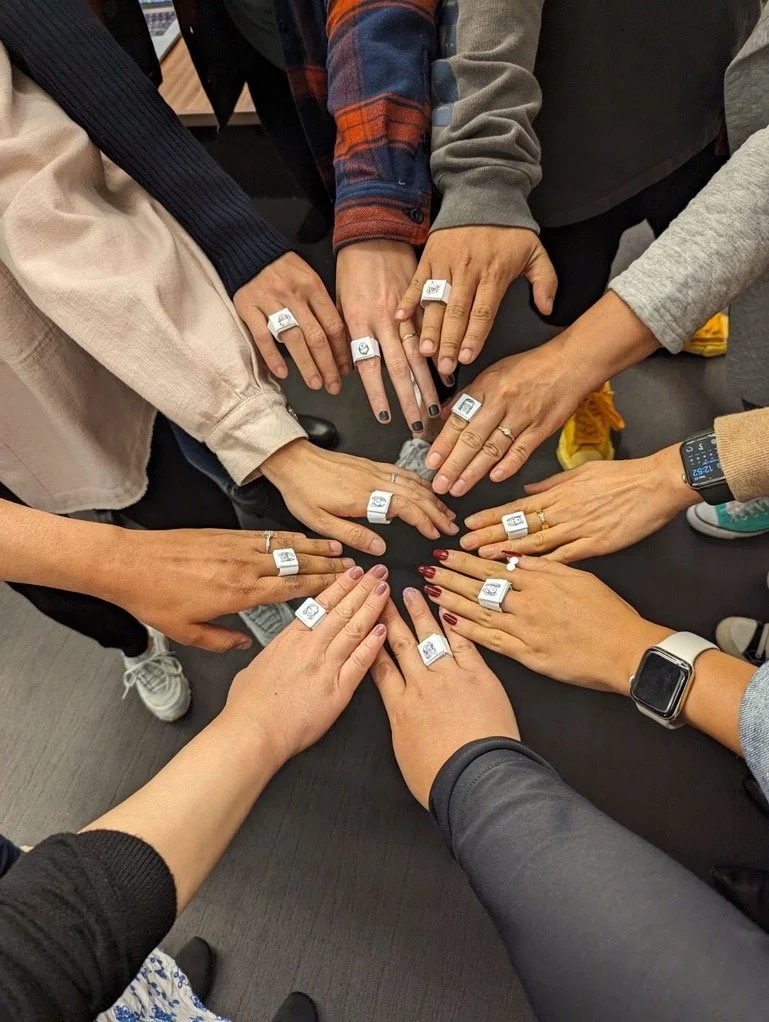
As part of her team building, Liz takes her designers to the Furniture Repair Bank in Seattle, a non-profit that teaches volunteers to revive unwanted furniture and provide it to local families in need.
If you connect the dots between those early design pages and your career chapters in media, teaching, and now leading design at Microsoft, what does that journey look like?
Because we weren’t originally from Scranton, I made it my mission growing up to go as far away as possible to learn. After college, I moved to Asia for a couple of years. I saved every yen I could to travel, studied for the GREs, and applied to graduate school. I ended up attending Carnegie Mellon for a program that seemed at the time at the intersection of writing, design, and technology. It was basically the reflection of my childhood newspaper in a graduate program.
When I finished, I landed my first position in New York City working in digital design as an information designer. At the time, getting a job in New York City felt so close (perhaps too close) to home! And with aspirations to continue traveling, it felt like my stay might be temporary. Yet here I am, embedded in the city, decades later.
The thread that has propelled me from early roles to where I am now has been simply following my curiosity, keeping an open mind, and meeting as many interesting people as possible who share that same sense of curiosity. Early in my career, I felt self-conscious that my path was a bit meandering. I’ve always been a writer, editor, educator, and designer simultaneously – almost running three separate career tracks.
You reframed how you viewed your career path. How?
Around the mid-2000s, I met Steven Heller, at the time, author, co-founder and co-chair of the MFA Design program at the School of Visual arts, art director of The New York Times Book Review section, and more. The author, teacher, and beautiful version of a multi-hyphenate. Seeing him made me realize it was okay to lean into multiple curiosities. He encouraged me to explore those distinct tracks through side projects, and eventually invited me to help research and propose a new master’s program at the School of Visual Arts. That became the MFA Interaction Design program. Creating it brought all my interests together and gave me the confidence to realize where all those skill sets were necessary, both for me and for students. Yet what was, and still is, more important is that I could work with students to share a perspective about the importance of confidence in one’s interests, and leaning into curiosity as an engine to propel one forward.
For me, that confidence allowed me to step into executive leadership roles. And I hope the same has been true for students as well.
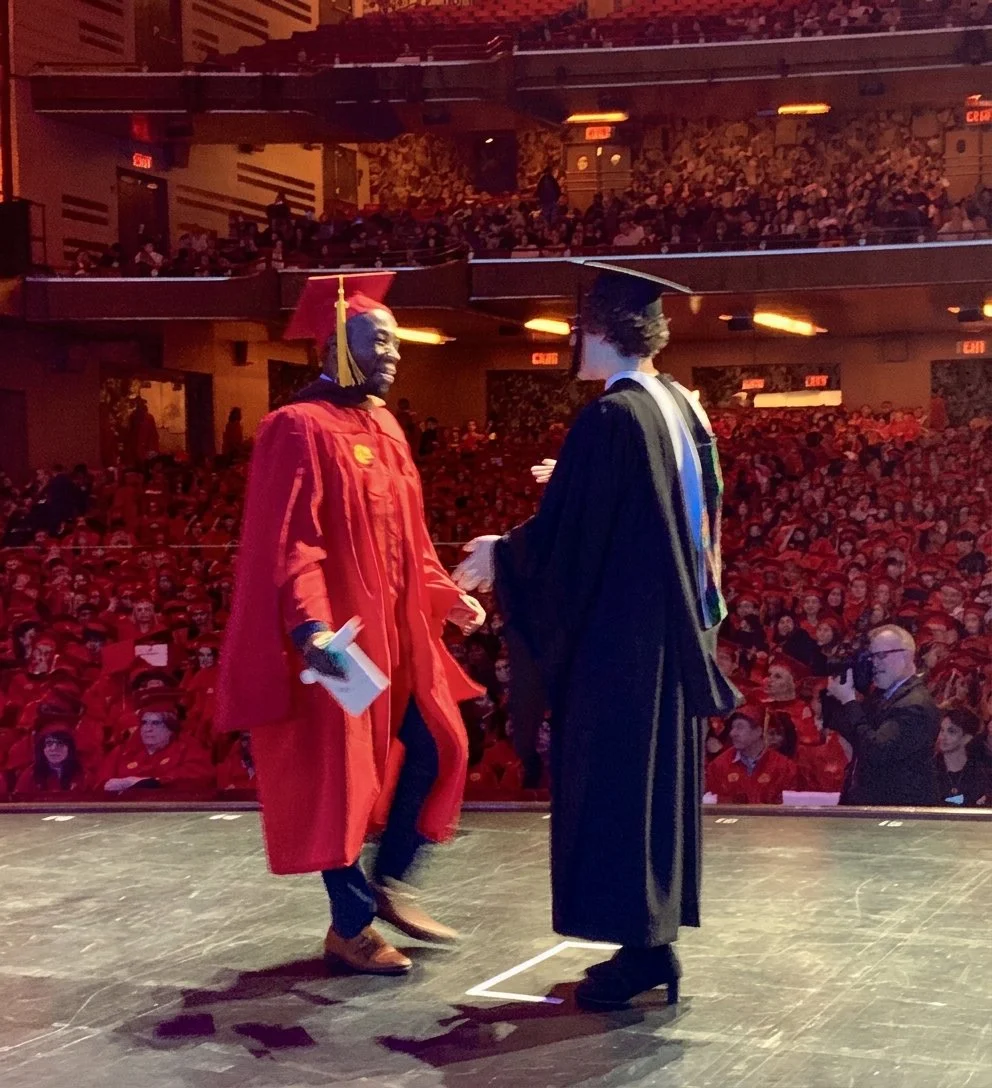
“For me, confidence allowed me to step into executive leadership roles. And I hope the same has been true for students as well.”
Looking back across your career, what was the most unexpected lesson you learned about career planning?
When I was leading design at NPR, they started an internal Mentorship Program, and I eagerly signed up as both a mentor and mentee. I was thrilled, as I had never made time for mentorship myself. I was lucky enough to be paired me with the President and COO at the time.
In our first meeting, she asked if I had a five-year plan. When I told her I didn't have one, she assigned it to me as homework.
Before our next meeting, I researched models online, wrote a five-year plan based on my career goals, and slid it across the table at our next meeting. She looked it over for what felt like ten seconds, slid it back, and asked simply, “Don't you have a family?” And, “Do you have financial goals?”
She went on to share that any successful plan has three parts, and two of the equal parts are family and finance. This was something I knew, but had never articulated. This plan I had so confidently created only included “work.” More importantly, to hear her state it so clearly changed my perspective entirely! You can only have an ambitious career when you account for your whole person.
What projects and initiatives do you lead at Microsoft?
I’ve been in this position for just over four years, and I started in summer 2002, which as people might remember was prior to the advent of consumer AI products, specifically the launch of ChatGPT, or Microsoft’s Copilot. I had the benefit of being part of the early teams thinking about what consumer AI experiences might look like.
My charter has evolved over these years as the field has evolved. I’m part of an organization of roughly 12,000 people, and I oversee designers responsible for helping people discover and connect with the most important information for their work and life every day. Our team focuses on Search, Growth, Microsoft Rewards, Tooling, and AI products. As a fun fact, our group was the team to design the user experience for Bing Chat, which became Copilot. With our User Research, Product, and Engineering partners, we map out both the present and future of search experiences.
I also co-lead The Royal Academy of AI, a peer-led academy within AI Experiences that has a goal of creating an environment where everyone can become AI proficient in their work.
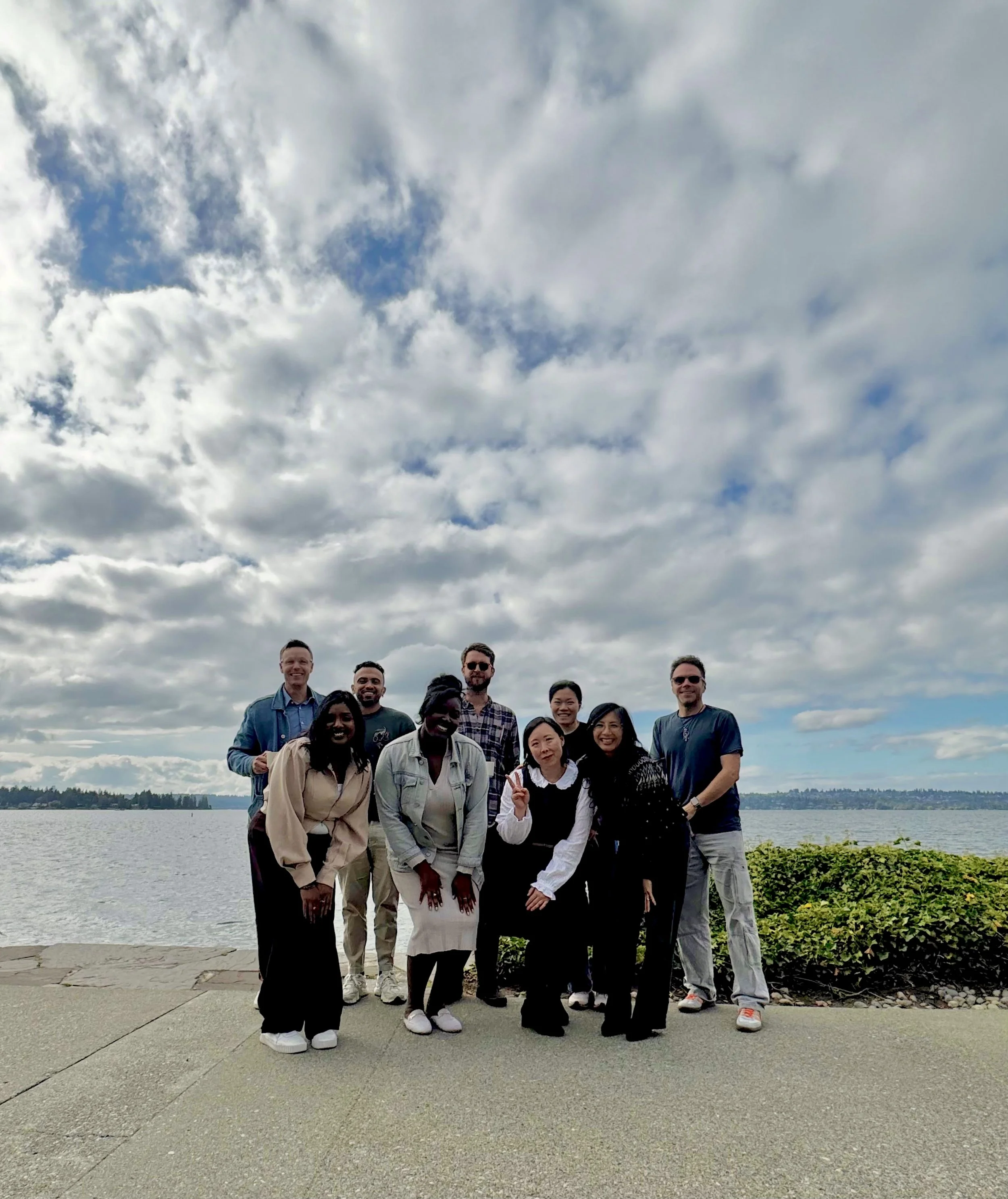
Members of the Microsoft AI Experiences Search & Experiences Leadership Team take a day outside the office in Seattle.
What was the biggest shift in internal dynamics between NPR and Microsoft? And how does that influence your leadership style?
What surprised me most about both places was how the internal dynamics operated. At NPR, making a user experience change – such as updating a flow – required extensive preparation. You needed pre-meetings, main meetings, and pitch decks reviewed by numerous stakeholders before touching the actual design. Organizational change is design work, but consensus-building felt like it made up about 75% of the job, with the remaining 25% spent on the output the public actually saw. This is necessary in a federated system, and with an organization as public service with the business model it has.
At Microsoft, it’s almost the exact opposite ratio. The work output itself is the primary focus. We operate with a high degree of accountability and responsibility, which feels like it gives us near-total autonomy to test ideas, ship features, and experiment at a speed that wouldn’t be possible at a smaller organization with a different business model. That said, there are layers of guardrails, accountability, and check-ins built in, but the feeling is one of being responsible for what one makes.
How has that approach changed what you encourage as a leader?
At NPR, we experimented within structured boundaries, like the Public Radio Incubation Lab I helped lead. Coming into Microsoft, I expected a corporate structure with rigid templates and heavy processes, but there is little consensus culture or preliminary deck-review process. The individual contributors – the designers themselves – have the power to make real changes. My role as a leader is to help them realize that if they want to change something, it’s up to them. I’m there to support them, clear obstacles, and make connections, whereas my previous role required leveraging relationships with leaders, building consensus, and more structured meetings.
What is an “executive muscle” you’ve had to build at Microsoft that differed from your past roles?
Making decisions in real time is a major muscle I’ve had to build. That stems partly from Microsoft’s culture, but even more so from the current pace of technology. In previous roles, the rhythm involved presenting a proposal, reflecting on it, gathering feedback, and deciding a day or a week later. Today, if we have a 30-minute meeting, we might aim to make the decision by the end of that meeting, and we might ship the change within hours.
To make decisions that quickly, you have to show up fully prepared. You need your team aligned, documents accessible immediately, and an active mental dashboard ready at all times. Using AI tools as workflow assistants to draft daily briefs and stay prepared has been hugely beneficial for that.
How have you developed that sense of good judgment?
I like to draw inspiration and examples from other industries entirely. For instance, I happened to attend a talk by Malcolm Gladwell this week about his new book. Hearing people discuss systems and decision-making outside design, whether in non-fiction, dance, cooking, or art, provides a valuable lens. In cognitive science, that’s called reframing. Stepping away from your specific problem space and looking at completely unrelated fields is the single most helpful way to return with a clearer perspective.
Developing judgment also means staying grounded in responsible design principles. Long before responsible AI became a prominent industry term, advocating for responsible design was core to our practice. Staying closely connected to team members who focus on those frameworks ensures we continually bring fresh, ethical perspectives into the work.
When we look at evals or responses from the UXR team, for instance, it can be easy to rely on generalized headlines or assumptions about broad user groups. Good judgment means slowing down enough to ask critical questions: Are we talking to the right people? Are we parsing these terms correctly, or are we just accepting an executive summary at face value?
What’s a long-held belief about how companies should operate that you’ve changed your mind on?
I’ve learned to treat organizational change as a form of innovation rather than a fix for something broken. In past experiences, reorgs were typically responses to strategic pivots, consultant recommendations for change, or operational gaps. In Microsoft AI Experiences, we adjust our organization continuously to match shifts in the market and the industry. Because our work reflects how modern work and life are changing, our organizational shifts are structured as ongoing experiments rather than disruptive interventions. Of course, they must be done with care and intention no matter the cadence.
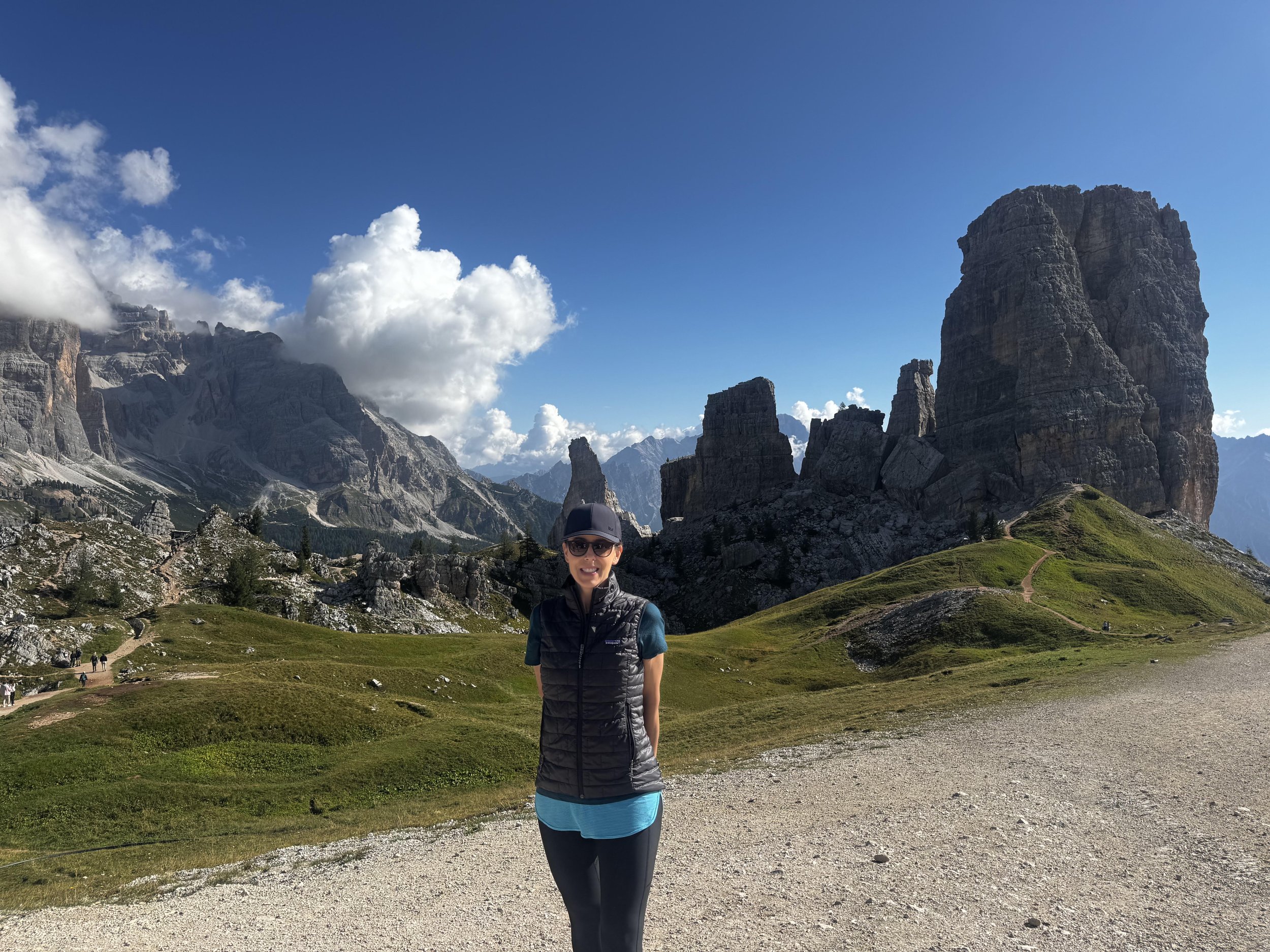
Danzico likes to recharge in nature. Most recently, she took a trip to the Dolomites.
Outside of your day-to-day work at Microsoft, how do you maintain your creative spark? What do you like to do for fun?
On a personal level, I spend a lot of time outside with my dog, hiking trails and kayaking.
I love music and try to play as many instruments as I can. Being outside or playing an instrument is my favorite way to reset every day, even if it's just for a few minutes.
I stay involved with education and civic engagement, and as one example, recently launched the Civic Imagination Award through the School of Visual Arts. It’s awarded annually to second-year graduate students whose thesis projects demonstrate civic imagination across journalism, technology, and community life. It's a way to shine a light on new ideas that see every problem as an opportunity for change.
The Most Useful Peer Network for Creative Professionals
Creative Factory is a private, highly vetted leadership community for brand leaders. Join peers from Netflix, Meta, Apple, Roblox, and more.