
How MIT Director Amos Winter Innovates By Day, Tinkers on Cars By Night
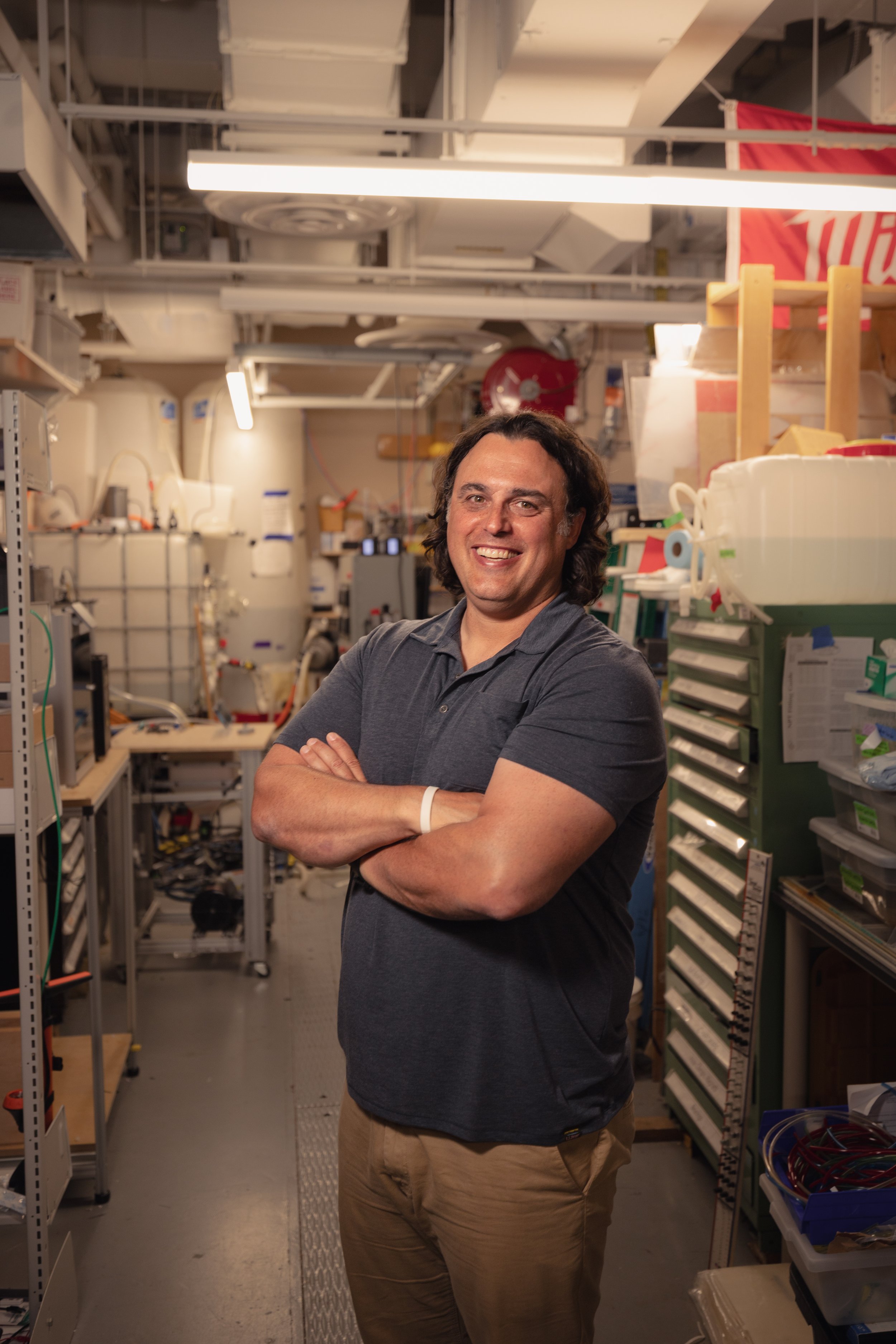
MIT Professor Amos Winter shares what it takes to properly make something intentionally “Global by Design.” Images courtesy of Winter.
The Most Useful Peer Network for Creative Professionals
Creative Factory is a private, highly vetted leadership community for brand leaders. Join peers from Netflix, Meta, Amazon, Roblox, and more.

There is an ongoing debate in the creative world: Is it more important to look at the world’s problems through a business lens or a humanitarian lens? For Amos Winter, the Germeshausen Professor of Mechanical Engineering and Director of the K. Lisa Yang Global Engineering and Research Center at MIT, it should be both.
The Leveraged Freedom Chair, an innovative low-cost wheelchair built from bike parts that can traverse rough terrain, is one example of Amos’s work, which spans technologies for irrigation, desalination, clean energy systems, and global health. The wheelchair works beautifully in developing countries, and to adapt for wealthy markets, his team redesigned the parts to fit in the trunk of a car.
In his new book with Vijay Govindarajan on his innovation and design approach, Global by Design: How to Create Innovations that Scale, Travel, and Transform, Winter shares the framework he uses to invent business solutions for problems in resource-constrained communities.
“The greatest problems affecting humanity — health, water, energy, housing — are concentrated in poor countries. My book is trying to open innovators’ eyes to that: this isn’t purely a humanitarian effort, and it isn’t purely a business one. If you do it right, you create something people want to adopt because it improves their lives, which makes a great business case. And if you’re designing around the constraints of low-resource settings, you’re pushed toward high-value, low-cost solutions that can disrupt wealthy-market equivalents too,” he says.
Here, Winter dives into how he works, including teaching on MIT’s campus by day and tinkering on antique cars by night; why he operates from the lens of a professional appreciator of engineering design; and the brightest idea he’s designed that died entirely on user perception.
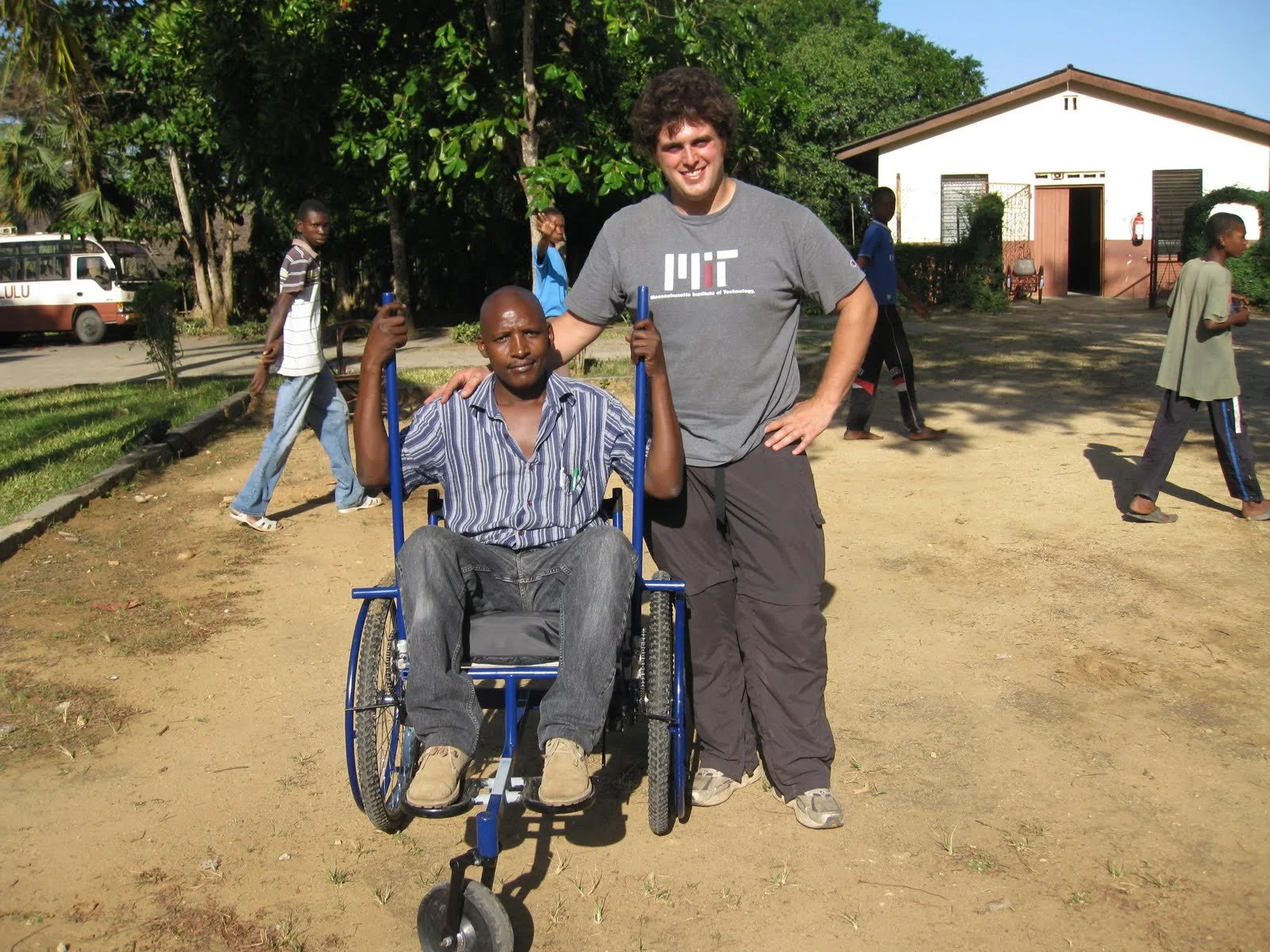
The Leveraged Freedom Chair, an innovative low-cost wheelchair built from bike parts that can traverse rough terrain,
Your book’s subhead is How to Create Innovations that Scale, Travel, and Transform. Without giving too much away, how do you actually do that?
The first part is really understanding the problem you’re trying to solve. When you’re working in low-resource settings, that’s especially hard, because you may be working in a culture you’re not a member of, facing constraints that you've never personally experienced. So step one is understanding what problems can actually make an impact in people’s lives, and what value propositions will support both the work itself and the eventual spread of a solution.
The second part is about designing the solution. That pulls on creative product design and user-centered thinking, but also on the underlying math, physics, and technology you can bring to bear. In my work, the innovation comes from the interface between market insight and technical insight. You see a technology you could tweak, or a physical principle you could leverage, to meet the specific requirements of the market you’re hoping to serve. What comes out of that is a solution built around a core value, whether it’s a water purification system, a healthcare device, or something else. And because human needs are more universal than we think, that core value often translates between poor markets and wealthy ones.
The last part of the book is going from local to global: figuring out what that core value is, and what features need to be added or stripped away to make it resonate in a different market.
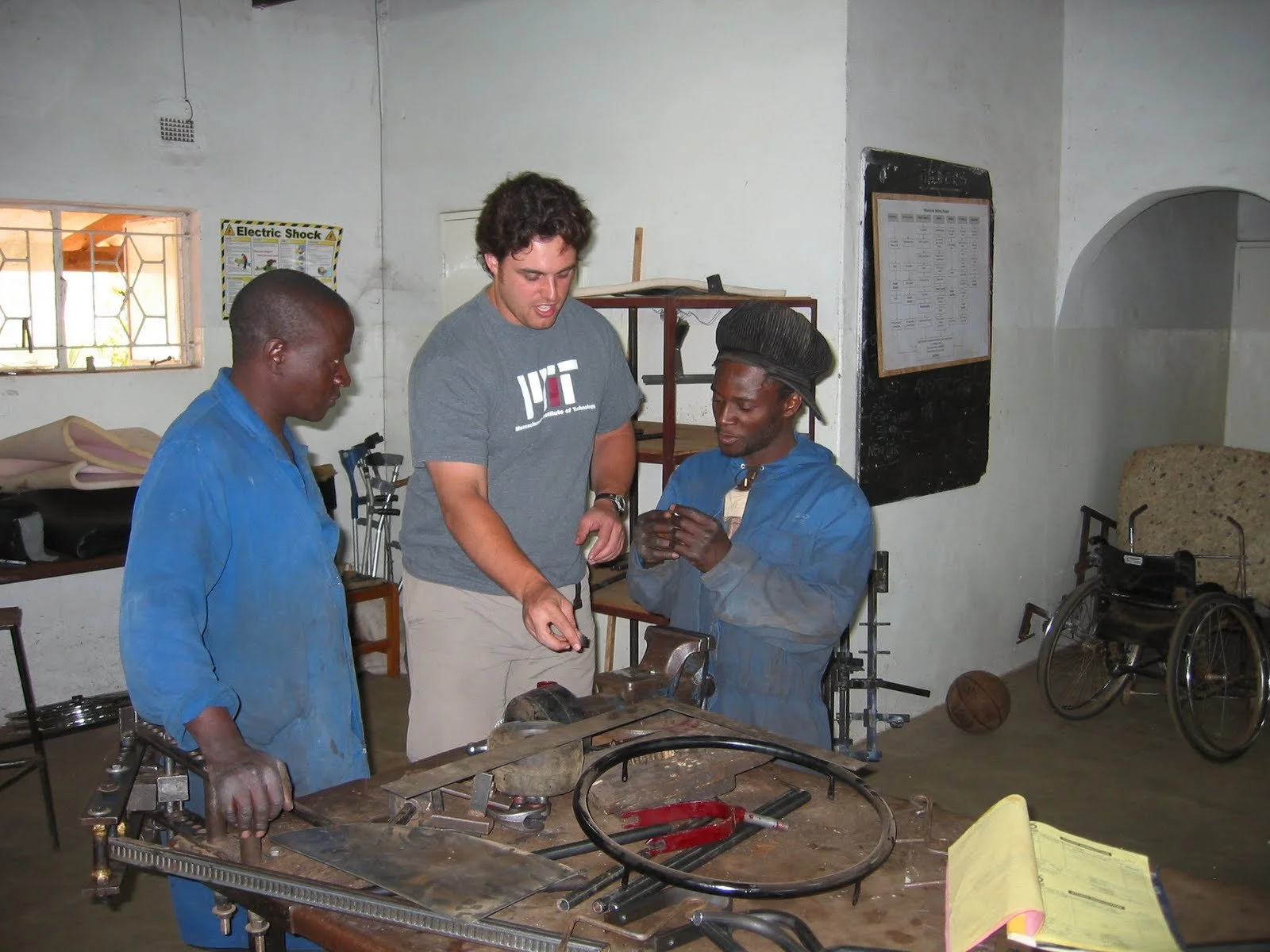
Winter working on his wheelchair design.
This framework occupies an interesting place right now, given how much excitement there is around AI. How do you think about AI in the kind of work you do?
I use AI every day myself. But the problems I focus on are nowhere close to being solved by AI alone, for three reasons. First, they require synthesizing information that isn’t formally cataloged, like cultural practices, economic realities, and physical principles that live in people’s hands, not in datasets. Second, they require real on-the-ground knowledge: what the dirt on a farm actually feels like, how much friction there is between two sliding pieces of wood. These are things AI can’t fully simulate. Third, solving them requires building real human rapport. I walk into rooms of strangers all the time and have to earn enough trust that they’ll tell me the truth about their marriage, their kids’ health, or whatever’s shaping their thinking. AI can’t do that yet.
How does your work stand apart in the field of academic innovation?
I’m wired to be “demand-pull” rather than “tech-push,” which makes me a bit unusual in academic innovation. A lot of academic work grows out of a researcher’s subject-matter expertise: they develop an idea in the lab, and only years later ask whether it could be commercialized. I actively avoid that model. It can become playing darts blindfolded: throwing darts and hoping, by chance, they land on something that actually meets real-world requirements.
Instead, we go to real lengths to understand the problem and confirm whether it’s worth solving, identify the knowledge and technology gaps keeping it unsolved, and distill the research questions that need answers. Only then do we start the actual research and design.
That model comes directly from watching the inefficiencies in academia over my career. I see tremendous intellectual firepower around me, but most researchers don’t have the time or training to go study a problem on the ground for a year or two before working on a solution. They have to start solving from day one, because that’s how funding and publishing work. GEAR Center exists to do that problem-definition work for colleagues, so their ideas align with real-world constraints, not just their expertise.
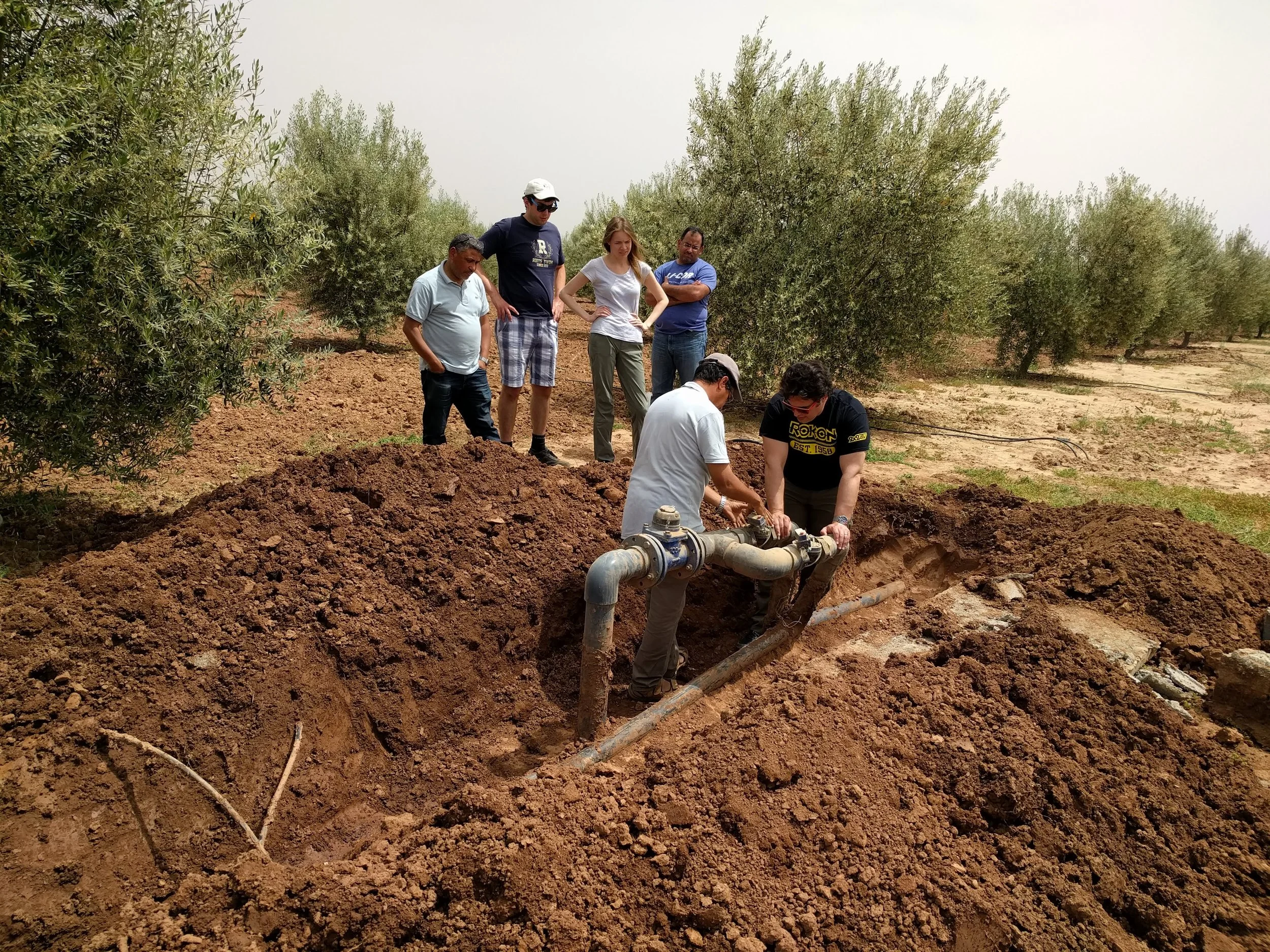
Winter installing a drip irrigation system in Morocco.
Let’s dive into how you work. Walk me through a typical morning in Massachusetts.
I joke that I’m time-zone independent, or always in the wrong time zone, because my work is international. So it really depends on the day. But on a typical day in Massachusetts, if I’m heading to campus, I’m up at six, shower, grab food quickly, and I’m on the road to beat rush hour.
I’d love to have a regimented morning routine — same wake time, same breakfast, same commute — but I’ve never had it. The upside is I get these stretches where I can think and daydream, and that’s had real utility in my job. I notice colleagues who don’t give themselves that time.
Do you have a work uniform?
On days I’m lecturing in my sophomore-level mechanical design class, I wear a shirt that ties to the lecture content, like a Formula One jersey, or a polo from an engineering or automotive museum, or something from a race I’ve done. People probably associate me with automotive-themed clothes more than anything else.
How do you structure your day, given how much your work can vary?
My mental acuity slowly degrades as the day goes on, so anything demanding happens early. I prefer to write in the mornings, and to work out because it makes me feel invigorated. Meetings tend to happen in the afternoon, when I’m still lucid. I work late some nights, when a recommendation letter or a proposal needs proofreading.
To balance the work, I take a month off every summer to go on adventures with my five-year-old son. Two or three days a week, I pick him up from daycare at 3:30 p.m. and put him to bed every night. My days are never typical, and I think that’s a good thing; it gives me the latitude to fit in what matters.
Any go-to playlists?
I watch sports documentaries while I’m working out for motivation. The Last Dance is my favorite; I’ve rewatched it a few times while lifting. When I’m on the bike, that’s a great time for a movie.
My favorite artist by far is James Taylor. I sing his songs to my son all the time. I’m also into Led Zeppelin, AC/DC, and classic rock from the ’70s and ’80s. I like folk too, and a lot of ’80s hits, which were really the soundtrack of my childhood: Huey Lewis and the News, the Doobie Brothers, that kind of thing.
What are the tools of your trade?
At MIT, it’s mostly a laptop, as I’m always typing, talking into a Zoom call, or building PowerPoints. There’s a real irony there: I love creating and testing physical tech, but I lead a large team that does the hands-on work now, so I’m rarely the one running a milling machine or getting quotes from a prototype shop. The laptop is the conduit for the grants that raise the money, the meetings, advising students. It’s a strange feeling: this digital device somehow produces physical outcomes at the other end of a very complicated process.
Then there’s my home set of tools, and I lean on those hard, because my job is so administrative now that I’m constantly craving hands-on work on evenings and weekends. I have a full workshop at home: two car lifts, automotive tools, woodworking tools, electrical tools, and chainsaws.
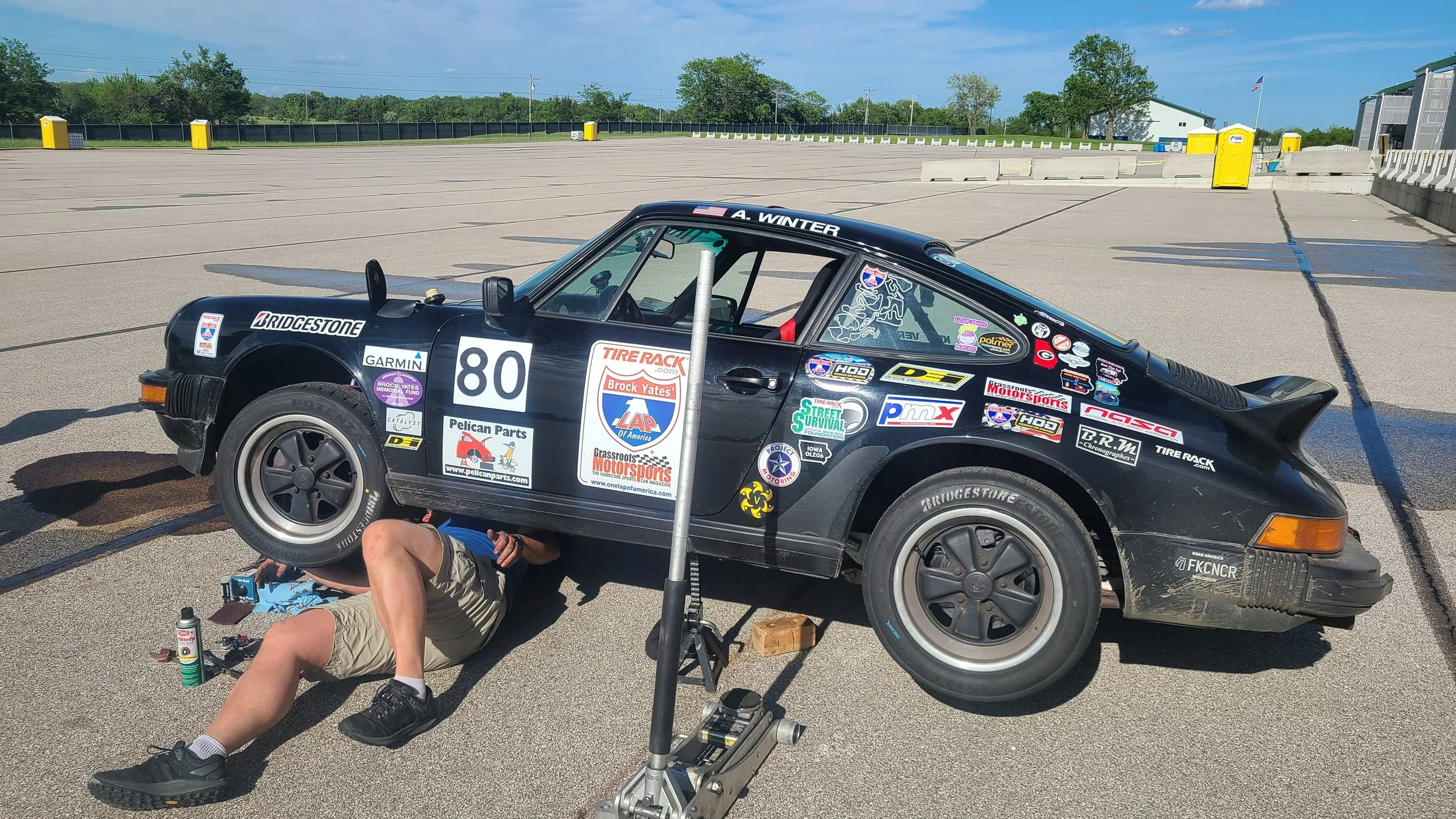
Winter’s side gig is tinkering on his collection of antique cars.
Do you have a dream studio?
I dream of a large, capable fabrication space right on campus, close enough to researchers’ offices that there’s almost no barrier between computer work and working with one’s hands.
Off campus, we recently started a sister nonprofit called Gear Works, which lets us hire people we can’t easily hire at MIT, or bring in funding we can’t access in academia. I dream of a bigger facility with space for field pilots, incubating companies, or shipping containers full of prototypes. I’m also launching an engineering consultancy called Winterworks, which I want to grow into a real product-design and mechanical-engineering practice.
At home, I’m lucky enough to already have a piece of this dream. I have a 2,000-square-foot barn with car lifts and a full workshop. I’d love to add metalworking facilities so I can shape body panels and eventually build vintage race car bodies myself.
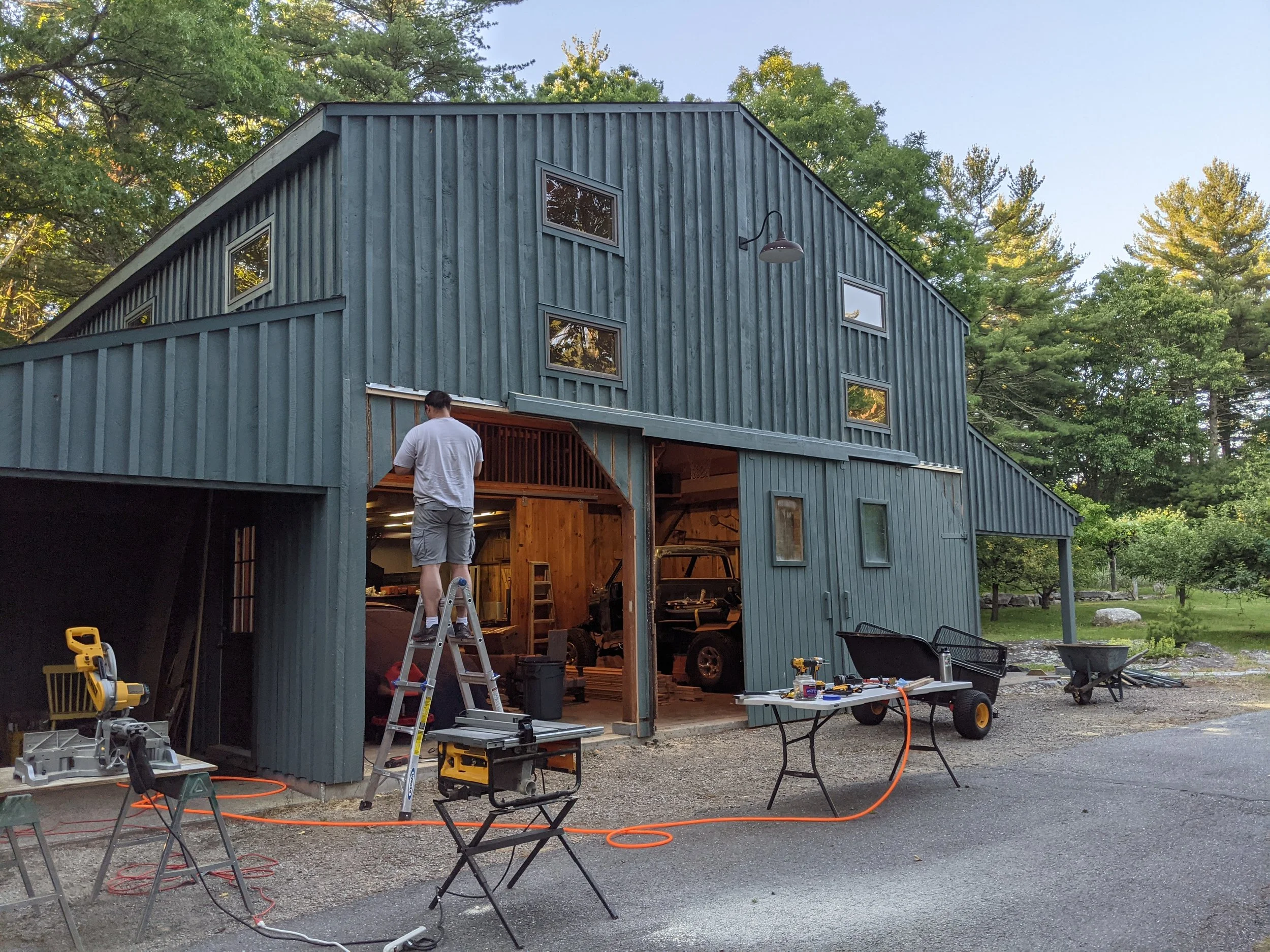
Winter’s 2,000-square-foot barn, with car lifts and a full workshop, is where he likes to get his hands dirty on evenings and weekends.
What’s one philosophy you turn to that informs how you work?
I say this in every class I teach: the most powerful tool a designer has is perspective. Designs fail because they don’t satisfy requirements they were never aware of. If you actively stretch your perspective, you’re far more likely to catch the full set of requirements, and once you can see them, you have to satisfy them. That’s especially true in my work, because I’m usually designing for populations I’m not part of. I don’t know what it’s like to be an Indian mother of five in her fifties, so I have to see the world through her eyes, and through the eyes of the kiosk owner where she buys a product, the company manufacturing it, and the government agency subsidizing it. The only way to understand that whole web of stakeholders and constraints is by broadening your perspective.
That’s something I think gets overlooked across product development in general.
It’s systemic. I think we live in an era that celebrates ideas. Hackathons are a good example, where the whole point is just generating new ones. New ideas are cheap. Good ideas, grounded and tractable, are hard to come by, and it takes real effort to understand the constraints that shape an idea into something viable.
What’s one of the brightest ideas you’ve had that never saw the light of day?
I worked on a new ceiling fan design for a couple of years with a company called Usha, out of India. It sounds like a mundane problem, but given how many ceiling fans run in a hot climate like India, even a small efficiency gain in the motor or blade makes a real dent in the electrical grid.
They hired me to see if I could design a more efficient blade, so I looked at early airplane designs to inform the approach. The Wright brothers tested sheet-metal blade shapes, and ceiling fan blades are made of sheet metal too. I found a 1918 curved blade shape, easily formed from sheet metal, and far more aerodynamic than the flat, sometimes-bent blades used today.
We built it and it worked perfectly. It took dramatically less energy to move the same amount of air, and it had the same great airflow, with no extra manufacturing cost. The gains we found translated into needing one fewer coal-fired power plant, nationally. We even filed a patent in India and got close to production. But users wouldn’t adopt it, because it didn’t look like the ceiling fan blade they were used to. The product worked flawlessly, cost nothing extra to make, and died entirely on user perception.
Do you have a creative exercise you use to channel inspiration?
I think of myself as a professional appreciator of engineering design. I’m constantly at engineering museums, aircraft museums, car museums, looking at construction equipment, studying how bridges are designed. I still take things apart all the time. What I love about cars especially is that when I open up an engine, I can see exactly why it was designed that way — sometimes I’m impressed, sometimes I think, “you guys are chumps.” But I love appreciating the thought that went into it. Cars sit right at the intersection of mechanical engineering and artistic design.
Because of my engineering background, I feel like I have X-ray goggles. I can see, at a deep level, why things were built the way they were. That’s beautiful to me. I’ll notice a linkage used one way and think, “we could use that completely differently.” I do it constantly, and I’ve built up a mental library of design solutions over years.
The Most Useful Peer Network for Creative Professionals
Creative Factory is a private, highly vetted leadership community for brand leaders. Join peers from Netflix, Meta, Amazon, Roblox, and more.

If you’d like to read more from Creative Factor, find our latest stories here. Or looking to tell your brand story? Introducing Creative Factor’s Storytelling Studio.