Raffaella Paniè: How I Designed the 2026 Winter Olympics Brand
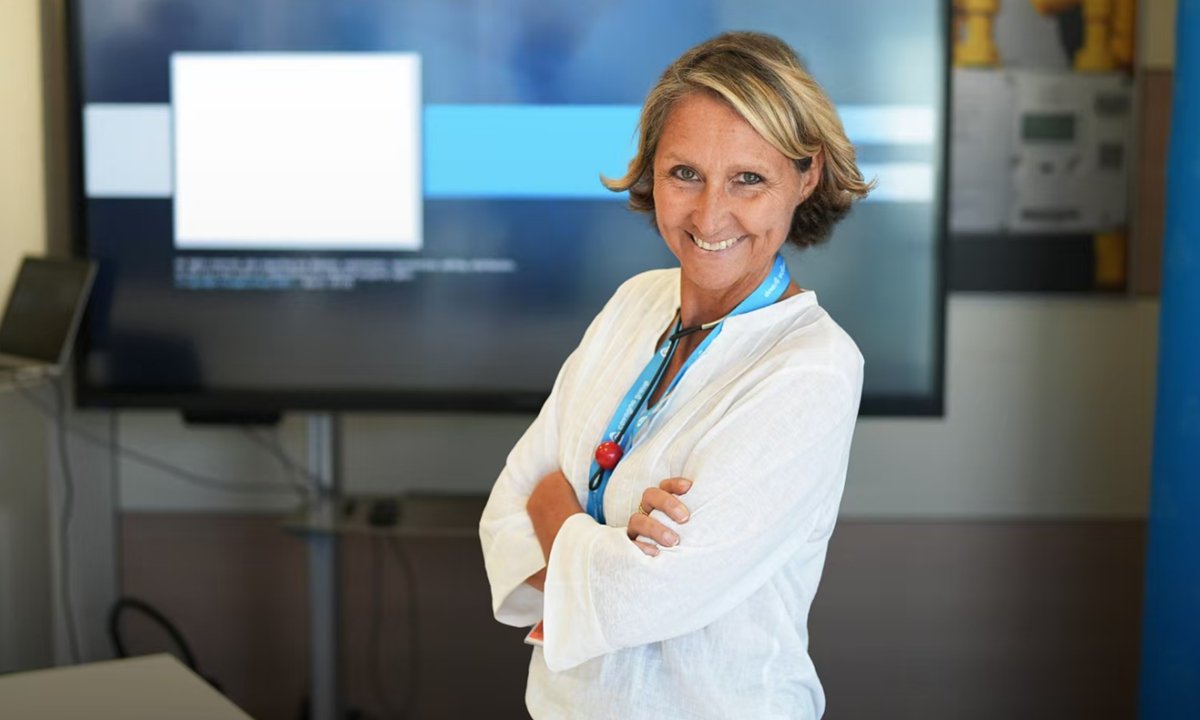
Branding the Olympics once is rare. Raffaella Paniè has done it twice.
Most people are lucky if they land their dream job once. Raffaella Paniè has done it twice.
Twenty years after leading the branding for the 2006 Torino Olympics, she got the call to do it all again for the Milano Cortina Games this winter. For her encore, Paniè is reimagining what the role of the Games should be in 2026 — and how that actually looks and feels.
Here, she shares how she developed the 2026 Olympics brand, how she leads a 35-person team that has created all of the collateral for the Games, and her leadership lessons to guide something that will be seen by only a few billion people.
When Paniè took on the role, her first responsibility was to interview everyone from the Minister of Sports to the Mayor of Milan.
This is your second time leading brand design for the Olympic Games. Take us back to four years ago, when you first laid hands on the project.
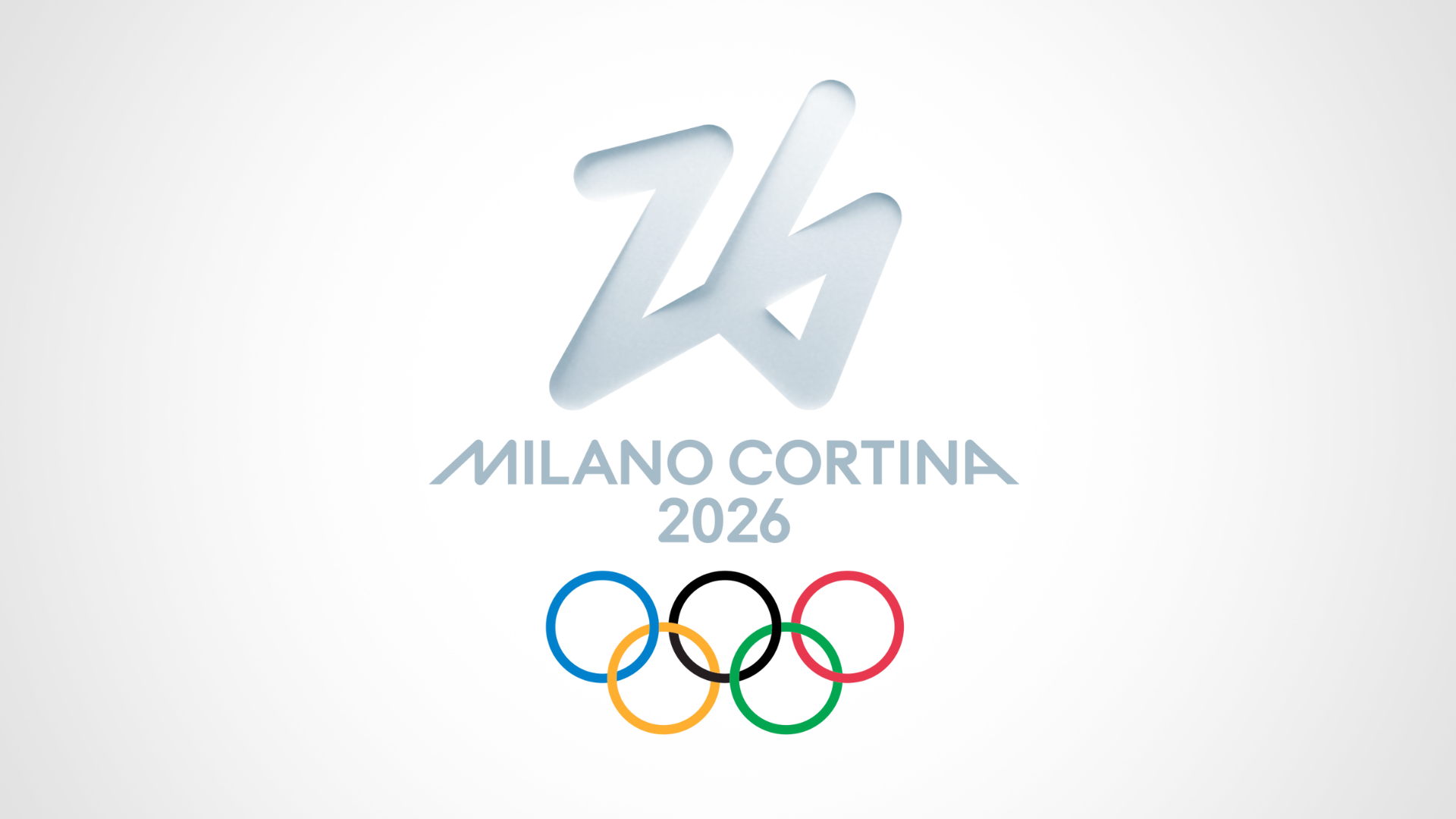
I came into the project at a crossroads, because the logo was already complete when I joined the organizing committee. Typically, there’s a gap between the candidate city’s preference for the logo and the designer’s, so the logo is redesigned to fit a marketing vision. And sometimes it’s forgotten how important it is to have a brand personality. That was an important starting point; it meant taking a step backwards to make sure that our storytelling fit the logo.
The logo had a beautiful idea behind it: the number “26” as a save the date, written by someone on a foggy window. That human gesture became incredibly important for the rest of the story. It naturally led us to put people at the center of the brand. From there, we did interviews and workshops with internal teams and politicians and institutional leaders to gather as much information as we could and to make sure that we had everyone’s point of view. We spoke with the Minister of Sport, the mayor of Milan, the mayor of Cortina, and many others.
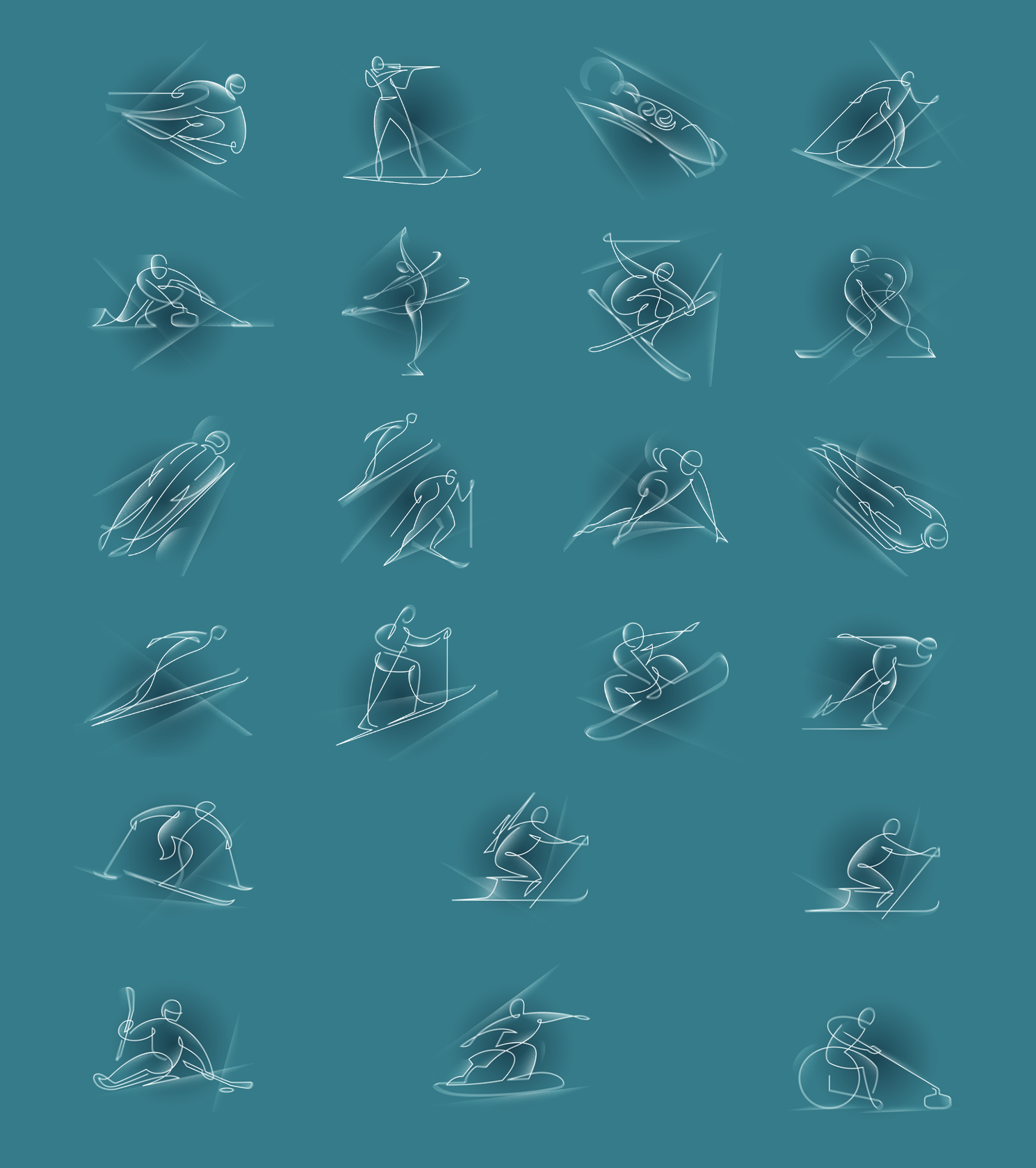
The logo comes alive with just one brushstroke.
How did you synthesize so many perspectives into one vision?
Fortunately, all you have to do in those conversations is listen. We asked everyone the same question: How would you like these Games to be remembered in 20 years? The answers varied, but we filtered and synthesized them. We found that local stakeholders naturally focus on their own territories, while the organizing committee has to think nationally and globally. So our challenge was to make the Games feel relevant to all of Italy. That led us to try to capture the Italian spirit with three words, which, to us, were vibrant, dynamic, and contemporary. Those words have guided every creative decision since.
What was the biggest theme that stood out?
One theme that emerged very strongly was beauty, which didn’t surprise us, of course, but we were cautious. In a country where beauty is given so much attention, the risk is it becomes a stereotype. We started thinking, are we sure we want to base all our storytelling on beauty? We didn’t want to rely only on that familiar narrative, but it came up so much in those early conversations that we couldn’t ignore it. And so we thought, well, maybe we should look more towards the future and try to see where that beauty lies.
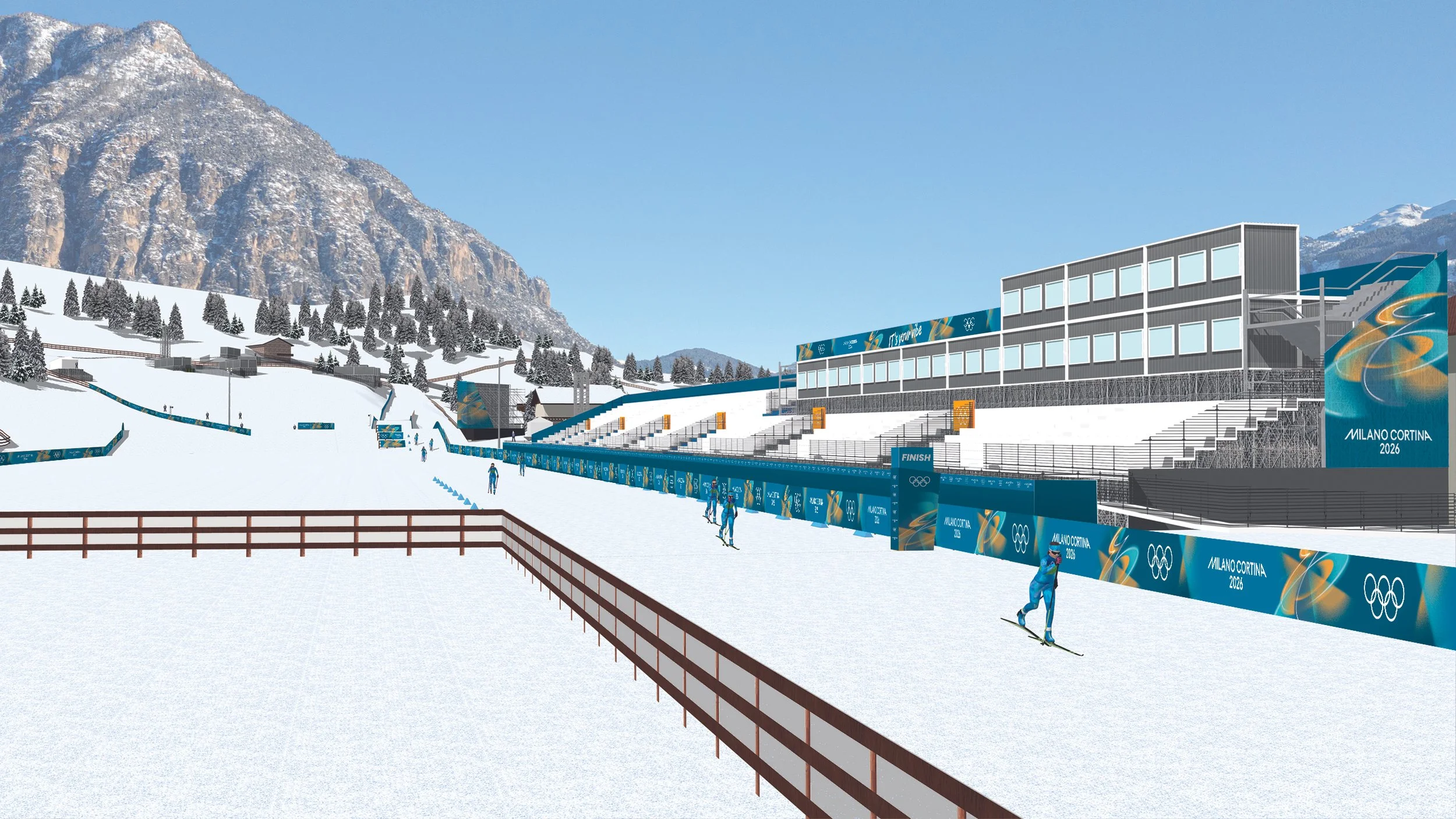
Tesero Cross-Country Skiing Stadium in Italy.
Tell me about your leadership style.
I focus a lot of my time on the team, both in terms of hiring talent and building real friendships. I’ve definitely been in situations where I chose not to hire someone who was very talented, just because I sensed they wouldn’t fit with the team. For me, it’s important that the team works, because that’s where you get the extra effort. I find this is especially true in the creative field. If the team is genuinely enjoying their time together, spending evenings out together, and becoming friends with each other, that energy feeds back into the work. My team gave me a lot of energy back, more than any of the work itself.
How do you run meetings?
I’m sort of sitting back, and I’m there if someone needs me. The team is the protagonist, and I like to listen to people.
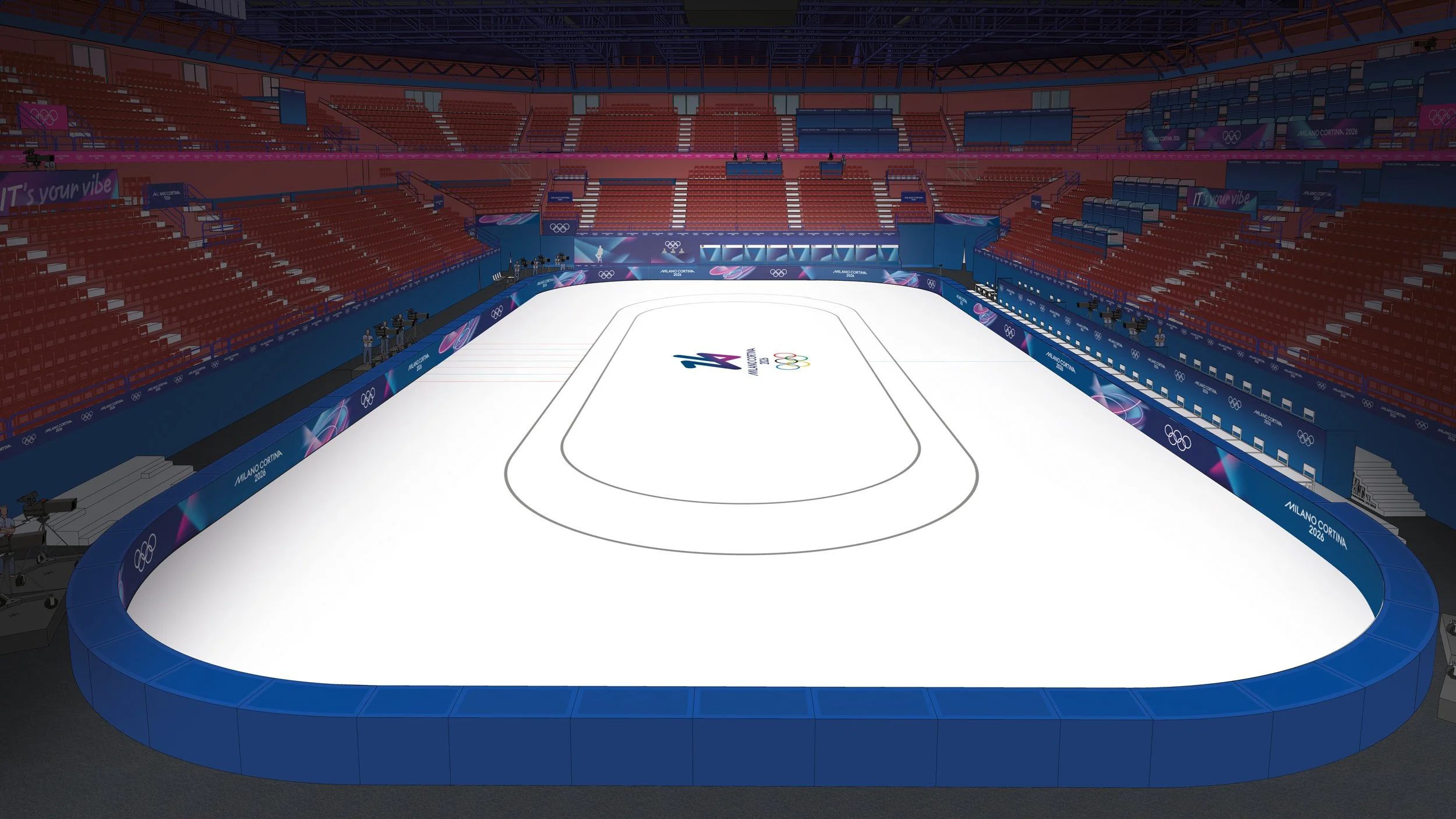
Milano ice skating arena.
What does the first hour of your day look like?
Tea, always. I don’t drink coffee. My father is Italian, my mother is English, so the tea comes from her. I love the ritual of it. Tea forces you to slow down, and it helps me get into the right mindset for the day. After that, it’s usually emails and catching up on what carried over from the day before.
Take me back to 2006, when you landed such a major role early in your career. What did that feel like?
When the opportunity for Milano Cortina came up, it felt natural to apply. It helped that I was Italian, building a brand so deeply connected to the culture.
But then the nerves hit me. I remember my boss asked me, “At the end of the day, are you frightened about all this?” And I stopped, and realized just how much I was. You know, if I wasn’t scared, I wasn’t paying attention to what was about to happen.
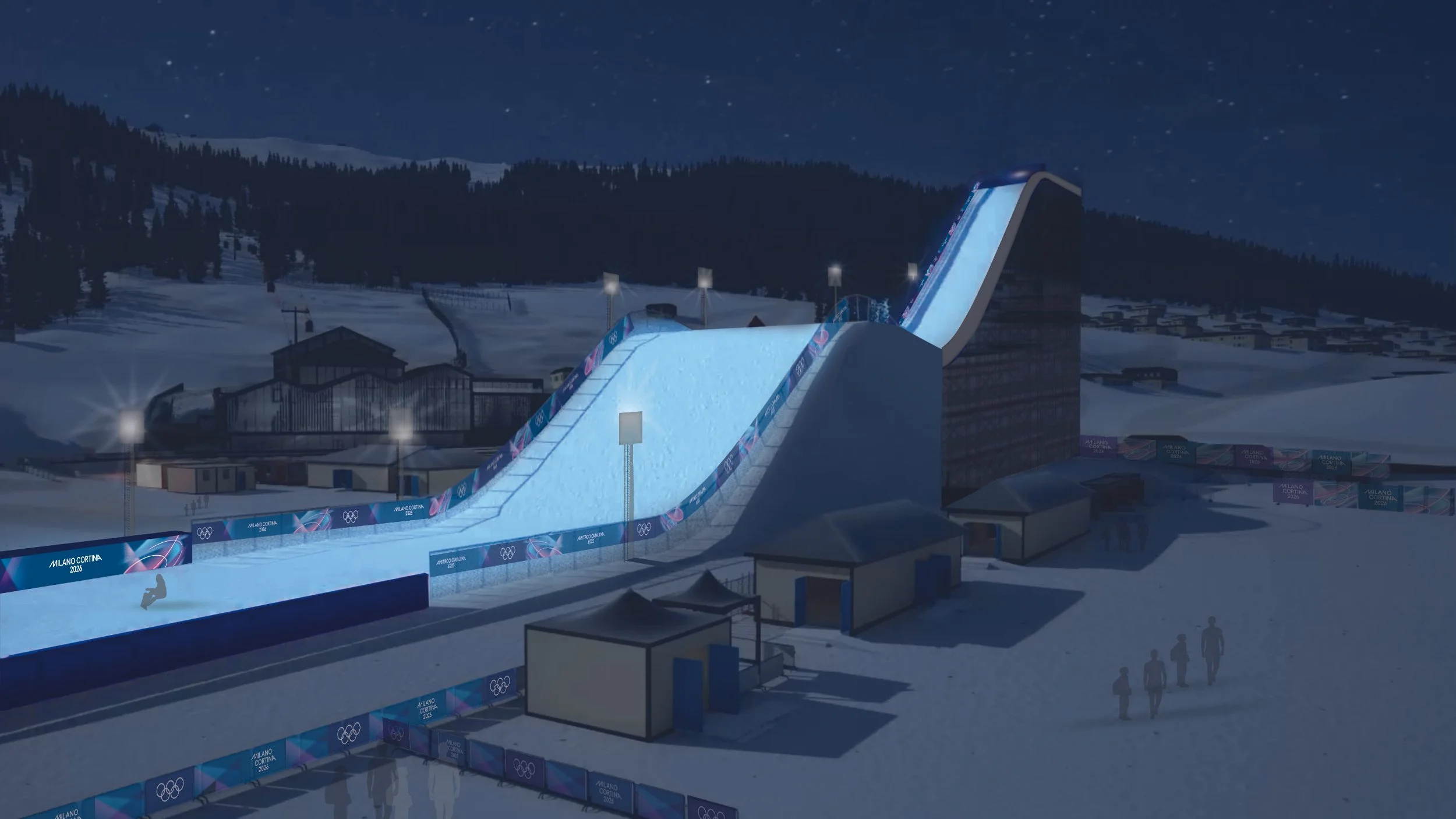
Livigno Snow Park, set to host snowboarding, slopestyle, halfpipe, and big air events this year.
Tell me more about your career background.
My father was an architect and he was very passionate about his work, which inspired me to train in his field. But I liked adrenaline and I needed more of it. I understood that I needed something faster-paced than architectural projects. So after university, I started working for a sportswear brand, which opened the world of events, because there were a lot of sponsorships and ambassadors and athletes and everything moved at a much faster pace.
What led you to pursue art in the first place?
I was always building things as a child. My father had a small workshop in our backyard, and I loved using his wood and nails to make things. I remember one year, I was going to visit my mother’s relatives, and I wanted to bring each of them a present. So my sister and I built clocks, trays for cutting bread, and all kinds of useful objects. I’ve always loved creating things that have a purpose and just figuring out how things worked. That curiosity led me to pursue architecture, and eventually, branding. And now, the Olympics!

Join more than 75 leaders from top organizations, including Spotify, Amazon, Shake Shack, Stripe, NASA, Cannondale, Hearst, Roblox, Clay, Paramount, and Mailchimp.