How I Work: Glassblower Ben
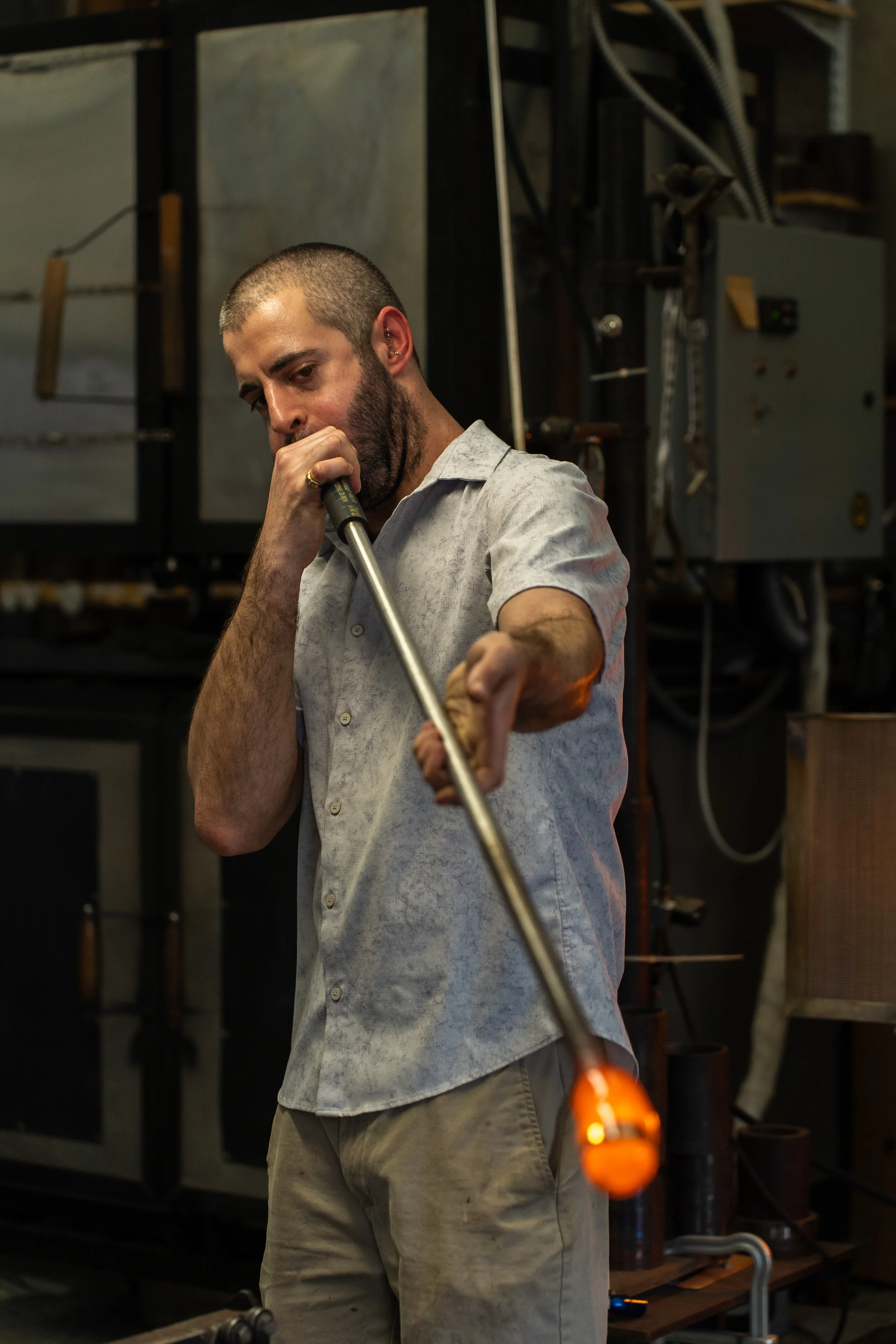
Glassblower Ben invented his own way of making handblown glass after a bike injury. Photos c/o Dombey.
The Most Useful Peer Network for Creative Professionals
Creative Factory is a private, highly-vetted leadership community for brand leaders. Join peers from Netflix, Meta, Amazon, Roblox, and more.
After a bike accident in 2019 left Glassblower Ben Dombey without the use of his right arm, he had to rethink his entire creative practice. The typical glassmaking tools require using both hands, but he only had one to work with. He began making his tools by hand to adapt to his new body: diamond sheers, steel molds, a CNC machine, and even an oven to cook his sculptures.
Glassblower Ben thrives in a city where people are always making something: every material in his New Orleans shop is handmade by him or someone he knows, from the Titty Tumbler and the Mardi Gras Magic to the Dombey, his signature whiskey glass.
“Someone recently shared that in this age of AI and trying to go to space, makers are like the horse-and-carriage drivers of this era. I’ll stick to my horse and carriage,” he says.
Here, Glassblower Ben shares his work process, including how he learned to blow glass with one arm; why he spends nights fixing what’s broken; and the time he looked to lamb hearts to inspire a new design.
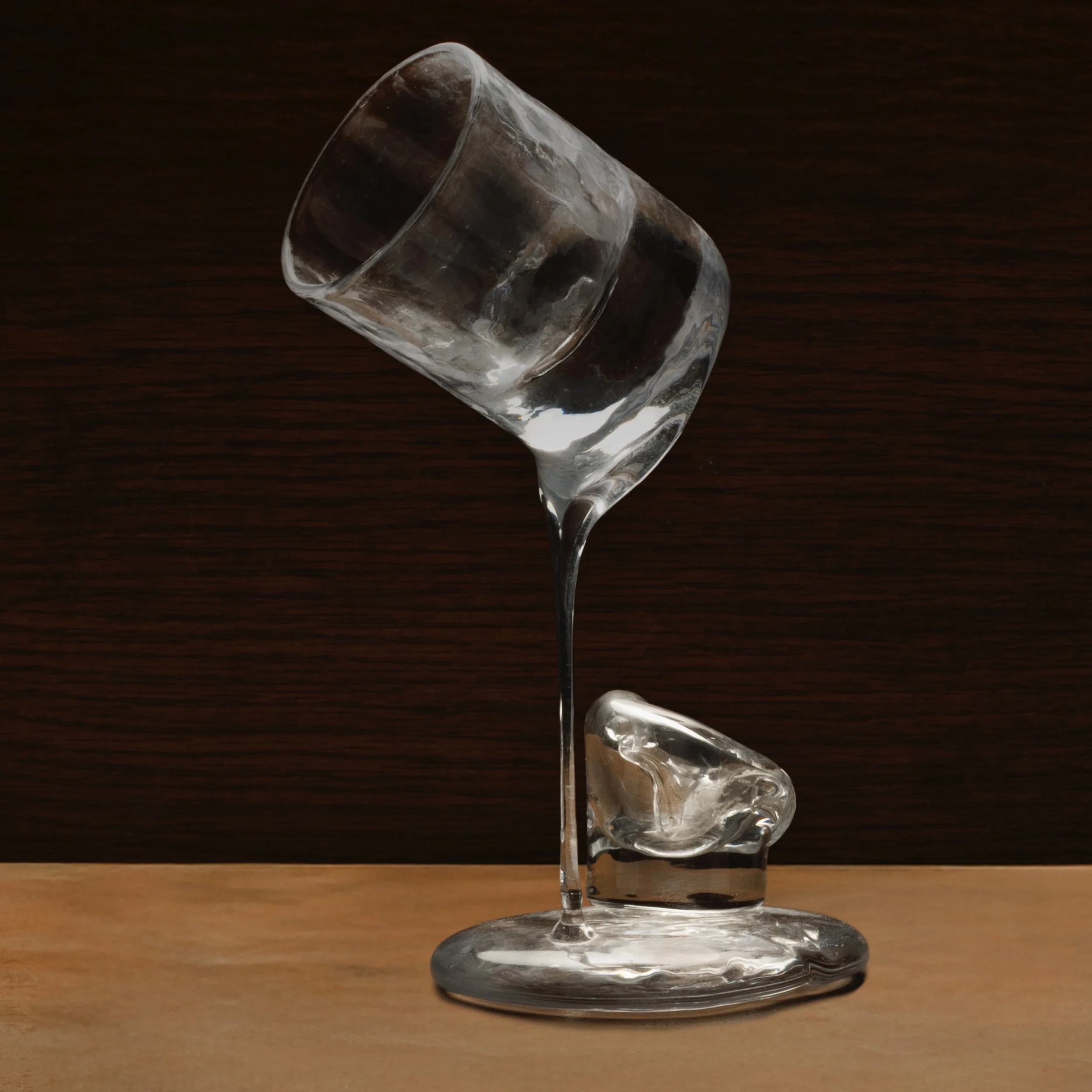
What Dombey calls “popping bubbles” is a technique Ben came up with because the old way wasn’t possible anymore.
What’s one unique thing about your work process?
I had a nasty shoulder injury from a bike accident in 2019, and I couldn’t use my right arm. So all of the traditional glassblowing methods I’d been practicing no longer worked. I don’t know if I’d call it stubbornness or stoicism, but I knew I’d have to come up with a new way to blow glass and work with one arm.
I call it “popping bubbles.” A large glass bubble always needs a hole in it, or the air inside will create a vacuum and implode. So I lower a very hot bubble of glass into a mold and then use a torch to superheat a pinpoint so I can burst through the glass with one heavy blow. The part where the constriction is, instead of being cooled and literally broken free, leaving an opening, is still very hot, and I’m able to cut it free with shears. This results in no hole left behind.
People from around the world approach you with their ideas. Is there one project that has been particularly meaningful to you?
A Marine asked me to make an anatomical human heart for a sculpture he was making around this image that had been negatively burned into his mind. It was the first casualty—the first body—he saw overseas.
To make the heart, I researched lamb hearts. They’re similar to human hearts in their structure and function. Constructing the heart was a cool challenge, and then to see him get really excited about it was something else. He said making the sculpture helped him free that image from his mind.
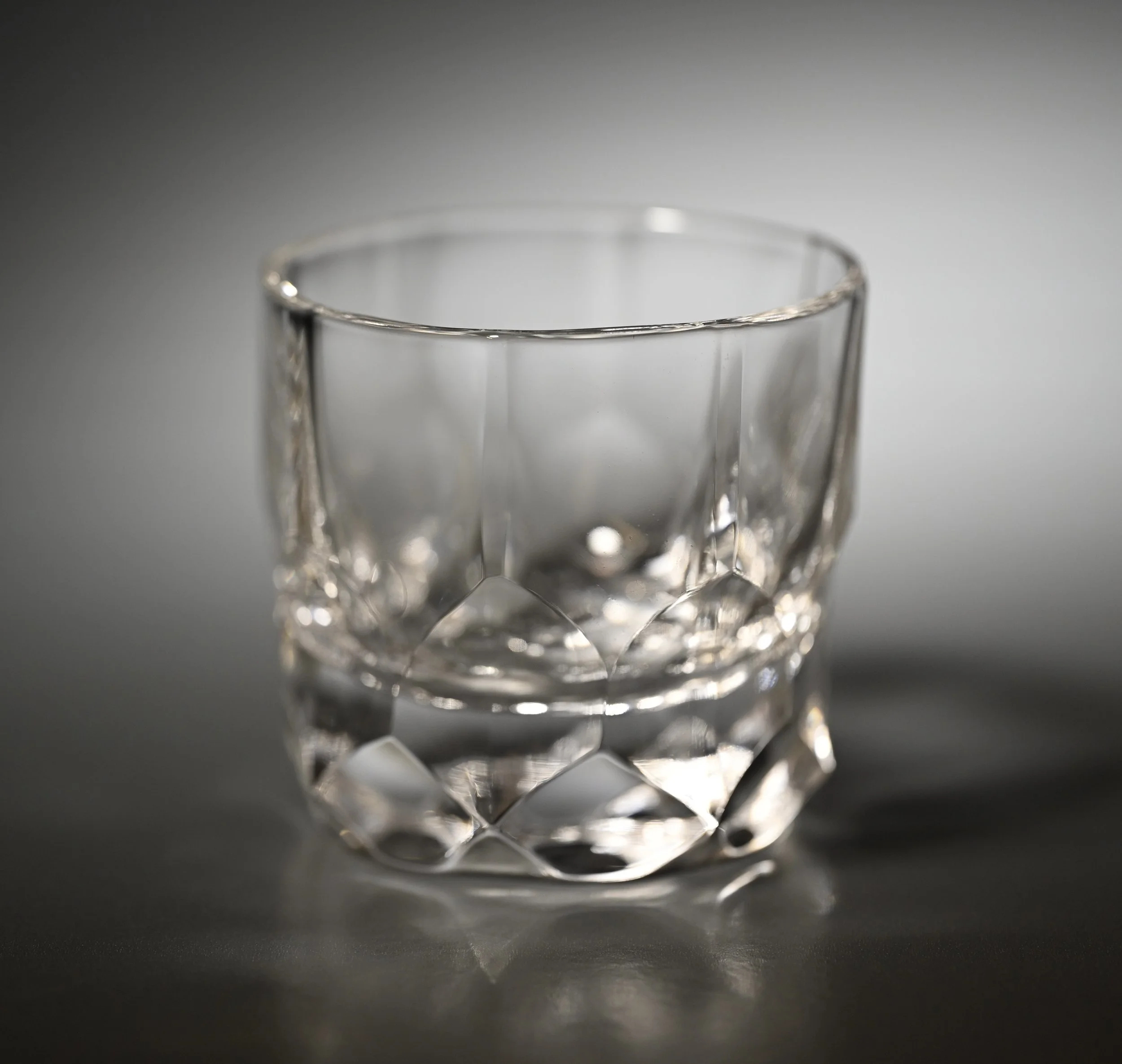
For a recent client project, an alcohol brand commissioned a glass inspired by an AI-generated design — complete with a custom octagonal mold for the molten form. Once blown, the piece was hand-faceted like a diamond, but with a twist: every facet is concave instead of flat.
How do you spend your mornings?
Watching my newborn, Bensson — my wife, Allyson, chose his name. Ideally, I’ll have a scoop of raw honey and do twenty minutes of tai chi. As I get older, I want to be sure my body is moving well. Then I make breakfast and coffee. Recently, I’ve been using a siphon coffee maker, and I’m hoping to make some of my own in the near future.
Then I go into the studio and start cranking away on whiskey glasses. Most of the sculptural stuff happens on the weekends or in the evenings, when I’m able to escape and get a little personal time in the shop.
What do you wear to work?
It’s hot, so closed-toe shoes, athletic shorts, and cotton T-shirts that get burned every now and then. It’s a physical process, and I dress for that — I work out my stress in the shop. Alpaca and bamboo are my recent favorite fabric materials, especially for base layers.
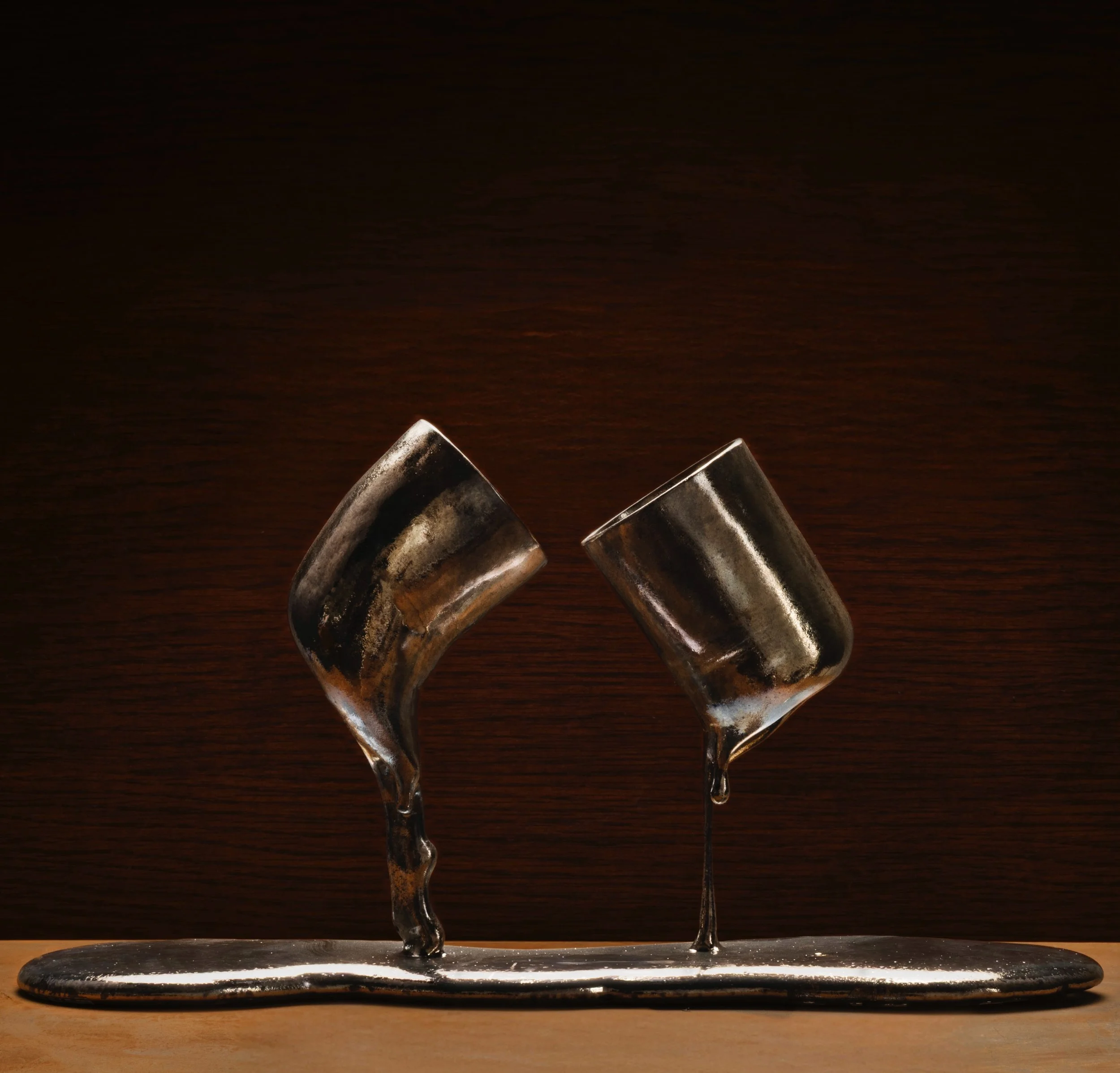
To Ben, glass is a constantly moving entity that inspires flexibility in his work as well as in life.
How do you structure your workday?
There are emails, glasses to ship, metalwork, and coldwork. Glass equipment runs so hot that the glass often self-destructs. Sometimes I’m up all night fixing something. It’s the part of the job I never get compensated for.
Glass is different from most materials. It’s elusive and fluid, then hard and brittle. You can’t pin it down; you can’t get a square to it. It’s this constantly moving critter.
How do you and your wife run the business together?
Wow, I am so lucky to have Allyson. Before she even officially worked for the business, she helped solve the problems I hadn’t known I had. I've pretty much worked for myself my whole career, and her background is in managing digital projects. That has been helpful in better structuring the business. She’s encouraged me to discover what my greatest skills are, and that has really enabled us to work together.
Allyson took care of all of the government paperwork when the NSA ordered glasses from us. She plans our business trips. She made it so anyone can book classes and hands-on molten glass experiences on our website so I can share my passion for glass with the community.
What are your playlist favorites?
Ayla Nereo makes the most soothing, peaceful music. I also love the Eels and the Beatles.
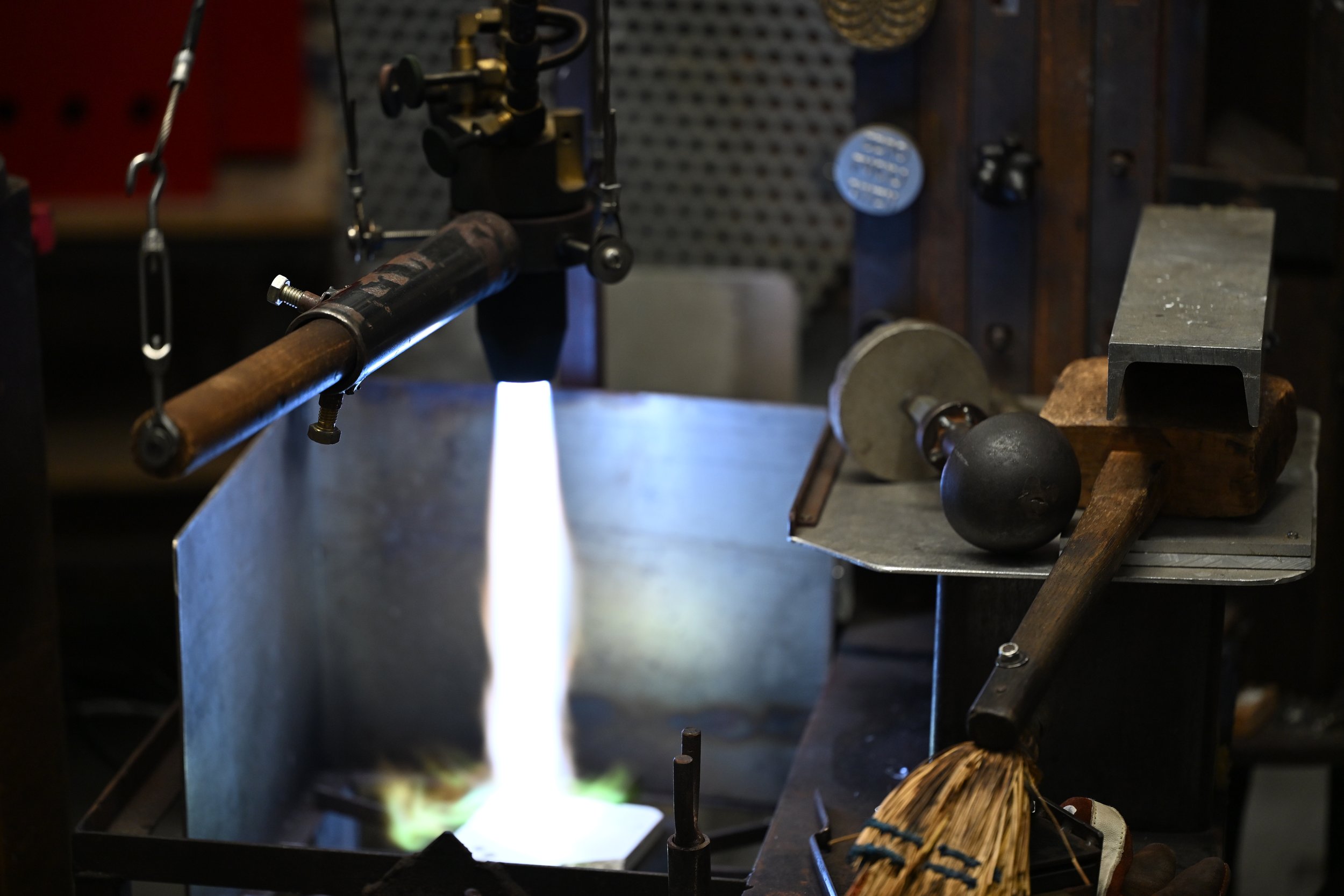
Visitors in New Orleans are welcome to make glass with Ben in his shop.
What are your tools of the trade?
Mostly traditional glassblowing tools but there have been lots of modifications. I use extra-long diamond shears to cut a glass free and immediately load it into the kiln, special steel molds for the glasses, and a jig to help aim the molten bubble perfectly inside. The hot plates are 1200 degrees, and they flatten the base of glasses with heat and a modified CNC to machine the lips of the glasses to precise heights.
I also built an oven to make sculptures in it. I developed my own oil for my tools — lots of people use WD-40 to oil their tools, but it’s not good for the skin, so I created my own. A friend of mine makes his own tools for glassblowers. So I’m fond of every tool and piece of equipment in my shop, either because I made it or I know who made it.
Describe your dream studio.
I have many:
A large hot shop with lots of kilns and torches.
Flame working studio with a lathe.
Welding or fabrication studio with laser engraver.
Machine shop with CNC machines and a metal lathe.
Apartment for visiting artists/ collaborators.
My shop is set up for smaller-scale lamp working and larger, mouth-blown work, so I’m pretty close to it. I’d love for it to be bigger so I could have resident artists come and facilitate other people’s awesome dreams and desires with glass. I enjoy collaborating.
Do you have a mantra?
Care, learn, grow, refine, repeat.

Join more than 50 leaders from top organizations, including Amazon, Netflix, Meta, Shake Shack, NASA, Hearst, Roblox, United Airlines, and Instacart.