How Illustrator Marianna Tomaselli Draws for Marvel, the NYT, the Olympics, and More
Marianna Tomaselli’s illustrations span cocktails at dusk in Portofino, car races in Nice, and ski destinations in the Swiss Alps. Images c/o Tomaselli.
The Most Useful Peer Network for Creative Professionals
Creative Factory is a private, highly-vetted leadership community for brand leaders. Join peers from Netflix, Meta, Amazon, Roblox, and more.
Illustrator Marianna Tomaselli made pasta for the Milano Cortina Olympic Games, and it just won the Silver Lion at Cannes. Technically, she designed the shape of the pasta to emulate the style of the Olympic rings, along with special-edition packaging depicting the competition’s events across various Italian landscapes.
Yet her work travels much further than Italy, where she was born and raised. She’s illustrated everything from movie posters for Marvel and cover illustrations for The New York Times to portraits of Queen Elizabeth and tennis icon Nicola Pietrangeli.
Her specialty is travel: capturing cocktails in Portofino at dusk, car races in Nice, and ski destinations in the Swiss Alps.
“I love to travel. When I go around the world, the sunset always catches my eye. It evokes something in me — memories of my childhood. And that brings me a bit of melancholy,” she said. “It’s my personality.”
Here, Tomaselli unpacks how she works, including why she starts every project by drafting francobolli, her dream of working in a Moroccan-style courtyard studio, and how she navigates a complicated relationship with her own work.
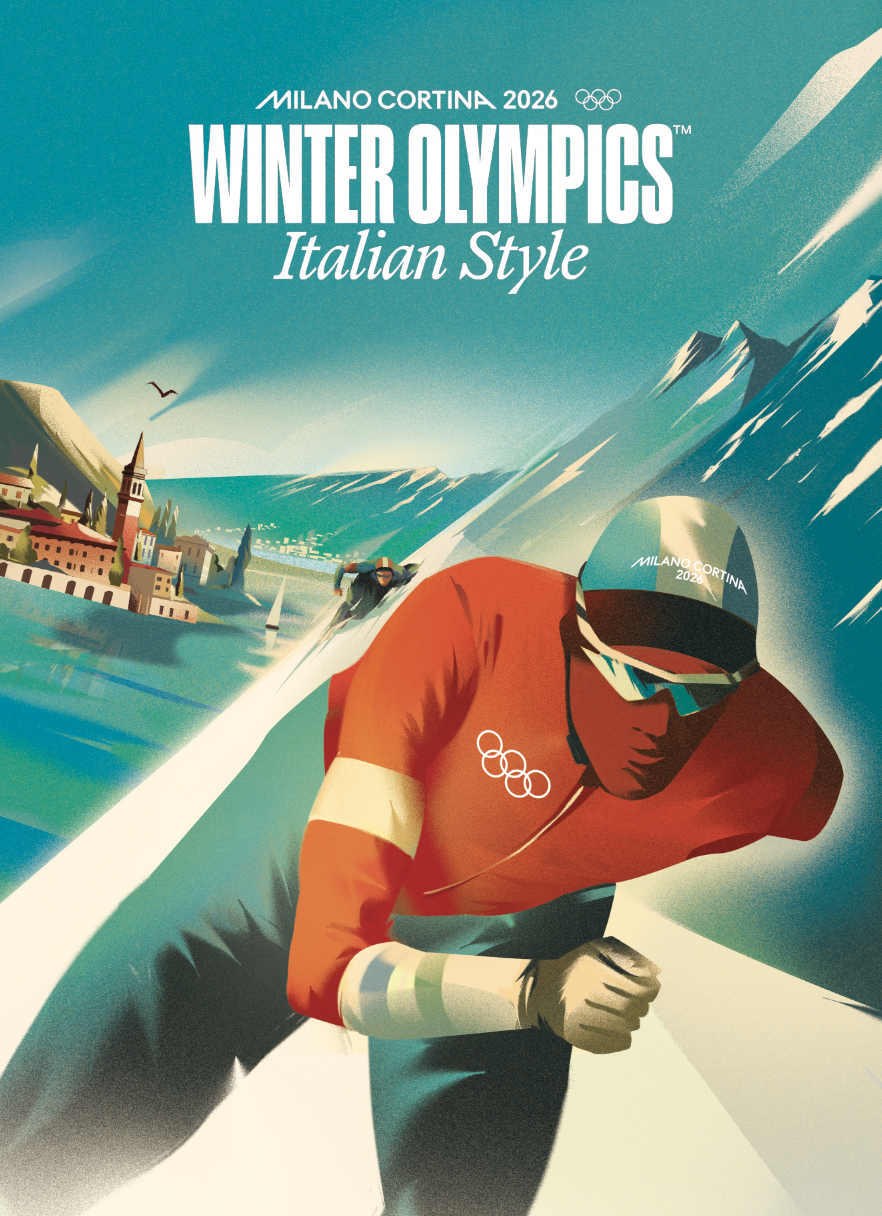
Like the Olympic athletes, Tomaselli’s pasta designs stick the landing.
How do you spend your mornings?
I have three children, one of whom was born at the end of April, so my whole life is based around them. Being a mother adds a lot of detail and responsibility to my life. So it’s something that’s in my work, too.
We live in a creative neighborhood in Milan, so before my third child, I worked in a creative coworking studio. In my type of work, you have some calls, but there’s no real contact with others, which is difficult because I’m a social person. The coworking space was great for this. In fact, the only thing I didn’t like was that it was dark and just men.
Describe your dream studio.
Full of light, plants, and water, like a Moroccan-style courtyard. I could have other creatives working there, but I’d like to have my own room. I’m very sensitive to other people’s noises.
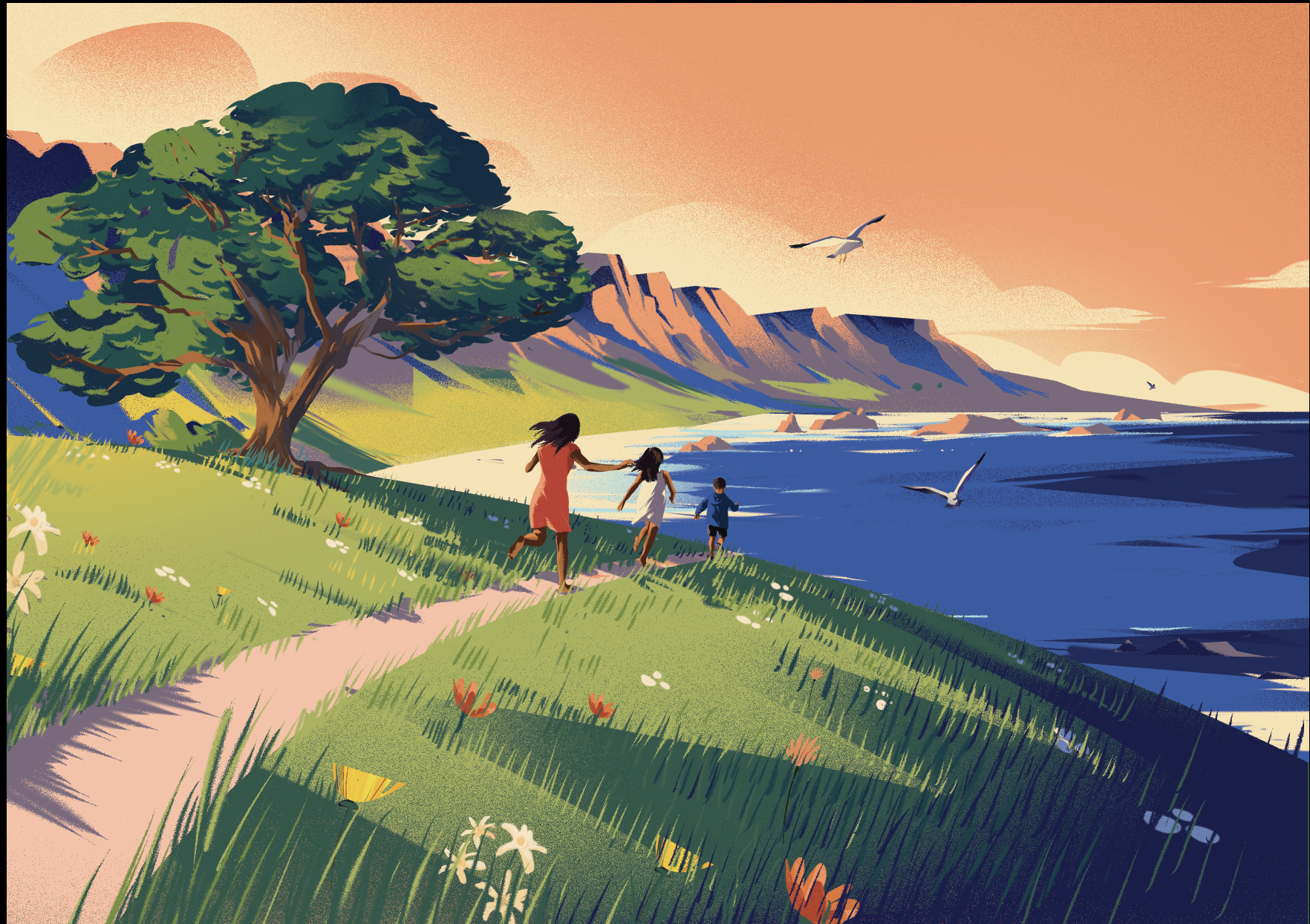
Some of Tomaselli's most powerful work isn't drawn for a brand, like this illustration for the #3RN campaign, a global initiative imagining a world where childhood is free from violence.
How do you structure your work day?
Right now, with young kids, everything is random, so it’s easier to talk about the past. Usually, it’s super hard for me to start in the morning, and I have to force myself to. I’m supposed to start at 9:30, but I’m very lazy in the morning, so I usually start operating around 11. If I didn’t have kids, I’d work in the afternoons and evenings, as I’m more creative and relaxed at night. I take a lunch break around one or two, though sometimes I don’t eat lunch until much later. Once I start something, I prefer to finish it.
What are your playlist favorites?
I listen to everything, including true crime, the news, and a program in Italy called Un giorno in pretura, which covers legal proceedings. I’m not sure why, but it’s something that relaxes me. Except that whenever I hear a noise outside, I immediately think it’s a murder.
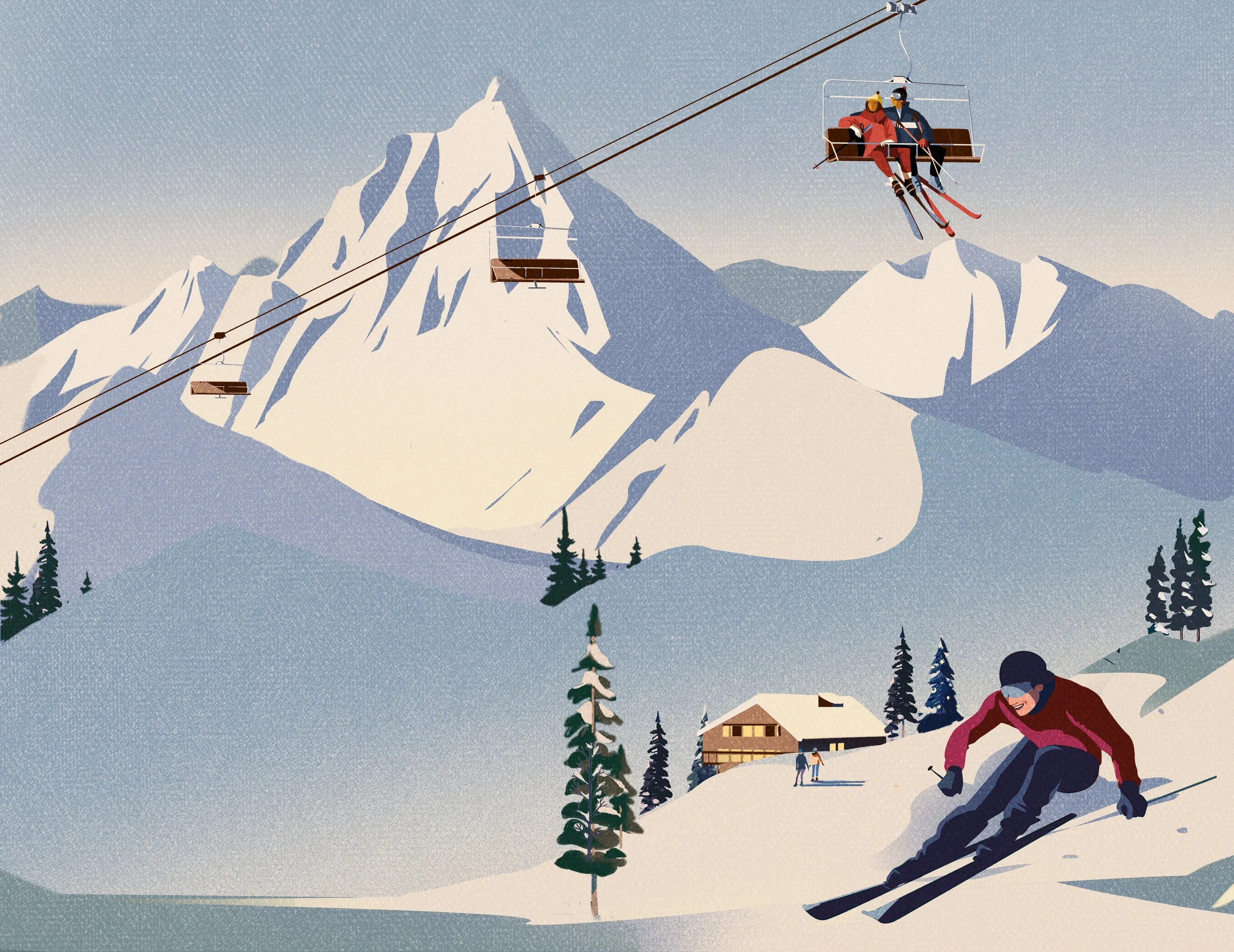
We're guessing Valtur ski resort in the Aosta Valley is almost as gorgeous in person as Tomaselli makes it look.
What are your tools of the trade?
Mostly, I work in Photoshop with a huge screen, which is helpful for client work. Otherwise, I use the iPad. I used to start by hand-drawing, but right now I’m faster with technology. On the iPad, the practice is basically the same, but it’s easier to erase when you make a mistake.
Sometimes I do tiny hand-drawn thumbnails to work out the space and get the composition right. We call them francobolli in Italian. I’ll do two to four small ones and see which composition works best. Then I usually do this five times.

Corona was the first-ever beer partner for the Olympics. It went swimmingly.
Are there any projects you’ve worked on that you hope to revisit?
When I graduated, I visited a psychiatric hospital in Foggia, in the south of Italy. I spent a week interviewing patients for my thesis, and I wrote and illustrated a book using their interviews. It was an amazing experience. I loved capturing real experiences. That’s something that’s important for me to talk about in my work.
Going back to my love of true crime, I originally wanted to go to a criminal psychiatric hospital, but it was impossible to get into. They had very strange rules.
What’s your relationship like with your own work?
I don’t have a single poster or anything in my house because I hate seeing my work. When I see something of mine, I’m embarrassed by it. I did a big mural for the city, and I have to turn my head when I pass it. I’m working on it, and I’m going to see a psychiatrist. At the end of the day, though, I tell myself I’ve done a good job.
What is one to-do list item that keeps you up at night?
My life is full of to-do lists. Right now, I have thousands of projects to deliver, book covers to illustrate, parties to attend at my kids’ school. My husband and I share a calendar, and I color-code everything: red is a work in progress, purple is for projects where I’m waiting on payment, and the ones without color are paid, closed, and delivered.
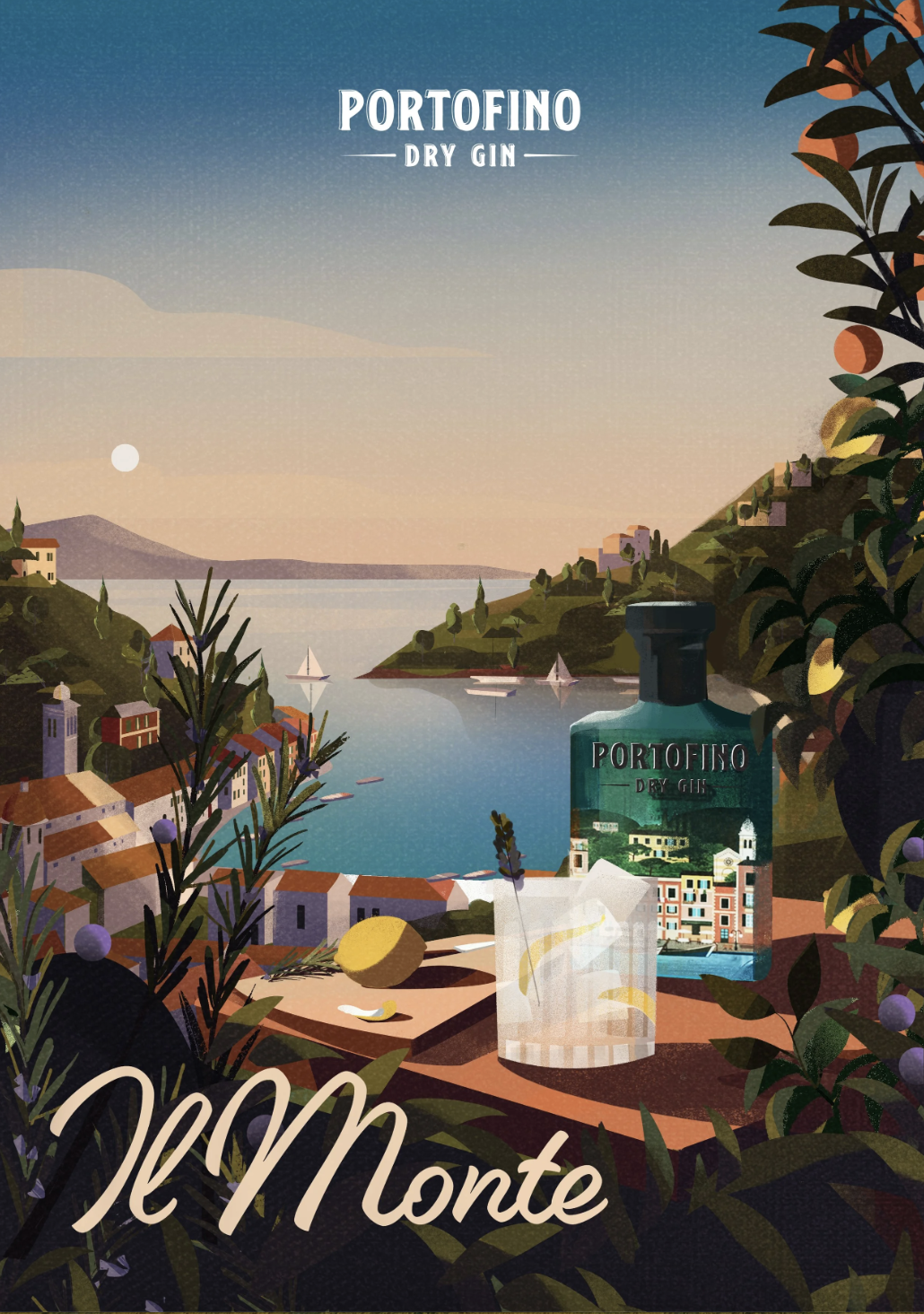
This vintage-style advertising poster for Portofino Dry Gin makes me want a drink.
What’s your favorite project you’ve ever worked on?
Milano Cortina was one of the best. It was very hard to do because the timelines and the client were tough, but we made it, and I’m very proud of it.
Also, I really liked Portofino Drygin, which was the opposite. The client was low-budget. They just said, “The theme is Piazzetta, Mare, e Monte (Little Square, Sea, and Mountain). You can do whatever you want.” So we had a lot of freedom, and it shows in the illustrations.

Join more than 50 leaders from top organizations, including Amazon, Netflix, Meta, Shake Shack, NASA, Hearst, Roblox, United Airlines, and Instacart.