
John Hoke: Nike’s Design Chief is a Creative Shark
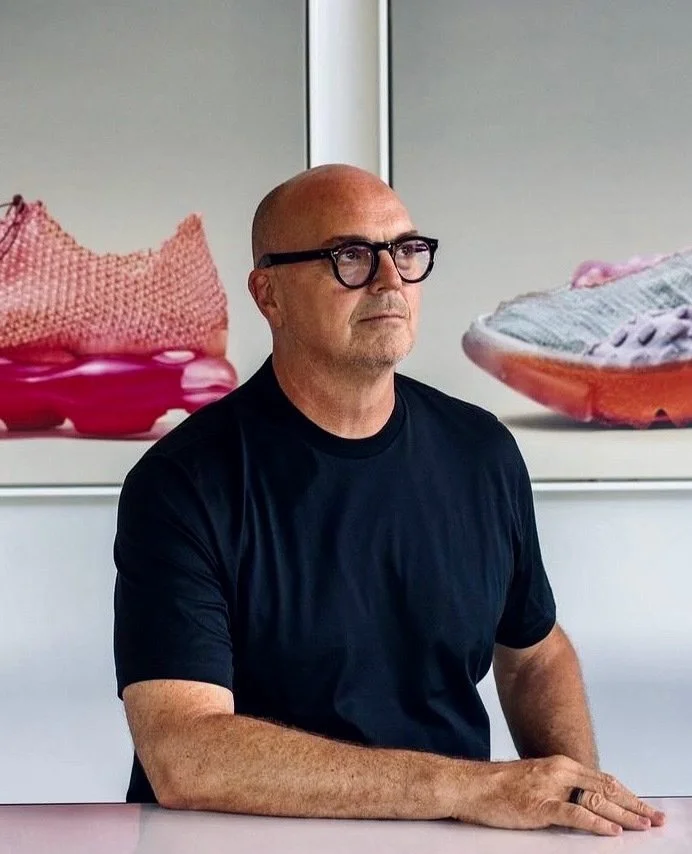
John Hoke, Nike’s longtime Chief Design Officer, describes himself as a creative shark: he’s only breathing when he’s moving. Images c/o Hoke.
Invest In Your Creative Career
Creative Factory is a private, highly-vetted leadership community for brand leaders. Join peers from Netflix, Meta, Amazon, Roblox, and more.

When John Hoke stepped away from a thirty-year career at Nike, you might expect a traditional exit interview. But a builder like Hoke doesn’t really exit – he simply flips the page to the next chapter and keeps designing great stuff.
Hoke describes himself as a creative shark, someone who only breathes when he is actively making things. Following his legendary run shaping the visual identity and innovation engine of Nike as its Chief Design Officer, he is now channeling his imagination into a book project on the power of wonder alongside board roles at Target and MillerKnoll.
In this reflective conversation from his home in Portland, Oregon, Hoke peels back the layers on what it takes to design true desire, scale a visual language across thousands of creators, and find inspiration in the unexpected.
It’s a grounded affirmation of human intuition in a data-driven world, and it reminds us that the true purpose of design is not just to build beautiful objects, but to create beautiful feelings.
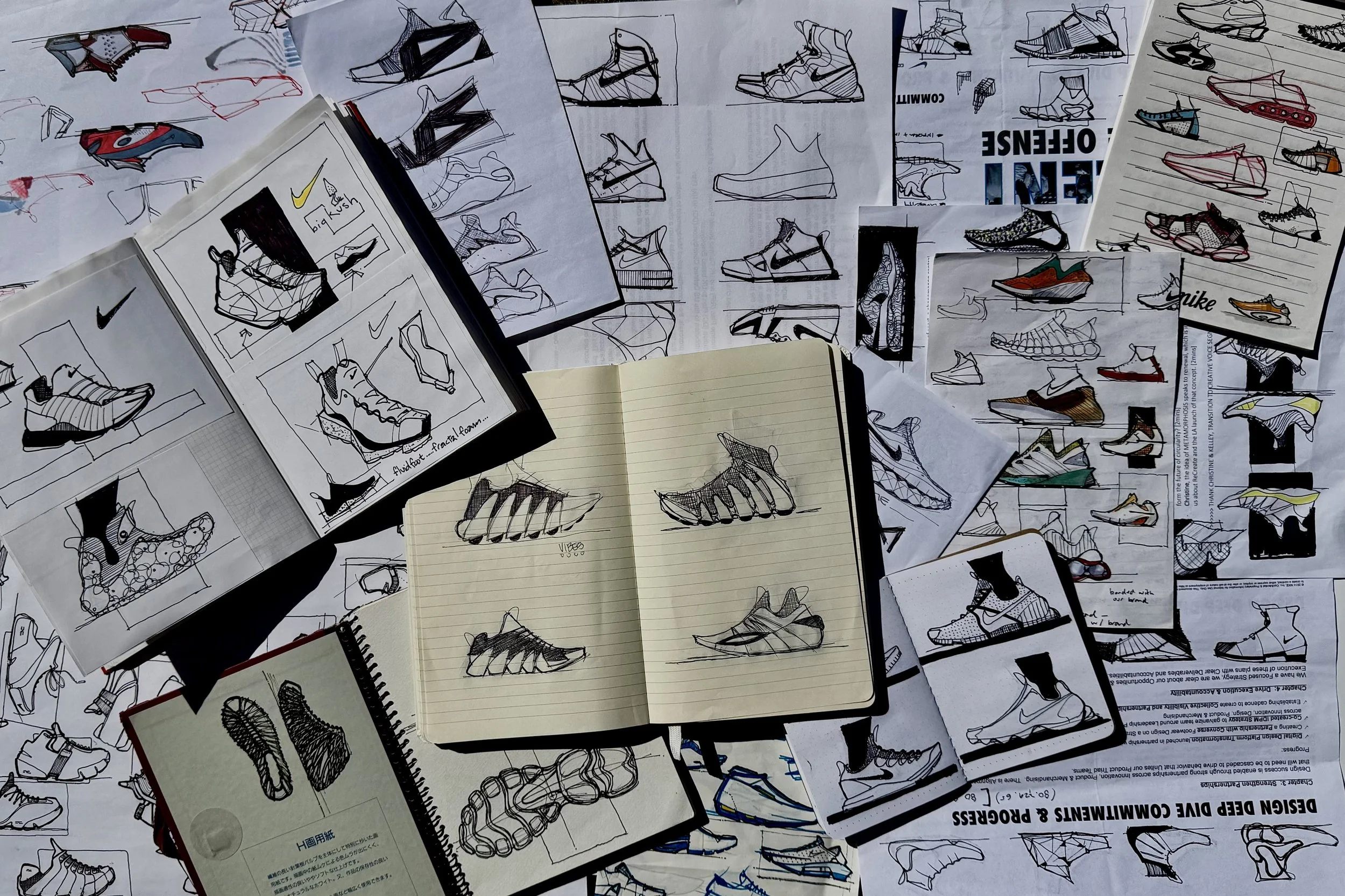
Hoke is always sketching, filling his notebooks with shoes designed from every angle.
Pitching Nike as a 12-Year-Old
Long before you officially joined Nike, you pitched the company on a shoe design when you were just 12 years old. Tell us that story.
When I think about how I became a designer, eventually going to work for Nike and building the career that I just had felt somewhat like destiny.
As a kid, I faced challenges in school because I am dyslexic. Growing up in the ’70s and ’80s, an academic environment was difficult for someone with dyslexia, but I had two important bookends that helped me navigate the world and gave me confidence. First, I loved to draw; I was an artist from the jump. Second, I was a natural athlete and competed on the track team. In the evenings, I would obsessively draw sneakers in my sketchbooks.
One summer day, I was floating on a raft in my local pool, daydreaming about why this raft kept me buoyant and how it cushioned the undulation of the water. I started thinking to myself, I wonder if I could shrink the raft and fix it under my foot to become a cushioning system as I run. It would help cushion the blow as I hit the ground, and then transition near my forefoot to give an energy release and boost as I toed off.
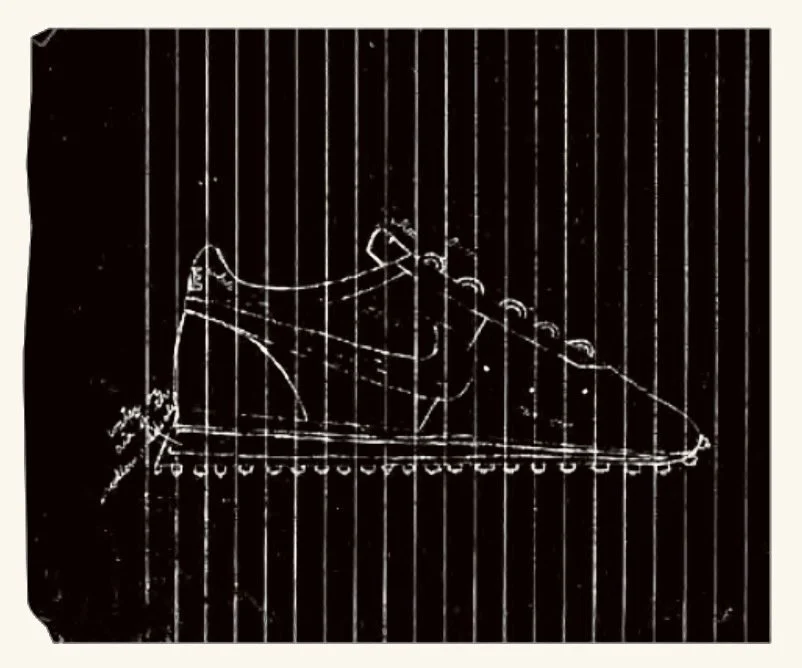
I went home that night and created a drawing. My father was an engineer, and he thought it was an interesting idea. He asked what I wanted to do with it, and I promptly said I wanted to send it to Nike. I went to my local library, looked up Nike’s owner and president of Nike, Phil Knight, and wrote him a letter.
This was a grade-school, handwritten note on lined school paper with a childish but fairly elaborate drawing of a sneaker, including cross-sections of how I saw the air bag working. I dropped it in the mail and thought nothing of it. Roughly a month later, a letter showed up in my mailbox accompanied by a pair of shoes and a T-shirt. The letter said, in effect: Cool idea. We love hearing from folks like you. We’re working on something like that called Nike Air, and, when you get old enough, you should come work for us.
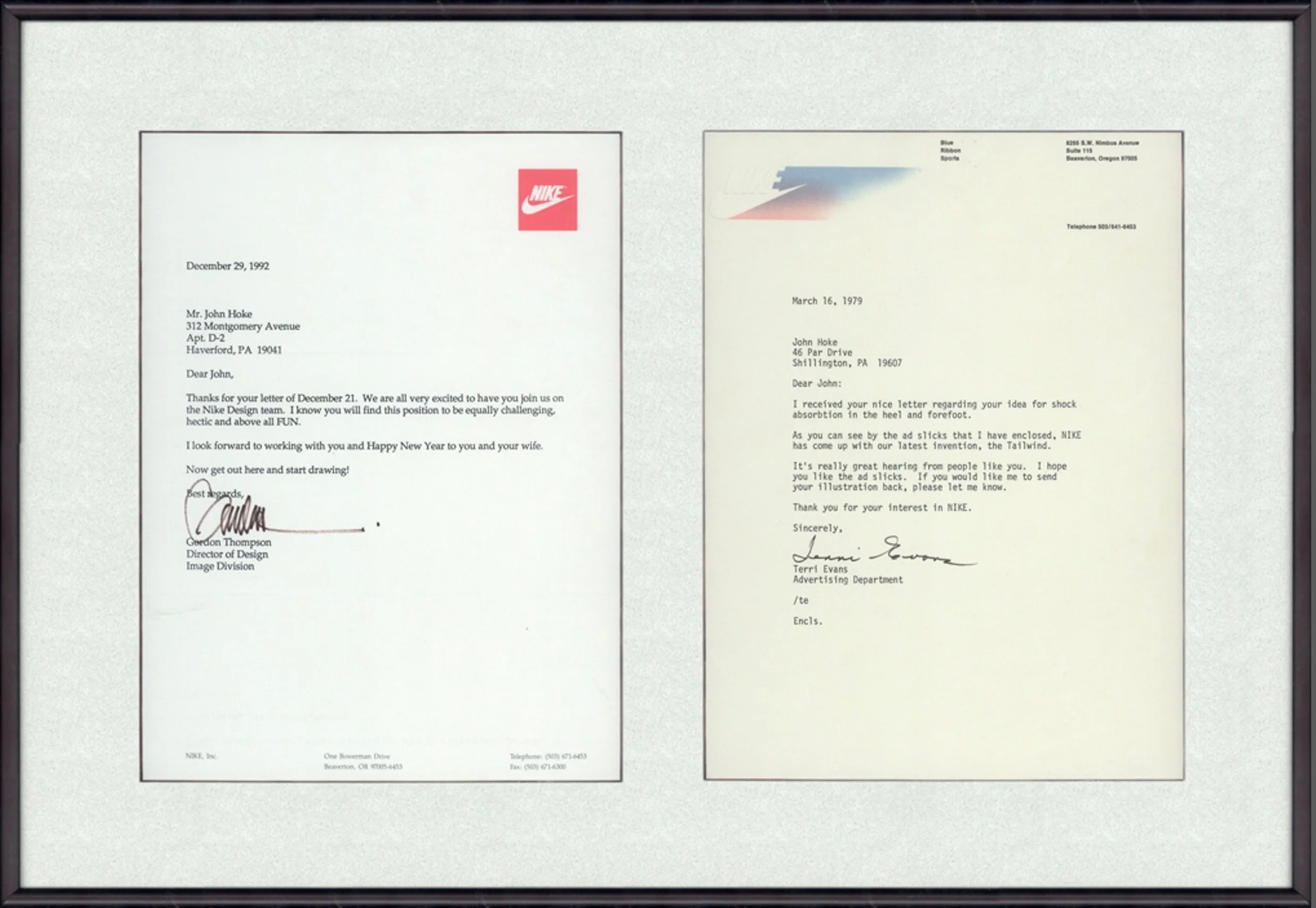
This early letter from Nike was Hoke’s coupon to work for them, which he later came to redeem in 1979.
How did you actually translate that childhood promise into a career at the company?
I went through high school in Pennsylvania, got into architecture school at Penn State on artistic merit, graduated, worked for Michael Graves, and went back to graduate school at UPenn. While teaching an undergraduate class on health imagery and architecture, I reached out to Nike to get a set of slides on a new store concept called Nike Town to use in a lecture. They sent me the slides, which restarted a correspondence.
I turned that correspondence, along with a lot of hustle, into an interview. I ended up sitting in front of several design leaders, including now-chairman Mark Parker. At the end of reviewing my physical portfolio, I pulled out that childhood letter and said, “I’m here today to redeem the coupon that you sent me in 1979 to come work for you.”
That was enough of a turn to get my foot in the door as a Designer II. I worked my way up from essentially entry level to eventually spending 20 years in the C-suite. For me, the lesson was about breaking down the barriers of your own ideas so your best concepts get out into the universe for someone to evaluate them.
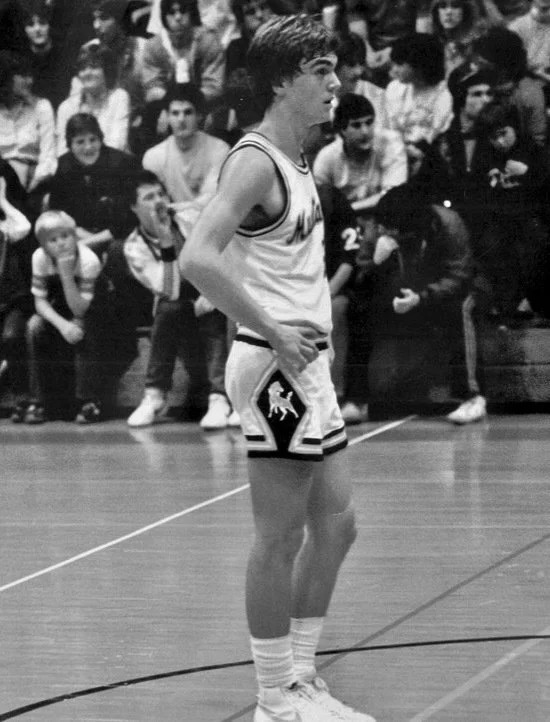
Hoke was an athlete from an early age, which made him a natural fit to work at Nike. (And here’s photo proof that he was a fan, even in high school.)
Designing Desire
You stepped into the role of Nike’s first Chief Design Officer in 2010. What was your approach to managing a global team of over a thousand creatives?
When I took over that remit, it covered nearly every creative discipline you can think of, from copywriting and cinematography to industrial design, architecture, and multimedia. My goal wasn’t to micromanage their individual output, but to establish a shared North Star. I called this ethos Modern Sport Design.
Every word mattered. “Modern” meant always pushing toward a progressive aesthetic where form follows function. “Sport” was our arena of supporting athletes and breaking down performance barriers. And “Design” was the ultimate footprint of the company. I’ve always argued that Nike is fundamentally a design company driven by curiosity and wonder.
During my tenure, the company grew exponentially, but my personal transition was psychological. They used to quote me at Nike as saying that as a young man, the company hired me as a design talent to make individual lightning strikes. But as I moved into executive leadership, I learned that individual lightning strikes weren’t enough for a massive enterprise.
My job transitioned into creating the conditions for lightning. It became about designing the environment that allowed thousands of other people to be brilliant, simply by upholding a crystal-clear standard of what excellent design was and wasn’t.
Hoke taught every designer a concept he called Complex Simplicity: to synthesize the incredibly complex into the very simple, allowing the depth of the design to reveal itself through layers of hierarchy.
Nike has always allowed for individual creativity, but did you get everyone to express themselves while moving in the same direction?
I hammered home the philosophy “freedom in a framework.” Creative people want autonomy, but a store filled with disparate products lacks a point of view and consumers shop points of view. The initial reaction from designers to any framework is resistance. But as the work becomes successful, those same designers become the fiercest ambassadors of that framework.
As your design and leadership philosophy has evolved over the decades, what is one long-held belief you still stand by?
We are in the business of designing desire. It isn’t about driving consumption; it’s about attracting attention and enduring a commitment of quality that builds trust and joy between a brand and a consumer.
Ten feet away from the product wall, your job is to Attract consumers and grab their attention. As they move closer, the design must Engage them, drawing them into the idea. Finally, that leads to Capture, the moment where the eye, heart, and hand physically grab the item because they are so captivated they have to put it on their body.
Attraction is about editing things away, Engagement is about refining and clarifying the design, and Capturing is about enriching the details that reveal themselves up close.
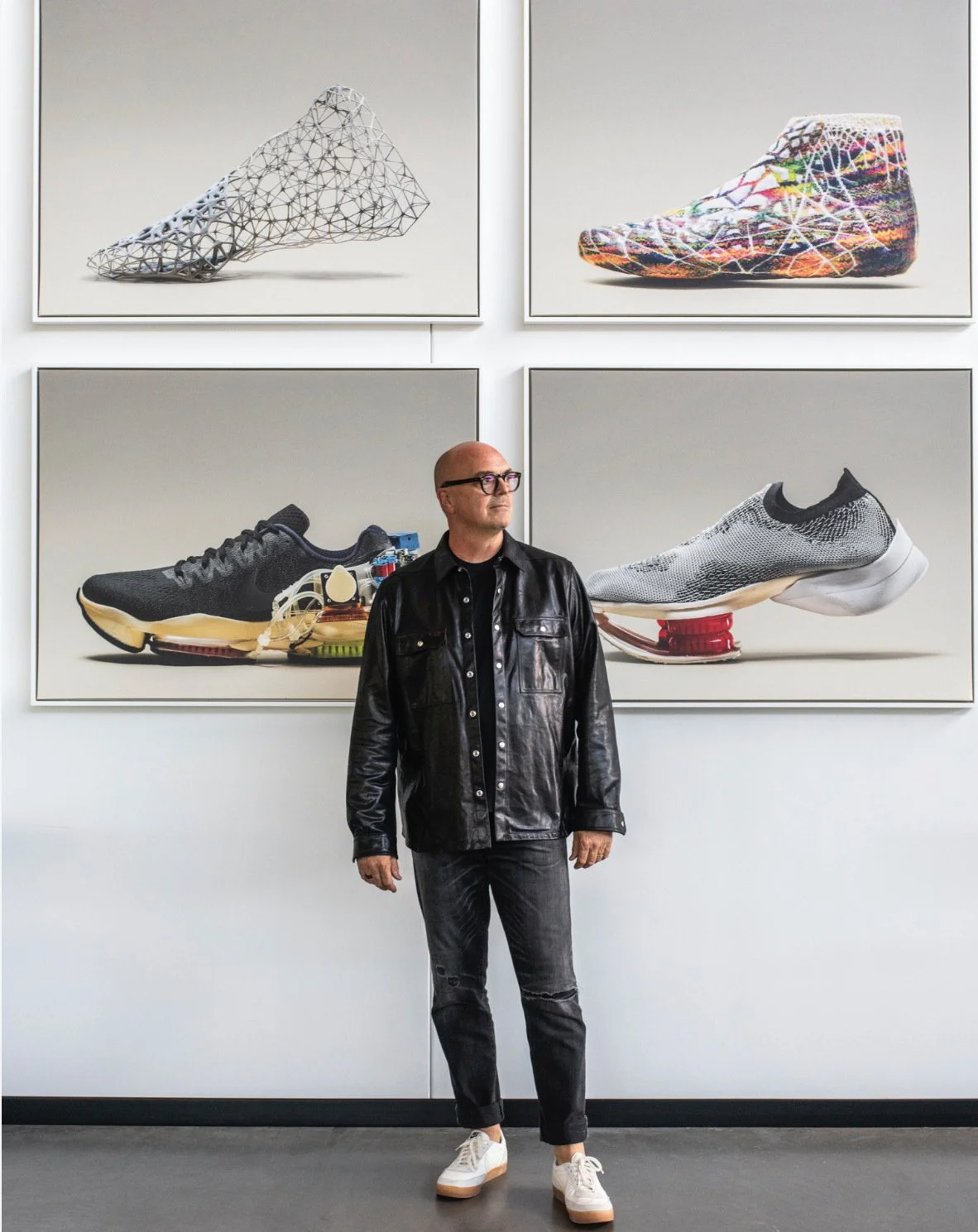
Hoke’s personal transition to executive leadership was psychological. He learned that individual lightning strikes weren’t enough for a massive enterprise—his responsibility was to create the conditions for lightning.
Finding the Creative Edge
How did you encourage your team to find and push past the creative edge?
It started with being in absolute awe of the athletes we worked with and mirroring their desire to break through human limitations. My approach was to lean hard into constraints and refuse to accept them as permanent boundaries. You have to think about an unlimited future and then work your way backward to the problem itself. Then you sit with the problem and marinate long enough that you don’t just settle for your first or second thought.
With projects like the Alphafly or Breaking2, the first ideas did not work. But that wasn’t a failure; it was an invitation to dig deeper.
You have a reputation for pulling inspiration from incredibly unexpected places. Is it true that a fruit basket from your in-laws inspired an Olympic shoe?
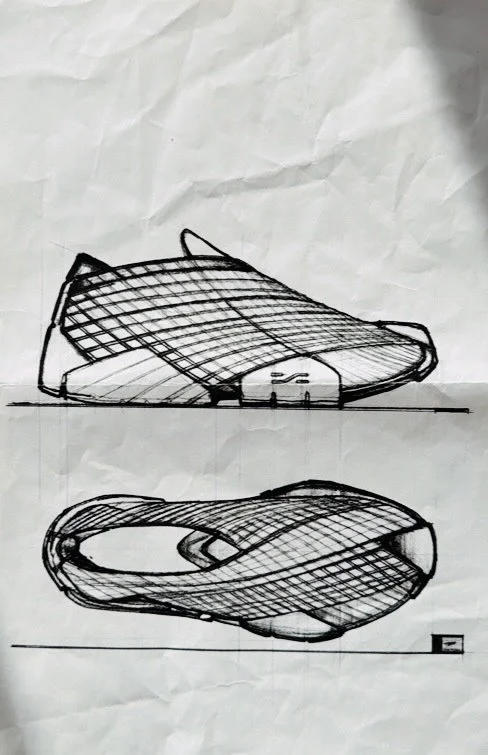
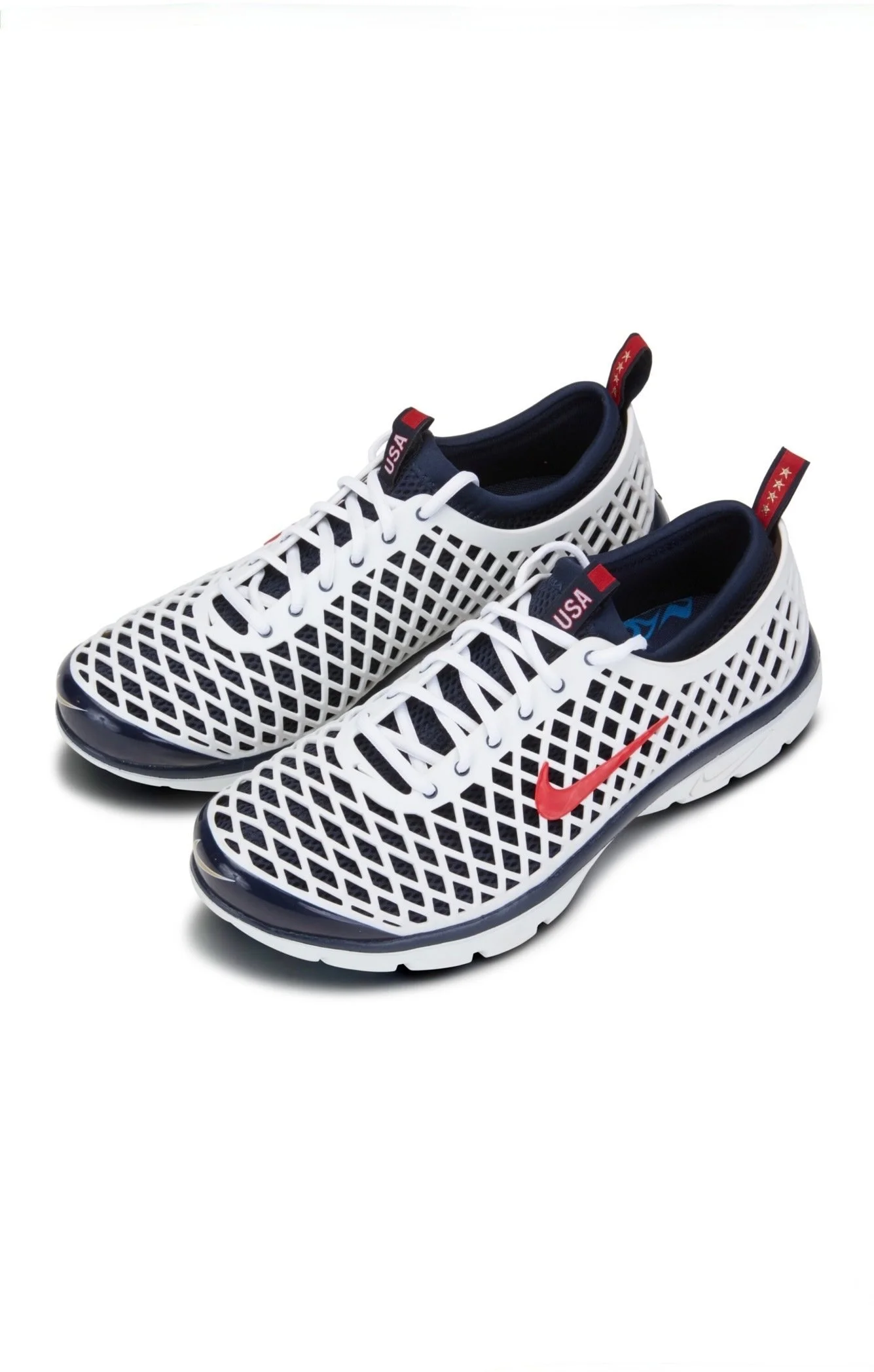
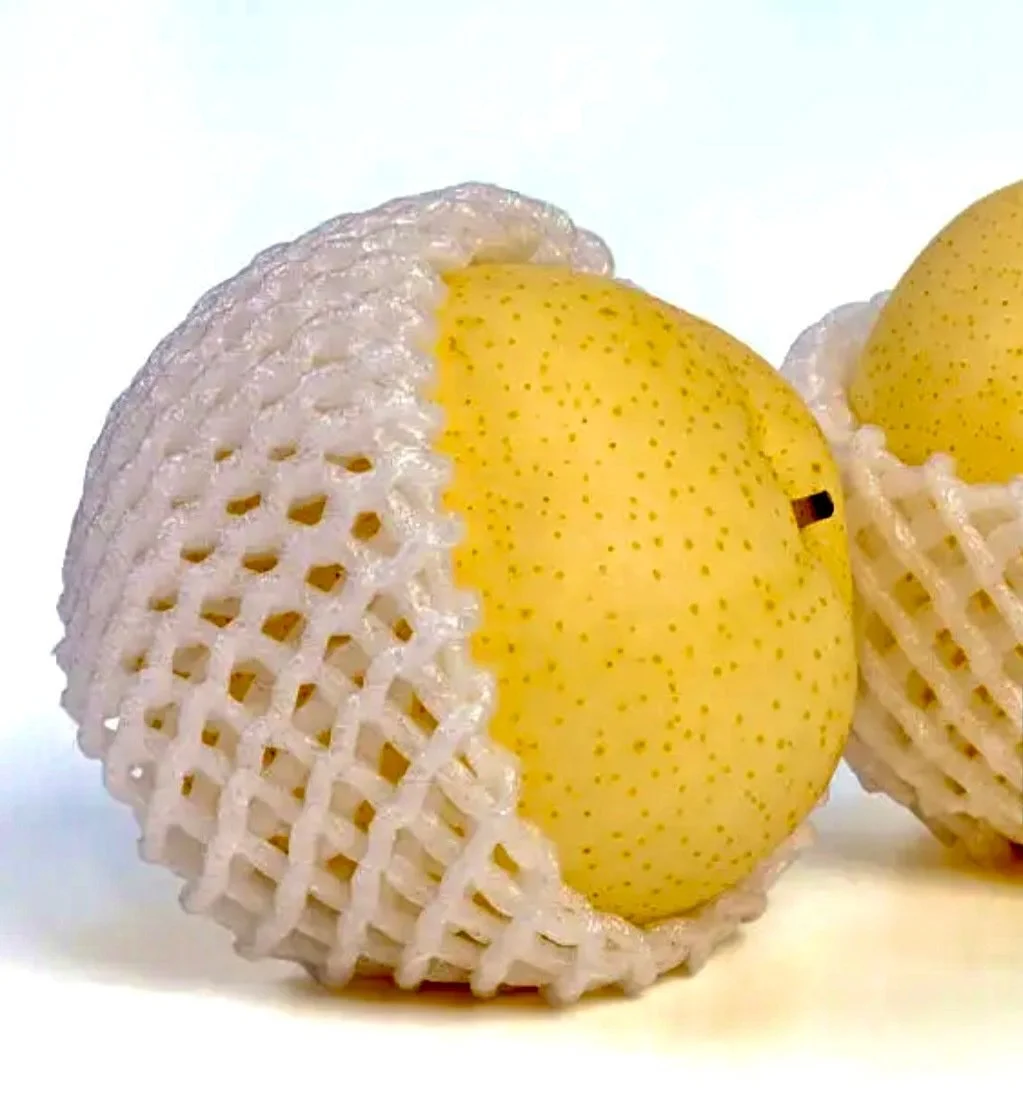
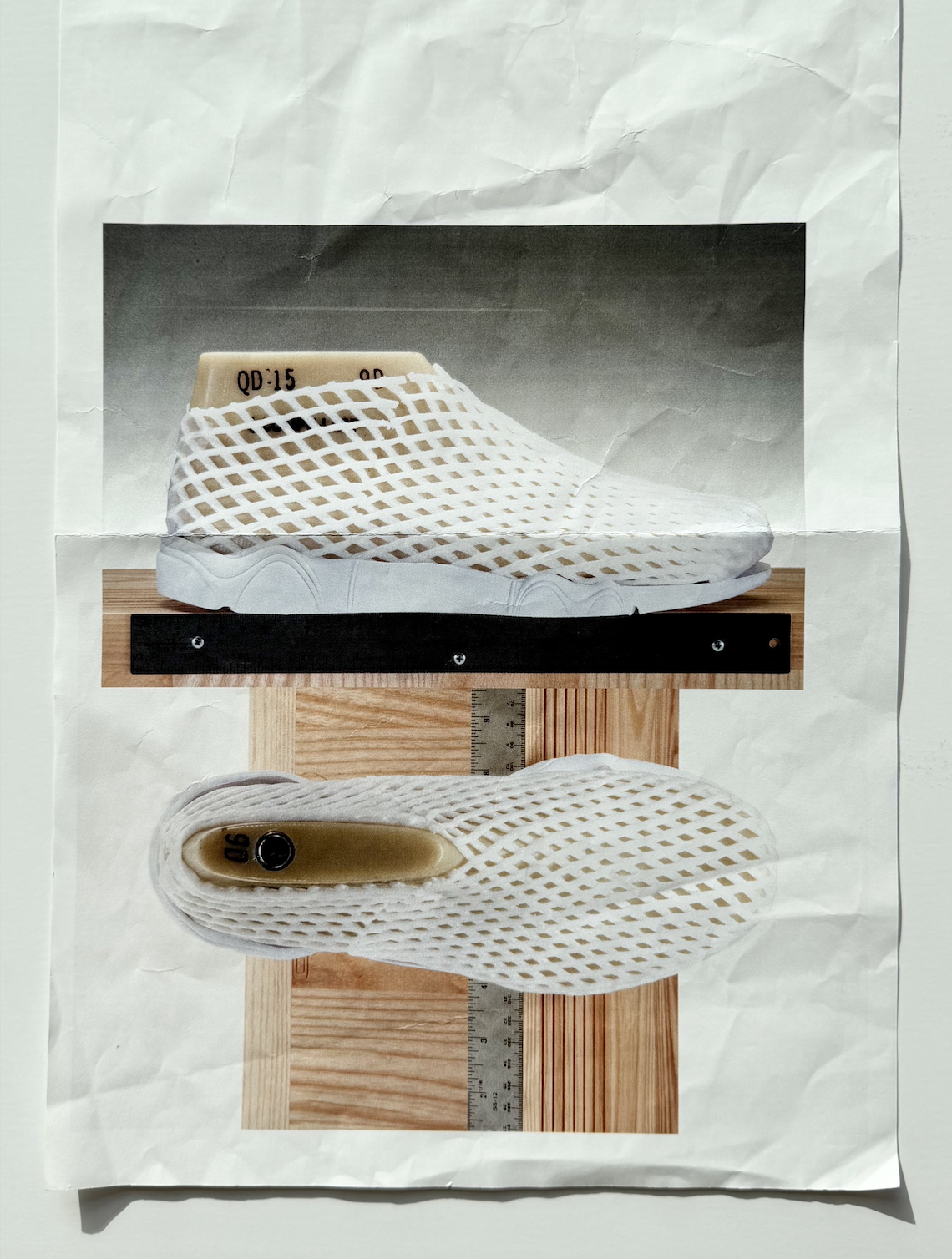
It is true. In 1997, my in-laws sent us a holiday basket of Asian pears. It’s a delicate fruit that comes wrapped in a cross-hatched synthetic sleeve to protect the skin from bruising. After we ate dinner, these plastic sleeves were left on the table, and my five-year-old son, who is now a creative director at Nike, started putting them on his arms, elbows, and feet.
I noticed how the cross-hatching pattern was agile and mapped perfectly to the geometry of his body. I grabbed a camera, took photos, and went straight to my drafting table to model how a synthetic armor with a cross-hatch pattern could function on a shoe. 11 years later, that design became the Rejuvenate, which was the medal-stand shoe for LeBron James at the 2008 Beijing Olympics.
The lesson is to keep your eyes open. Inspiration rarely arrives as a fully formed concept; it comes as an abstraction, and your job is to remain open enough to connect the dots.
Was there ever a design element or product that you loved but had to kill?
When you live on the frontier of design, you have to be willing to thoughtfully disrupt yourself, which means accepting a lot of “no’s.” But I always treated a no as a “not yet,” which can turn into a “yes, please.”
When I moved to Converse, the brand lived and died by a single shoe, the Chuck Taylor. I wanted to design a modern Converse sports shoe. We partnered with Ivy League tennis teams to create state-of-the-art tennis shoes using a Nike chassis and a Converse veneer, called the Evo Pro. The design teams and the kids playing in them loved them to death.
However, we ultimately pulled the product because it conflicted with our brand. The core muse of Converse wasn’t the traditional jock; it was the rock-and-roll kid making fun of the jock. Forcing a traditional athletic vector would damage the brand’s identity.
Interestingly enough, about ten years later, the teams came back to us and asked for that exact same tennis shoe design only this time, they put a Nike Swoosh on top. Even the greatest ideas must wait for the right context.
Looking back, what is one “sacred cow” you realized didn’t have the weight you once thought it did?
The historical design equation often completely ignored a product’s end of life, and the classic Bauhaus rule of “form follows function” needed an amendment.
Today, form and function must follow footprint. If we believe that material matters, our job as designers is to design for post-use and think about how we recapture, reclaim, and reuse materials over time.
The Assignment: Create Beautiful Feelings
What impact has dyslexia had on your career, and how have you navigated that?
Being a young boy in the ’70s with dyslexia was challenging, and because my father was in the Navy, we moved constantly. I was in 12 different elementary schools by the time I was in sixth grade, so I had a lack of continuity in my education.
The most vital lesson I ever got from dyslexia was tapping into a sense of empathy. As designers, that is our superpower. We are trying to translate who we are, what we think, and what we believe into an empathetic view of helping someone else. We can make their life less friction-based, and more connected and meaningful.
How lucky are we that we get to turn our innate abilities into joy? Few people can use their given skills to create love. Design exists to make the world better. Full stop.
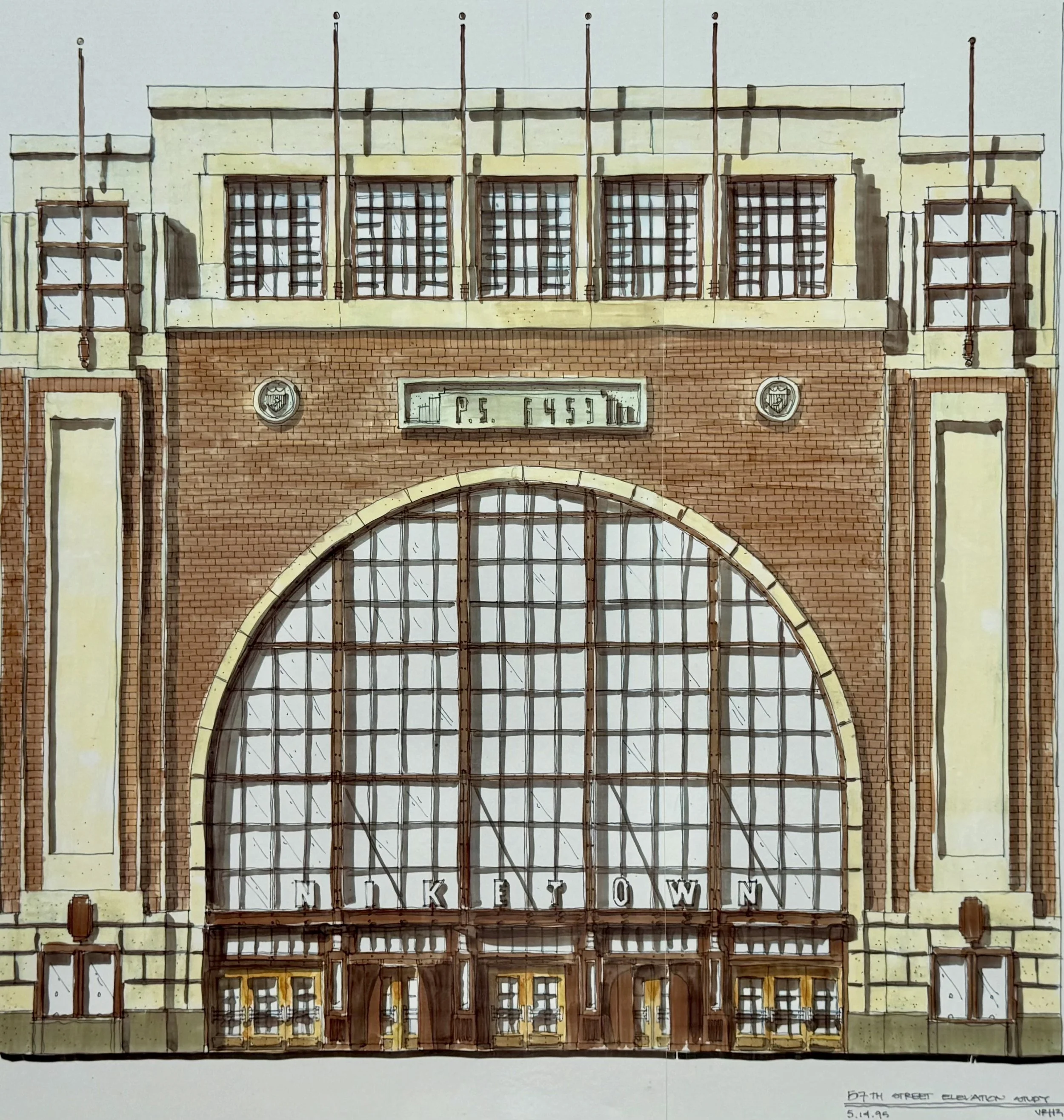
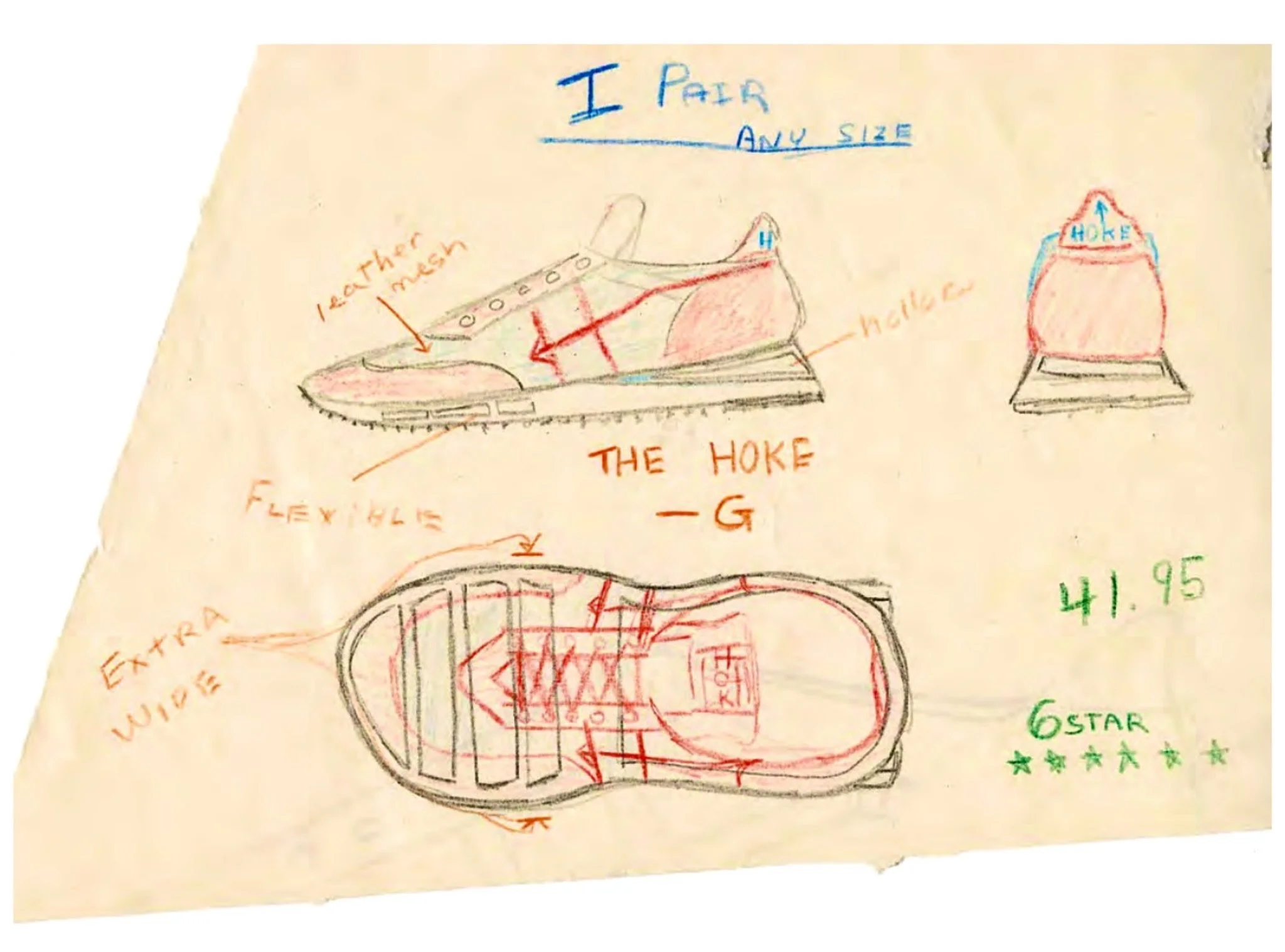
If you can draw it (which Hoke did, above)…
…you can achieve it.
You’ve described yourself as a creative shark, someone who only breathes when you are actively making things. As you flip the page to this next chapter of your career, what is driving that momentum, and what is your parting wisdom for the next generation of design leaders?
I really do only breathe when I move, and I’m channeling my restless imagination into a book project code-named Wonder. The book centers around the necessity of human imagination sustaining us in an era of autonomous creativity. Data cannot dream, and AI cannot wonder. We do.
My parting advice to young designers is that you have to understand two distinct ecologies in the world: the company ecology down here, and the brand ecology up there. They always have to work together.
We have to move beyond making items and selling ideas. We have to move beyond making beautiful things to creating beautiful feelings. We have to move beyond objects that stand alone to experiences that create more humanity.
If we can move past the transaction and move toward the relationship, we will elevate design from simple excitement to true enlightenment. That is our ecology. That is what creates things.

Join more than 50 leaders from top organizations, including Amazon, Netflix, Meta, Shake Shack, NASA, Hearst, Roblox, United Airlines, and Instacart.