
Meet Joe Berlinger: The Director of Your Favorite True Crime Show
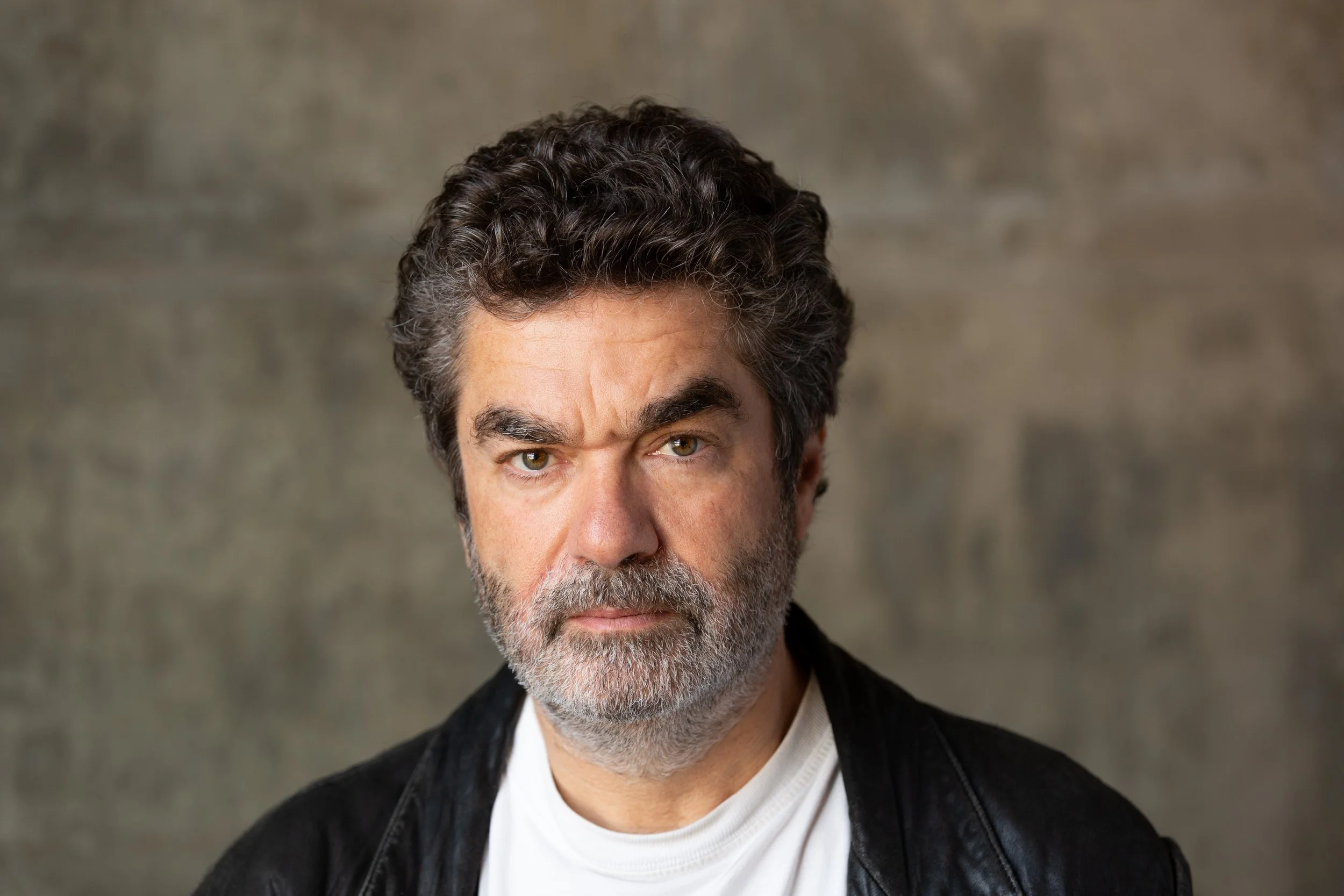
Joe Berlinger is known as the OG of true crime, but the perception that true crime is purely entertainment is something he is trying to change. Photo by Russell Peborde.
The Most Useful Peer Network for Creative Professionals
Creative Factory is a private, highly vetted leadership community for brand leaders. Join peers from Netflix, Meta, Apple, Amazon, Stripe, and more.

A few years ago, American documentary filmmaker Joe Berlinger was parodied in an SNL skit about the interesting way some women like to unwind — watching true crime shows.
Berlinger is known as the OG of true crime, but the perception that the genre is purely entertainment is something he is trying to change. His work, which includes films like Extremely Wicked, Shockingly Evil and Vile; Jeffrey Epstein: Filthy Rich; and Cold Case: Who Killed JonBenét Ramsey, draws attention to issues within the U.S. criminal justice system. In total, his films have helped free seven wrongfully convicted people from prison, three of whom were on death row.
With his latest series, Conversations with a Killer: The Charles Manson Tapes, Berlinger dismantles the story America was told about the coming race war and its influence on Manson’s motive; in a way holding up a mirror to the genre he helped create.
Here in this conversation, he discusses the new series, of course, but also why your best work rarely resembles what you originally set out to make; how he helped Metallica band members settle their creative differences; and how even the best reach a creative breaking point, but can still come back from it.
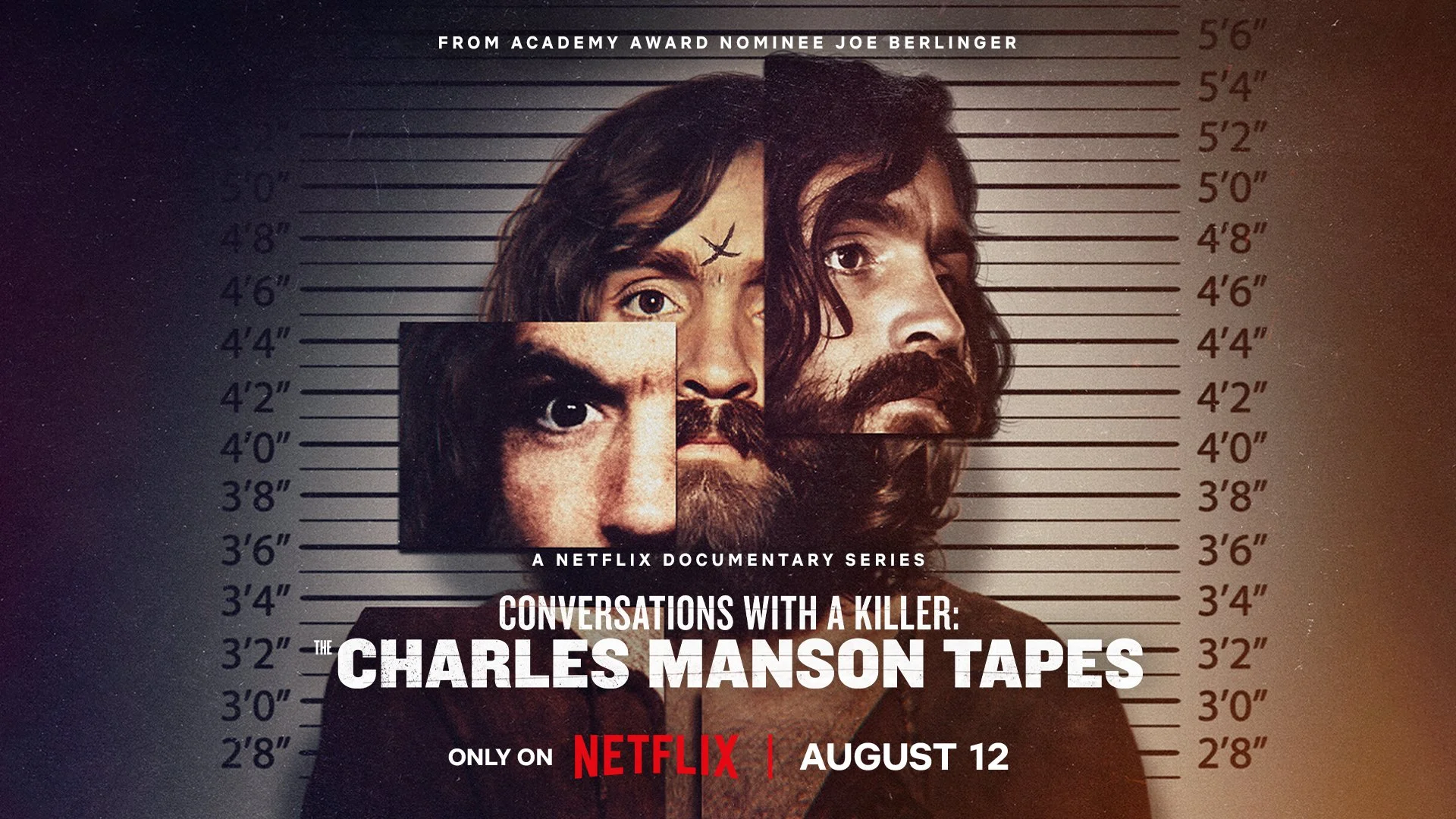
Charles Manson was never present at the murders; which drew Berlinger to the story for the final chapter of his Netflix series. Photo courtesy of Netflix.
You’ve been doing true crime longer than almost anyone. How did it all start?
Early on in my career, I worked for the Maysles Brothers, who helped invent cinéma vérité in the early ’60s. The idea was that you can follow a real story while it’s unfolding, bring it into the editing room, and craft something with a present-tense feel. That started as a technological breakthrough called crystal sync, which let the Nagra tape recorder and the 16mm camera run at exactly the same speed. You could get picture and sound back from the lab and they would line up. And then people like the Maysles Brothers, Robert Drew, and Frederick Wiseman realized that a whole new style of filmmaking could emerge, where you could follow a real story in the present to make something as dramatic as a scripted film.
What’s one idea they instilled in you?
Albert Maysles always said, “If the film you’re imagining at the start is the same film you deliver at the end, it’s probably not a very good film.” Every film I’ve ever made started out as one thing and became something else.
In 1993, my team and I went to Arkansas to film Paradise Lost. It was about a week after three teenagers were arrested for the murders of three young boys. For the first few months, we thought we were making a film about guilty teenagers, because that’s what the press was reporting. The police chief and the prosecutor were saying that, on a scale of one to ten, the evidence was an eleven. So HBO sent us down to make a film about why kids kill kids.
In November of that year, we got access to do our first interviews with alleged perpetrators. The teens were in county lockup awaiting trial. And something didn’t seem right. I was interviewing Jason Baldwin, who had allegedly wielded a serrated hunting knife and inflicted terrible wounds on three eight-year-olds, and I’m looking at his tiny little wrists, listening to him tell me he’s innocent, and I believe him.
It wasn’t a lightbulb moment. I didn’t say, Oh my God, they’re definitely innocent. It was just that something felt off. So I called HBO and said, “I know you want a kids-killing-kids film, but I think these kids might not have done it.” I was half expecting Sheila Nevins, who ran documentaries then, to say, well, “I want the film I ordered, pack your bags.” To her enormous credit, she said, “That sounds even more interesting. Stick with it.”
It sounds like a large part of your work is about trusting your instincts. What’s the least intuitive part of the job?
A big part of being a filmmaker is that sometimes it’s better not to film. We were among the first documentarians to show up after the Idaho college murders. Most documentarians rushed out because everyone wanted to be first. I said to Netflix, and they agreed: no matter how long this takes, we can’t release it until we have the whole story. The best way to honor the victims is not to wallow in conspiracy and conjecture but to deliver a truthful portrait.
Before the plea deal, everyone was under a gag order. The surveillance footage and other materials weren’t going to be available until the trial was over. Other networks and filmmakers didn’t wait; they rushed their shows out without the complete story. We knew we had to be patient and wait for the footage.
I learned this lesson on our first film, Brother's Keeper, which was about four dairy farming brothers upstate who lived the way people lived a hundred years ago, in a shack with a little wood-burning stove, sharing a bed. I don’t think they really understood what making a film was. So the first couple of trips up there, we kept the cameras in the car. We wanted to build rapport and get to know them. We did chores together and cleaned out the stalls and hung out while they made hay. They weren’t very loquacious, and sometimes nothing was said for an hour, but we were all just there together. The lesson was that you don’t have to jump out of the car with cameras blazing. Sometimes it’s better not to film.
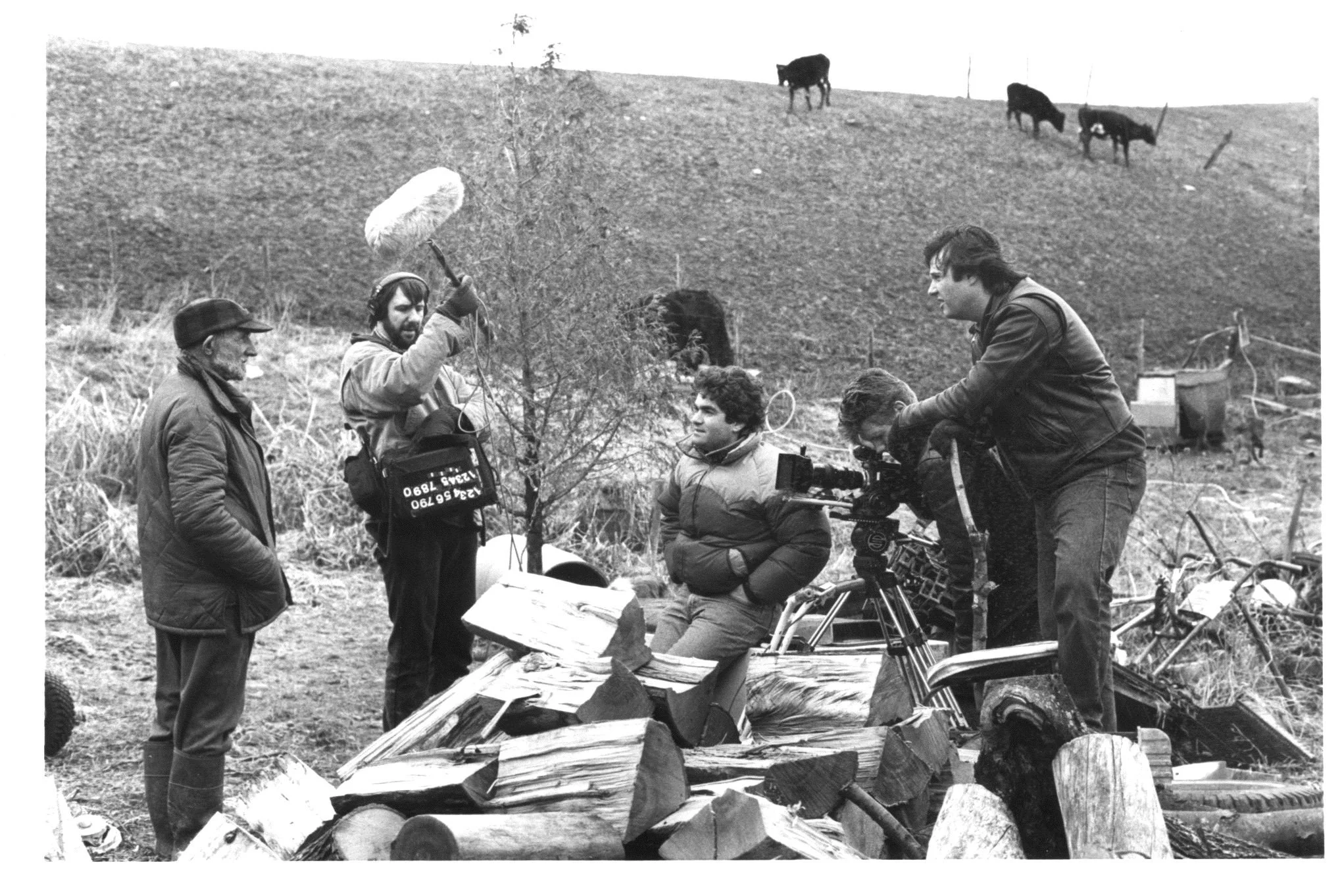
Brother’s Keeper; Roscoe Ward waiting for the verdict. From left to right: Soundman Mike Karas, JoeBerlinger, DP James Cooper, and Bruce Sinofsky. Photo by Derek Berg, Courtesy of Third Eye Motion Picture Company, Inc.
The Charles Manson Tapes must have been an exciting project for you, as it’s the final chapter of the Conversations with a Killer series. What was the most challenging thing you pulled off for this project, in particular?
The design of the series is to explore American serial killers in their own words. I wanted Manson as the final chapter because he’s almost a self-reflexive look at true crime itself: how we consume it, how it’s reported, why it’s so popular, the moral gray areas of it.
It’s a very well-known story, so we needed to make it fresh. And Manson doesn’t quite fit the mold of the previous seasons because he’s not a serial killer in the classic sense. Technically, yes, if you kill more than two people you’re a serial killer. But he wasn’t there for the murders. He mind-controlled other people into doing the killing. For this final chapter, I wanted to look at the genre by covering who I think is the big bang of modern true crime.
What sets the Manson case apart?
The murders happened in Hollywood, right as the auteur era was beginning and the old studio world was ending, to celebrities like Sharon Tate and Roman Polanski. That got seared into the consciousness of the culture.
Interestingly, Manson and the three women charged with him were tried together, and reporters had unfettered access. The trial itself wasn’t televised, but you’d never seen so many cameras roaming the halls in and around a courtroom. Manson and the women gave daily interviews, which fed this monster of the daily headline. There was this expectation of accessibility for a trial that was the longest in L.A. history at that point. All of that created the mania for this kind of story.
Then you have Vincent Bugliosi, who wasn’t even supposed to prosecute. The lead prosecutor was taken off the case at the twelfth hour because he’d been warned not to talk to the press and gave an interview to Rolling Stone anyway. So Bugliosi comes along, and he knows he’s sitting on a great story. He hires a ghostwriter to sit in the trial from day one. Helter Skelter is, to this day, the biggest-selling true crime book of all time.
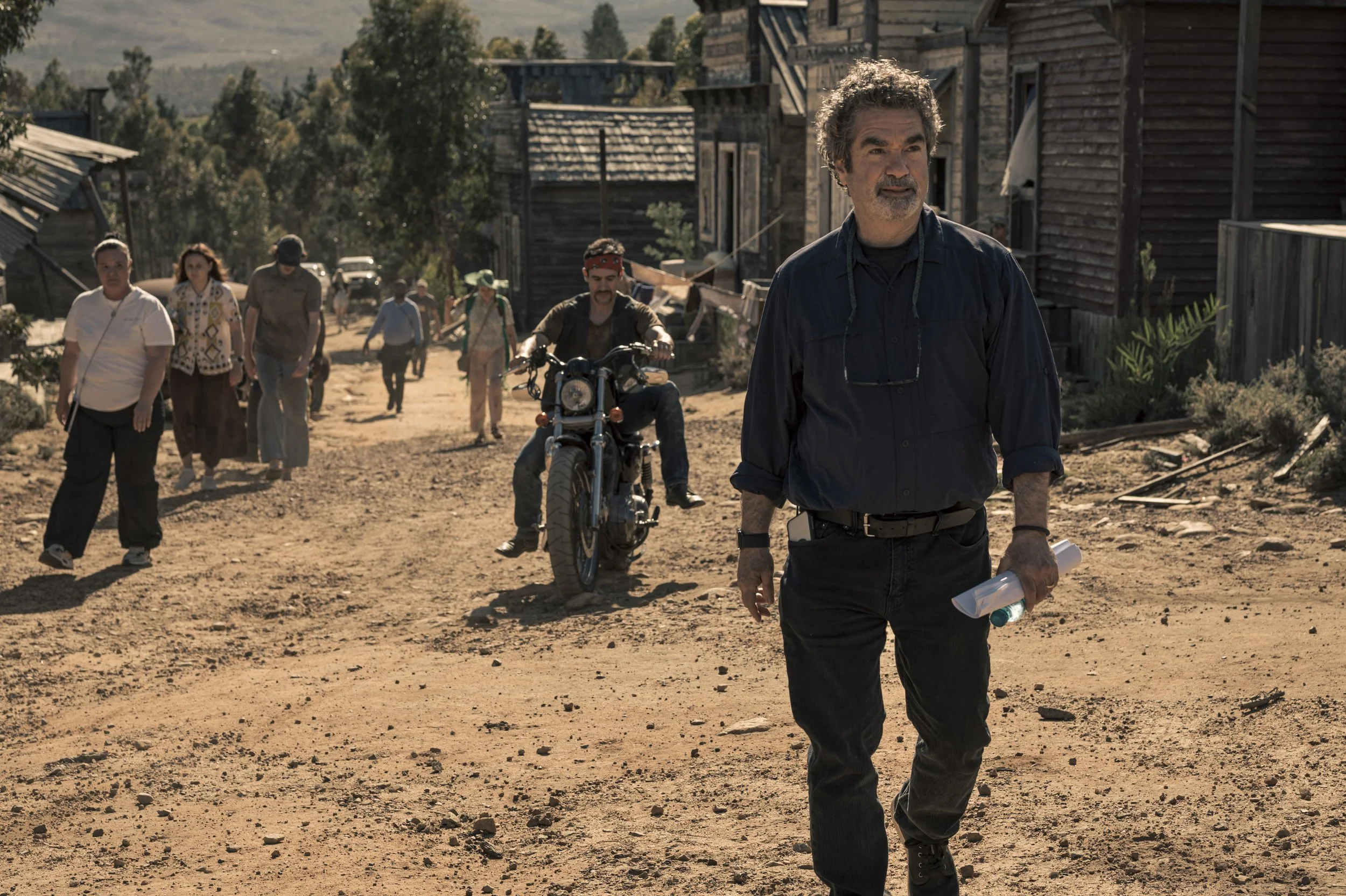
Behind the scenes from Conversations with a Killer: The Charles Manson Tapes. Photo by Raquel Fernandes.
What did you want to focus on in the series, from a storytelling perspective?
Our show argues the motive Bugliosi built the case on wasn’t real. Bugliosi’s big problem was that Manson wasn’t present at the murders. If you’re not there, it’s much harder to bring a murder charge. So Bugliosi came up with a brilliant idea for a motive: “Helter Skelter,” the coming race war that Manson supposedly wanted to precipitate, with messages he was hearing in the White Album.
The truth is more banal. It’s a series of escalating blunders, bad drug deals, and a ruse about a race war. It was a brilliant legal strategy. How do you convict somebody who wasn’t there? You invent a motive. And that mythologizing is itself part of true crime, which is why I wanted to end there.
As you work on large-scale projects with dozens of stakeholders, what is the creative hill you’re willing to die on?
The hill I’ll die on is a truthful portrayal of a subject. With the JonBenét Ramsey series, another filmmaker might have lingered longer on the perspective that the family looked guilty for Ramsey’s murder, because that's the traditional version of the story. But I think that’s a false story. What I don’t want to do is hold information for the right dramatic moment at the expense of the subject of the film or wallow in conspiracy theories for the sake of keeping people glued to the TV. My show told the true story, and a lot of people came out of it saying, “Wow, I have a completely new perspective on that crime.” Shifting a perspective is sometimes my goal.
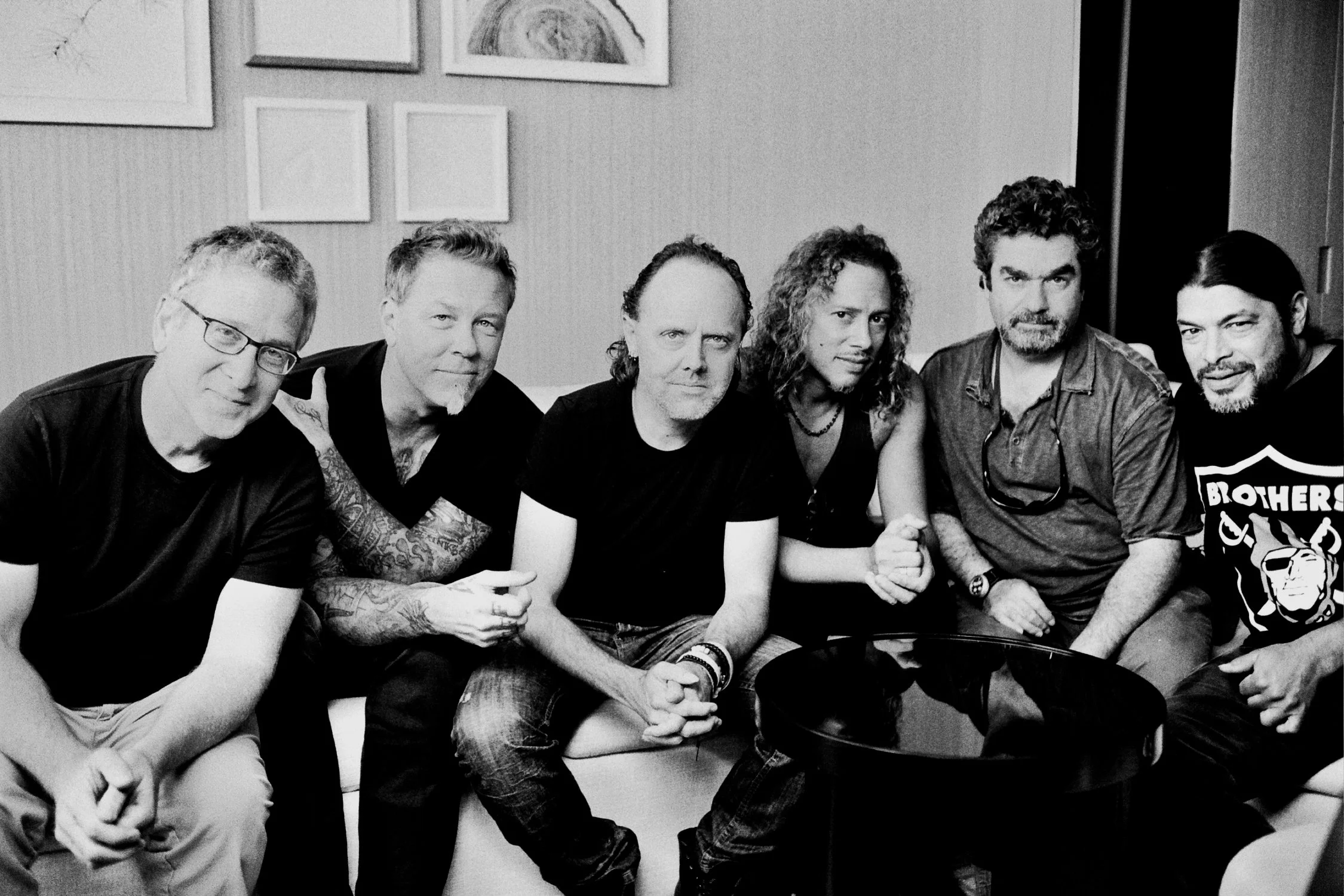
Berlinger pictured with the members of Metallica and the DP for Metallica: Some Kind of Monster, Bob Richman (pictured far left). This photo was taken 10 years AFTER the film was made for a short film. Photo courtesy of Third Eye Motion Picture Company.
You have a great story behind how Metallica: Some Kind of Monster started. Can you walk us through it?
We fell in love with Metallica music for Paradise Lost. Perversely, Metallica lyrics were entered as evidence that the three kids in Paradise Lost were killers. Which is doubly offensive. Since when does your musical taste determine whether you’re a murderer? And anyone who knows anything about Metallica knows their lyrics have nothing to do with devil worship.
But we wanted to use the songs in the film. So I sent a fax to Metallica’s manager and I said, “Heavy metal music is on trial as much as these kids are.” He called me and said, “Send me a rough cut.” We did, the band watched it, and they signed on right away.
Around 2000, they asked me for a favor in return. They were going into the studio to record their first album in years and wanted a little behind-the-scenes B-roll. So I flew out to San Francisco, called Lars, and he said, “Oh, dude, I forgot you were coming.” Jason had quit the band because he couldn’t handle it anymore. He and James weren’t getting along. He said, “I don’t think there's a record happening. Sorry to drag you out here; there's nothing to film. Management hired a shrink to see if we can get it together.”
I said, “Shrink? Let me film the therapy sessions.” I didn’t know if there was a film there. I just felt like I was already there, and this sounded fresh and new. They gave me permission, and they decided to record the album after all. So it became a film about making a record with this psychological undercurrent running through it.
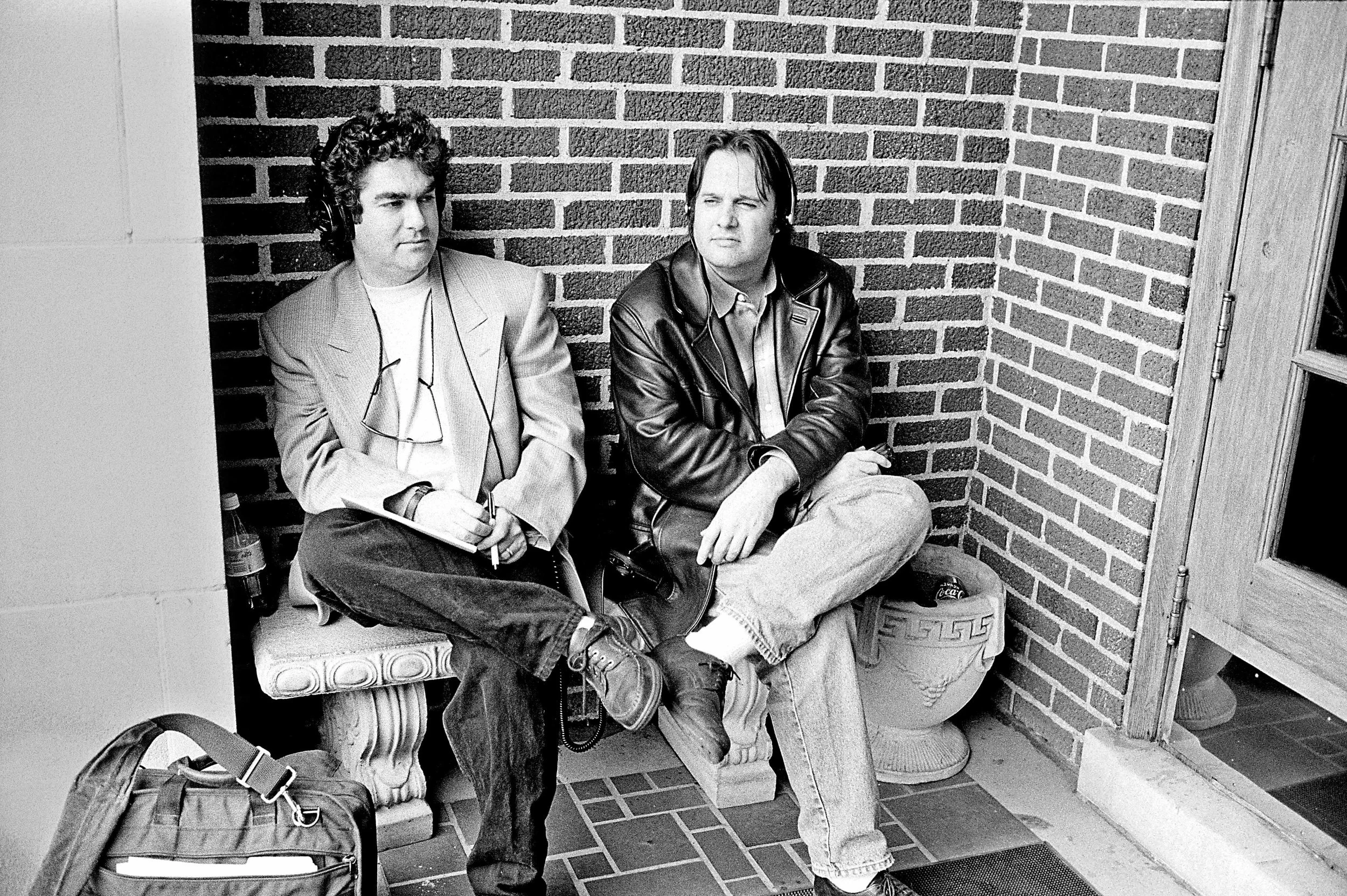
Joe Berlinger and the late Bruce Sinofsky on the set of Paradise Lost: The Child Murders at Robin Hood Hills. Photo by Bob Richman
Why did you push so hard to be in that room?
I’d just come off a big public failure, Blair Witch 2, which the studio (Artisan Entertainment) had recut against my wishes, and was hated by everybody. On top of that, my filmmaking partner and I had split up over the growing pains of making films together for years.
I was in a raw emotional state, questioning myself. And I’m sitting in a room listening to two very successful musicians open up about their feelings, about their own existential and creative crises. I felt like the universe had put me in that room. Whether or not it turned into a film, I had the magic pass of the camera and I was hearing something almost nobody gets to hear, and it was actually helping me.
At the end of the first session I filmed, I called up Bruce Sinofsky, the partner I’d broken up with, and said, “You need to come out to San Francisco. You need to be part of this.” We broke up badly and I thought this could be healing for us. He came. We made the film together, and we used our own time — at night after shooting, in the hotel rooms — to have our own conversations and do our own repair work. It was very powerful.
The Most Useful Peer Network for Creative Professionals
Creative Factory is a private, highly vetted leadership community for brand leaders. Join peers from Netflix, Meta, Amazon, Roblox, and more.

If you’d like to read more from Creative Factor, find our latest stories here.