The Swagger of a Storyteller: How Martin Rose Leads Netflix's Creative Studio
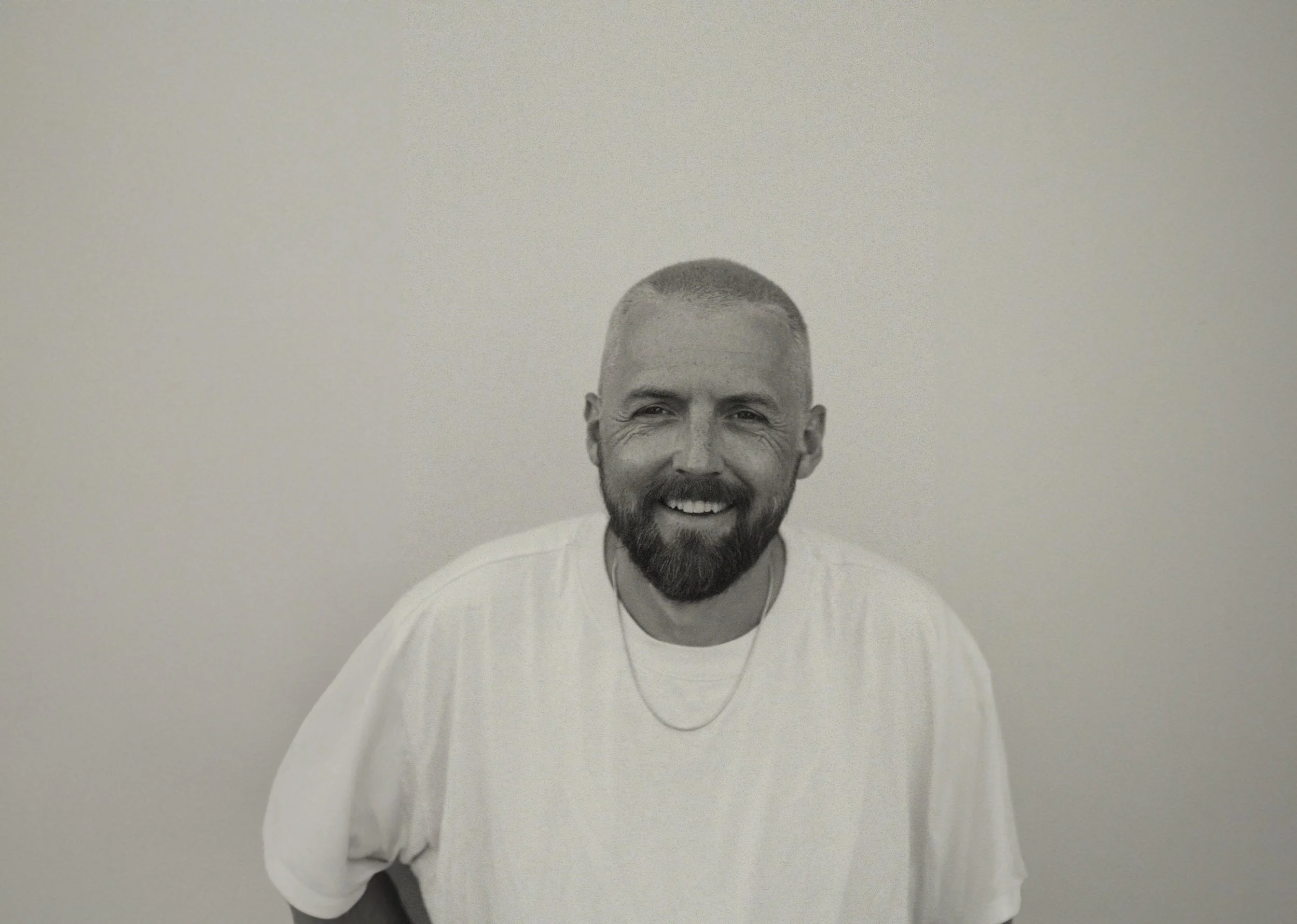
Martin Rose, Netflix’s Head of Creative, Global Brand & Partnerships, wants to make Netflix as much of a destination as the content it hosts. Photos c/o Rose.
The Most Useful Peer Network for Creative Professionals
Creative Factory is a private, highly vetted leadership community for brand leaders. Join peers from Amazon, Shake Shack, Meta, Roblox, Procter & Gamble, and more.
It’s worth showing up early for a meeting at Netflix in Hollywood. The lobby coffee bar features four varieties — from Canyon to Verve — plus a La Marzocco, the Ferrari of espresso makers, available for individual use. And then there are the bathroom directions: “Go past the Emmys” — gold, shiny statuettes lined up in a row on the wall — “and turn right.” It is the ultimate flex to give directions to the washroom by way of television’s highest honor.
While we could easily spend the morning in the lobby sampling the roast, there is the more important matter of interviewing Martin Rose, Netflix’s Head of Creative, Global Brand & Partnerships. Rose joined Netflix after 15 years at the agency Mother, where he served as Executive Creative Director, working on campaigns for Uber and KFC, among others, over his time at the shop. (The latter included a notable spot where patrons believe in the brand so much they join a cult of chicken and get baptized in gravy.)
Rose’s mission is to elevate Netflix’s creative expression through global partnerships, cultural initiatives, and brand storytelling. The ambition is to continue to make Netflix as much of a destination as the content it hosts.
By establishing a clear creative North Star for the Netflix brand profile, he hopes to shift any perceptions that Netflix might be simply a service that streams stellar content, and continue to be the place people always turn to when they are looking for something wonderful to discover.
We are here to talk about that approach, of course, but also how a Londoner ended up in L.A., how he’s building his team, and why he always keeps a hand on the tools. We dive into the balance between bold creative ambition and mental health, his early failures in math and physics, and how he uses his own life experiences to inform his leadership.
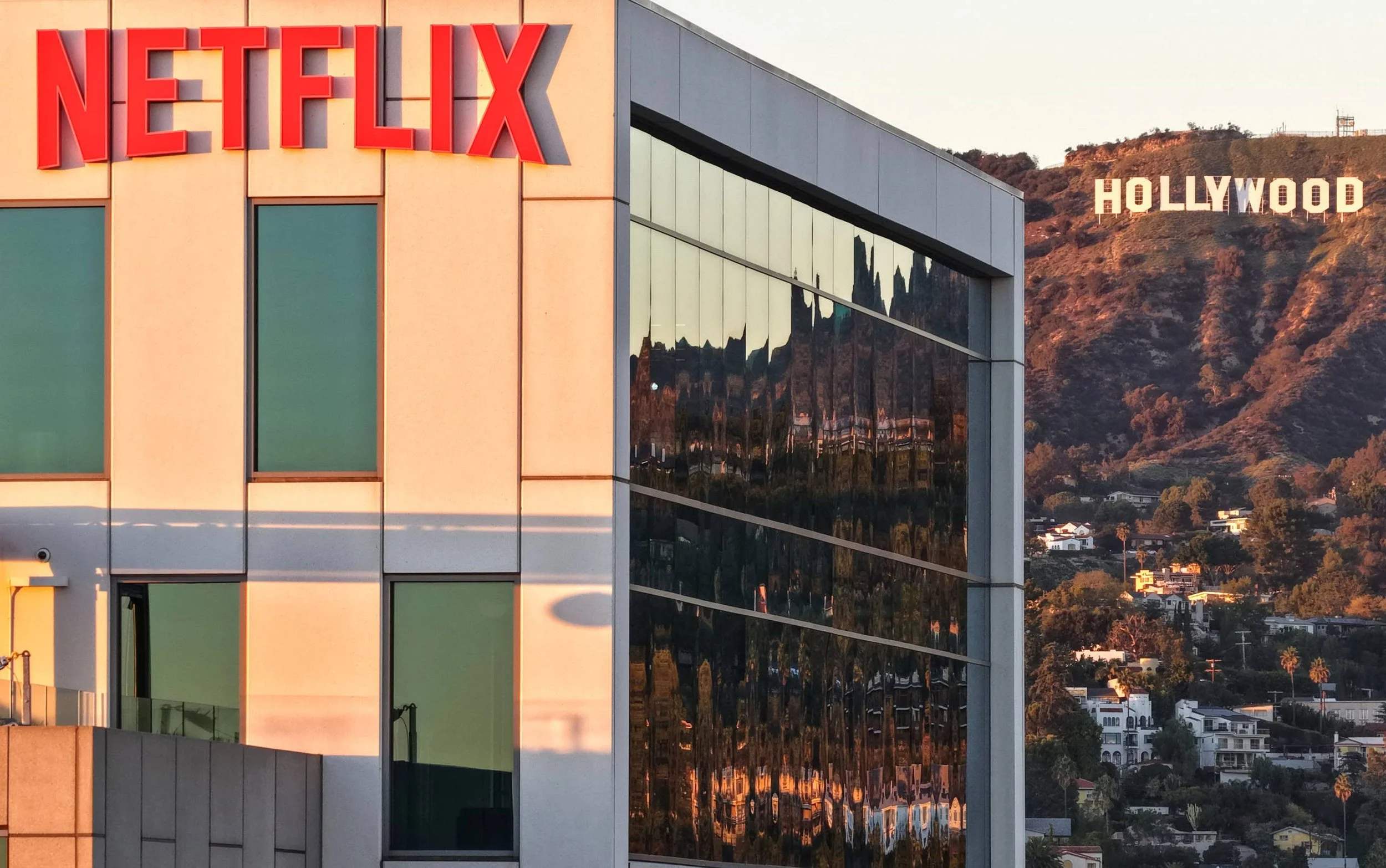
The Netflix HQ in Los Angeles… not too shabby for an office view.
Let’s start from the beginning. Do you have a childhood memory you can trace your creativity back to?
Actually, when I was young, I didn’t even know this was a thing you could do. My parents grew up in working-class families in Scotland — my dad was an accountant, and my mum was a nurse — and their life experience guided me down more traditional paths. To them, the creative world was just entertainment. They didn’t really know where it came from or how it was made, and like many people, they never imagined it could be a career.
I was a massive film nerd. My dad’s main hobby was going to the cinema, so that became our thing. Some of my clearest childhood memories are tied to music and movies. I can almost map the ’80s and ’90s by the VHS tapes I watched on repeat.
Home, in many ways, was what I think of as an “iceberg.” On the surface, everything looked fine: food on the table, a roof over our heads, but underneath it could feel cold and emotionally distant. Film, television, and games became the place I escaped to. I lived through characters and worlds on screen, and found a lot of solace and safety there.
Did you know then that you wanted to be the person that makes these films?
I struggled quite a bit in school, feeling pretty lost. To get me out of his hair, my dad would often suggest new hobbies: “Go try rugby,” he’d say, or “Why don’t you take up the saxophone?” I tried everything — diving, swimming, football, and rugby; drama school, endless musical instruments, Scouts, and even the Air Cadets. The list goes on, I know, but I was simply trying to find something that felt like me.
Without much direction, I ended up taking Maths and Physics for my A-levels, but I quickly realized I wasn’t wired that way. I didn’t really know what I was doing — I just thought it was what I was supposed to do. My favorite subjects were History and Art, but no one ever tells you that those can lead to a career.
I’m dyslexic, so I’ve always struggled to get my thoughts down on paper. I’m a much better talker than a writer — as my colleagues will tell you, sometimes too much! At seventeen, I left home to travel with the little money I had. I eventually ended up in New Zealand, where I had a bit of an epiphany: I realized I needed to figure out what I was actually going to do with my life.
I found an Interactive Design course at Lincoln and called the course leader, Chris Dunne. I told him I had no required qualifications, no art college diploma — just a massive interest. He gave me a chance.
I hope he still thinks it was a good decision.
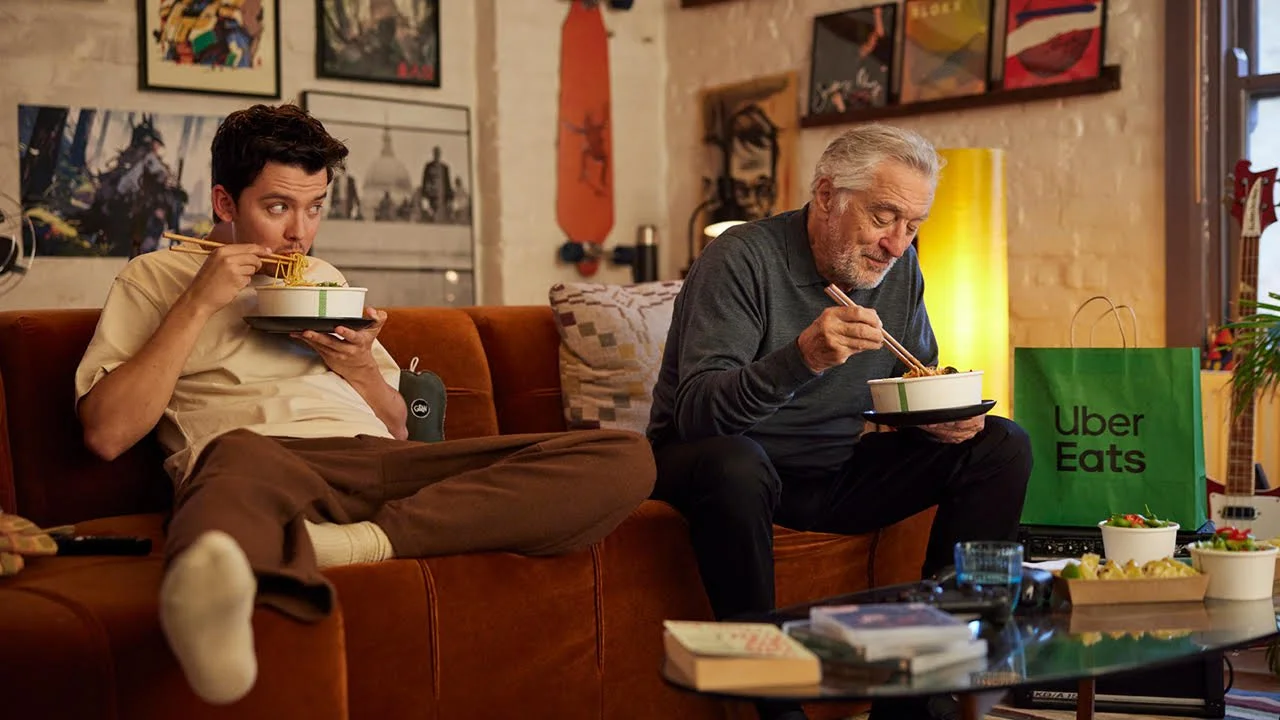
An unlikely friendship: Asa Butterfield and Robert De Niro starring in the an advertisement for Uber Eats, created by London agency Mother, where Rose served as the Executive Creative Director prior to his current role at Netflix.
Is there anything you do in your creative process today that is an adjustment in response to your dyslexia?
I try not to write too many emails if I can avoid it. I’m much better at communicating ideas in person. Distilling things onto paper has always been harder for me. I know for a lot of people writing clarifies their thinking, but for me, it’s the opposite — conversation is where my ideas solidify.
I remember a course leader once telling me that the points I made in debates were often really thoughtful and inquisitive, but those same ideas would get lost in my written responses. In that sense, AI has been a bit of a godsend. Don’t get me started on my spelling…
You eventually found your footing, but you once got let go from an early job. What was that like?
I wasn’t a traditional advertising creative. I was somewhere between an art director and a writer, and I didn’t have a work partner, which meant I wasn’t the easiest hire in agency land. But Aaron Hinchion at Albion London gave me a shot at my first placement. He just “saw” something in me and let me explore.
I was making stop-frame animations for Skype and creating branding for a prison radio station. I loved it. But the founder didn’t quite know what to do with me because I didn’t fit the usual mold. I even made a campaign to try to keep my job: “Save Martin.” Sadly, it didn’t work — they still couldn’t keep me.
I was gutted. I’d only just started to feel some validation since University, and suddenly that was slipping away again. I have this vivid memory of being at a football game as a kid and having my dad and cousin laughing from the sidelines because I was so bad. I grew up in a family where if you broke your arm, you were told, “You’re fine.” You didn’t moan. So when that first job ended, the imposter syndrome hit hard.
What have you learned about mental health and creativity over your career?
That vulnerability is probably my most powerful tool. I suffer from depression and anxiety, and in this industry, it’s impossible to always be on top of your game.
At Mother, there was a culture of delivering the best of the best, which I genuinely value. It pushed me and shaped the creative person I am today. But that pressure can also make you nervous and less open. It can make you feel like there’s no room for bad ideas.
For most of my career, I didn’t feel good enough. It’s probably only in the last four years that I’ve started to say to myself, “Actually, I can do this job.” I can trust my vision. I can lead something as big as helping build the Uber brand and KFC rebrand, making work I’m proud of without sleepless nights, worrying too much about every human on earth’s opinion.
How did that lead you to Netflix?
Aarti Thiagarajan, who I’d worked with at Mother in New York, messaged me one day and asked, “Would you ever come back to America?”
My first instinct was to stay where I felt safe, in London and at Mother (15 years). But my wife actually got a bit angry with me and told me I needed to open my mind. That meant a lot, because it was a real sacrifice on her part. She’s from Portugal, and our four-year-old son’s only grandparents live there. Moving to Los Angeles meant being even further away from them. For her to push me to reconsider meant a great deal.
Creatively, Netflix is a dream brief. At Mother through the years, the benchmark in a lot of my creative reviews was often,Would this get on Netflix? In other words, would people see it as entertainment rather than advertising? Was it good enough?
So the opportunity to help shape what the Netflix brand becomes in its next chapter was something I couldn’t say no to. I’ve never seen a culture memo like the one here. It empowers people to move quickly and encourages a level of autonomy and honesty I’ve rarely experienced. There’s a phrase I’ve already heard internally: “Silent dissent is disloyalty.” They genuinely believe candid truth is kindness.
For someone like me, who can sometimes overthink how my ideas are landing, that kind of culture is incredibly freeing. I’d always rather hear the truth quickly and deal with it head-on.
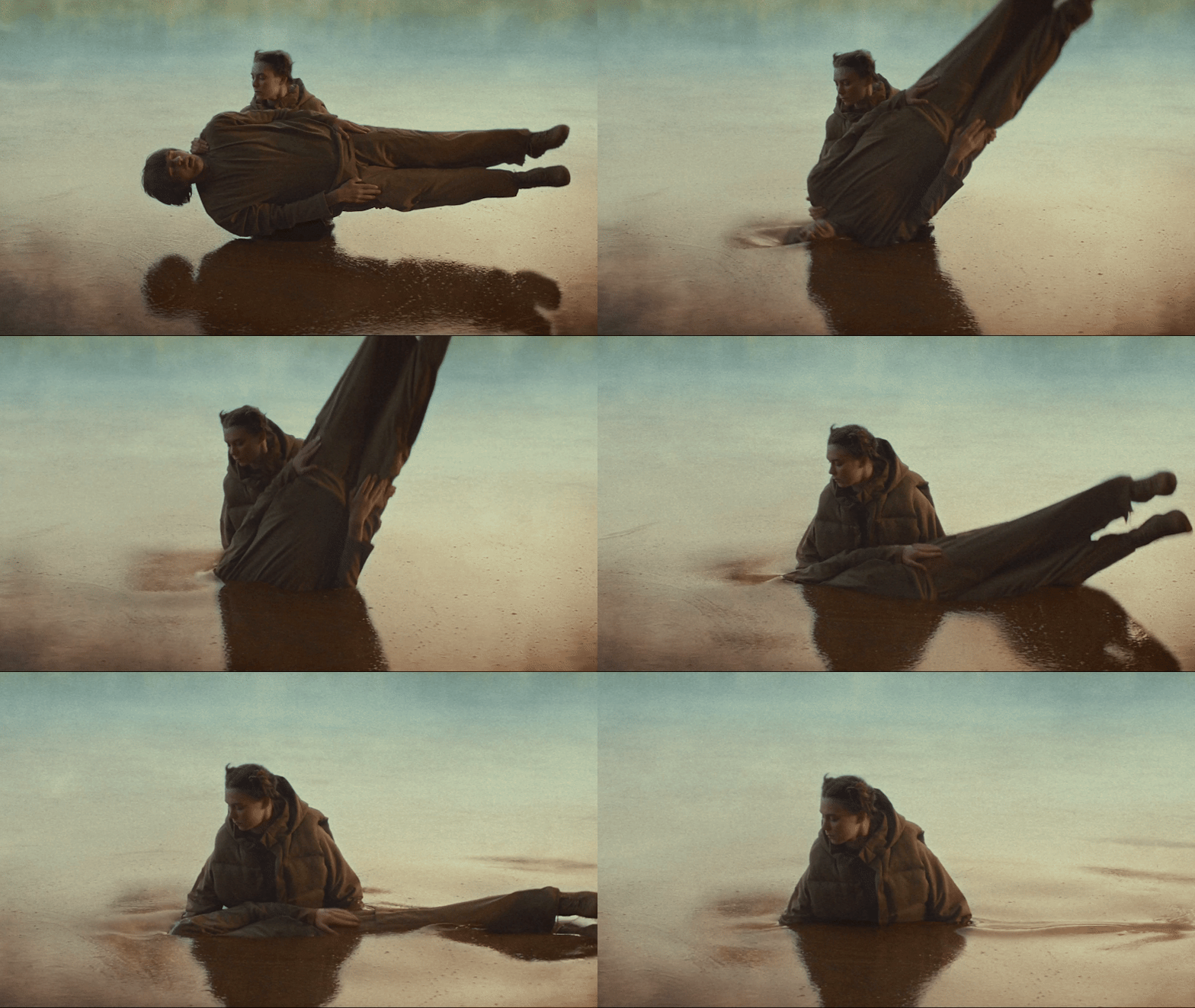
In this KFC campaign by Mother, patrons believe in the brand so much they join a cult of chicken and get baptized in gravy. Obviously!
At Netflix, how do you develop an offbeat idea when the data might not signal that people “desire” it?
Data is incredibly useful, but it mostly tells you what people have already done. Creativity is about what they haven’t experienced yet. If we only followed the data, we’d probably just keep making slightly safer versions of things that already worked.
For me, it comes back to instinct and taste. Does the idea feel entertaining? Does it feel like something our fans would genuinely choose to spend time with, rather than something that’s interrupting them?
Netflix is built on taking creative bets and big swings — that’s true for the shows, and it should be true for the brand too. Did you see Skyscraper Live? Didn’t know I needed that in my life till I did. So the job is really about creating an environment where people feel safe putting those crazy ideas on the table and then shaping them into something fans will love. Often, the things that look a little weird on paper end up being the most unforgettable.
When companies produce brand partnerships, it can sometimes feel like “ads in the middle of shows.” How will yours be good for the viewer?
That’s exactly the thing we’re trying to avoid. The moment something feels like an ad, people switch off.
The bar we set internally is pretty simple: would someone want to engage with this even when there is another brand attached to it? Is it entertainment? If the answer is no, then we probably shouldn’t be doing it.
The goal is to create things that feel like extensions of the worlds people already love. That could be experiences, products, or collaborations that deepen the story rather than interrupt it.
Netflix has always been at the epicenter of entertainment and culture, and our partnerships should do the same. If we do it right, the audience shouldn’t feel like they’re being marketed to — it should just feel like another fun way to step inside the world of the show.
Tell us about how your team is structured now.
The brand creative studio team includes production, strategy, creative, design, and brand management. What we’re building is a more autonomous studio where the core team is leaders, collaborators, and also hands-on makers.
The idea is that we have a strong creative nucleus internally, and then we collaborate with specialists depending on the project.
When hiring, I’m always asking: what talent can we bring that complements, but offers a different skillset, to the team? We have someone who wrote for Jimmy Kimmel’s team — she didn’t make ads, she wrote jokes that became culture, we have someone who helped start Ben Affleck’s ad agency, and we have someone who curated, produced, and wrote campaigns for Musicians. What I want to keep doing is hiring different shapes of creatives — people who bring different perspectives to the already brilliant team.
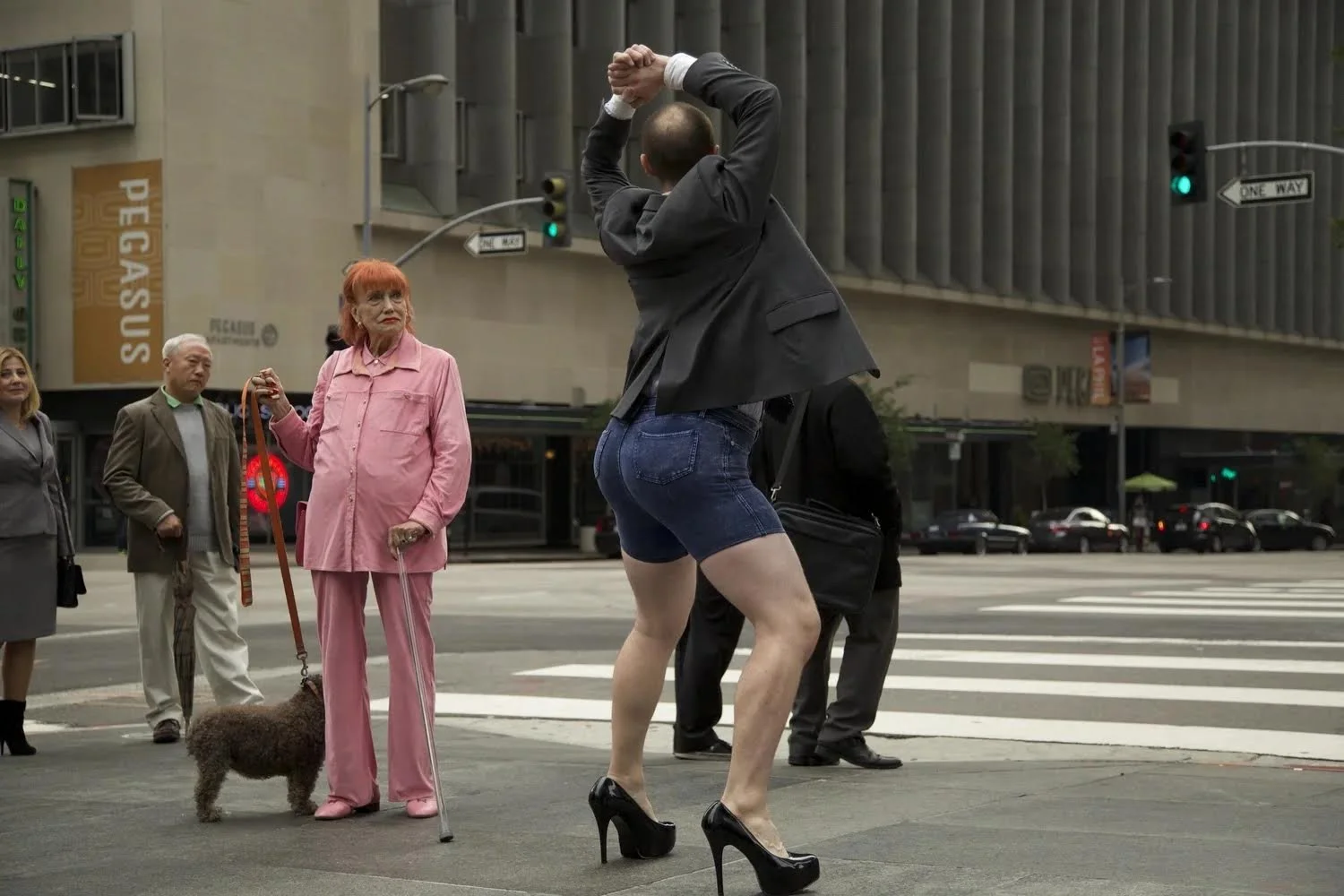
This popular campaign by Mother, “Bootylicious,” became the most complained-about television commercial in the UK back in 2017. (How could you not like it?!)
When you’re reviewing work, what makes you say, “This feels too much like an ad” versus “This feels like Netflix"?
For me, it’s pretty instinctive. The moment something feels like it’s trying to sell you something, you can feel it. It has that transactional energy to it.
When something feels like Netflix, it feels like entertainment first. It makes you curious, it pulls you into a world you never expected.
We talk a lot internally about whether something feels like culture rather than advertising. Netflix should feel like it’s participating in culture, not interrupting it. If the audience feels like they’re being marketed to, we’ve probably gone the wrong direction.
We see more creative leaders becoming “coach-players.” How do you do it?
That’s the balance I’m still learning — when to jump in and help shape something, and when to step back and let someone else run with it. But that comes from a genuine love of the job. I still want to be on the tools — editing, shaping something, helping make the thing that sells the idea.
Having the idea isn’t really the profession. The job is communicating that idea and getting people excited enough to come with you. Getting people to understand something strange — like a cult of chicken — that’s the real win for me.
You have to sell the story so people feel what you feel; make them feel it was their idea too. I tell every creative person I work with: you can have the best idea in the world, but if you can’t sell it, it’s useless.
And with the level of talent and seniority on my team at Netflix, I’m not there to make them better creatives. I’m there to try and help the others in the business understand what great creativity looks like.
You’ve been open about imposter syndrome. How do you help your team face it?
I tell them the truth — that I often worry I’m not good at my job. In one of my first meetings with the team, I spoke openly about my mental health. I also show them my worst piece of work.
It removes the tension in the room. If people feel like they have to arrive with perfectly formed ideas, they won’t take risks. But if they know they can bring something raw to the table, that’s when the interesting stuff starts to happen.
If my team ever feels like they can’t bring unfinished thoughts to me, then I’m not getting the best out of them.
What is the hardest part of the job for you personally?
Energy. Because I suffer from depression, I spend a lot of the day projecting social energy — getting people excited, selling ideas, lifting a room. By the end of the week, I’m often exhausted, and unfortunately, my family sometimes gets the downside of that.
Learning to balance that, and giving more autonomy to the people around me so I don’t always feel the need to drive the energy (which is often not the reality), is something I’m still working on. I think getting that right will make me a much better leader.
If Netflix were a person, who would they be today? And who do you want them to be in five years?
Honestly, I’m not sure — and that’s part of what excites me. Netflix never really sits still. It could never be categorized as one person. Its core mission is to entertain the world, in whatever shape that requires.
I’d actually hate to pretend I know exactly what this brand could become. One of the most special things about joining a company like Netflix, compared to agency life, is that we’re not the most important people in the room anymore.
We’re in service of something much bigger than advertising. We’re helping bring stories and worlds to entertain the world. So hopefully in five years, Netflix is still that restless, curious person who’s always evolving — and still surprising us. Impossible to put in a box.
And without giving away anything to come, what defines the “Netflix feeling” you’re trying to bake into every campaign?
A feeling you never knew you needed.

Join more than 50 leaders from top organizations, including Spotify, Amazon, Disney, Shake Shack, Stripe, NASA, Cannondale, Hearst, Roblox, Clay, Paramount, and Mailchimp.