The New Rules of Mentorship for Creative Leaders
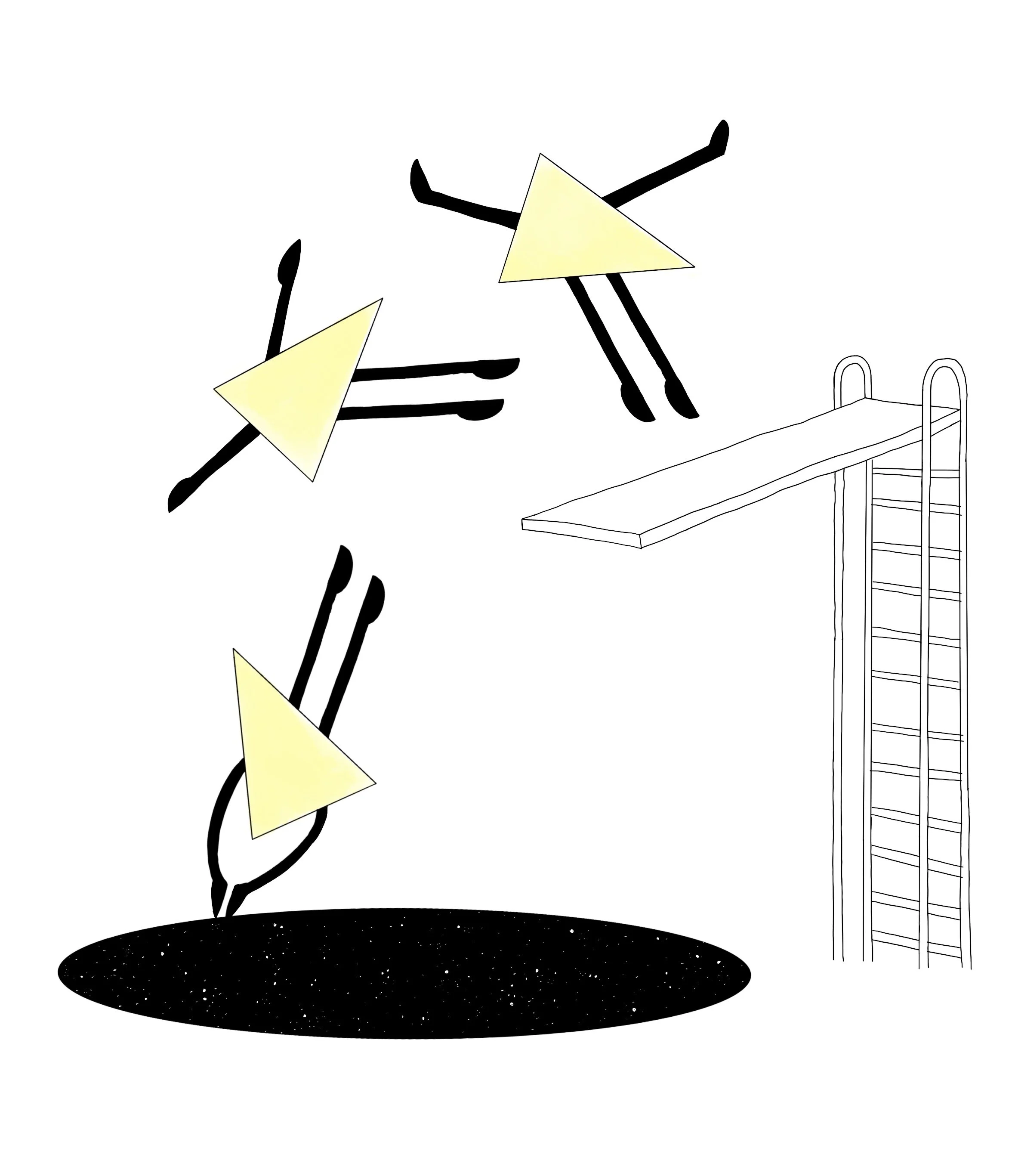
Restructuring, flattening orgs, and remote work have transformed how mentorship forms. We set out to find what's changed and how to make the most of it.
The Most Useful Peer Network for Creative Professionals
Creative Factory is a private, highly-vetted leadership community for brand leaders. Join peers from Netflix, Meta, Amazon, Roblox, and more.
Finding a mentor in the creative industry used to be as simple as knowing your office floor. Your mentor was the creative director two cubicles over, or the senior designer who happened to be two rungs above you, or the brand lead who took a chance on you and gave you real work. If you were honest, you probably weren’t looking for a mentor — you were looking for a promotion. In an ideal world, you got both.
Now mentorship feels more like online dating. It’s more transactional and fast-paced, both people have to actively make time for it, and even if you can connect with someone on the other side of the world, scheduling is a nightmare.
What’s behind the shift? The conditions that used to make mentorship happen organically, like shared office floors, proximity, and built-in hierarchies, have been picked apart by team restructuring, flattened hierarchies, and remote work. And as much as we’re all on LinkedIn, the consensus among design leaders is that there is more noise than substance: mentor-mentee relationships are unlikely to start there from cold outreach.
Despite the shift, most of us could benefit from being a mentor or having one. So we set out to learn the new “rules” of mentorship and where the opportunities now lie. After speaking with veteran creative leaders who have led teams at Amazon, Snap, Disney, and Cannondale, we learned that mentorship is no longer about getting your next job — it’s about tapping wisdom, leaning into that vulnerable feeling in the mentor seat, and looking outside the walls of your own company for a deeper perspective.
Here are several ways to make the most of this important relationship on both sides.
1. Tap your mentor’s wisdom, not just their knowledge. (It’s a big difference.)
Most mentorship conversations cluster at two extremes: crisis management (being managed out) or ladder-climbing (getting promoted). The rich middle ground surrounding craft, identity, and leadership philosophy goes largely unexplored.
Yet that is the good stuff. “Mentorship today is less about learning a hard skill from one person and more about absorbing how someone thinks, collaborates, and navigates a room,” said Ann Morrow Johnson, who has had leadership roles at Disney and now leads creative at Gensler as the Global Immersive & Entertainment Leader.
In a landscape where no one can predict what their own creative team will look like in a few months, tactical advice on taking your next career step has a short shelf-life. What lasts is someone's judgment, instincts, and way of navigating uncertainty.
2. A good mentor moves beyond the obvious asks.
If you treat the conversation like a structured Q&A session, you’re leaving most of the value on the table. A good mentor will have to dig deeper.
“When mentorship conversations only focus on the practical, they’re missing out on the opportunity to go deeper and really tap into that person’s experience, skill, and background in a way that might be more meaningful at depth,” said Jim Dantzler, who built and led the Center of Design Excellence at Amazon, a program that elevates craft and ensures designers were supported beyond their current role. Now, Dantzler is a mentor, adviser, and design professor at the University of Washington.
Of course, this means the mentor is going to have to want to put in the extra effort — which is what makes it all the more important for both parties to be committed to the relationship.
“You have to intentionally push beyond the surface-level conversations if you’re going to get to some of the more nuanced things. It’s not always what people want, even if it’s what they need,” Dantzler said.
With most professional conversations now unfolding over DM, it’s not surprising that mentorship has followed suit. Conversations tend to be quick, need-specific, and easy to mistake for the real thing.
“Mentorship feels more transactional and digital than when I started,” said Rudi Anggono, who led creative innovation at LEGO before moving to his current role as Global Executive Creative Director at SNAP Inc. “It used to be more about proximity and tenure; now it’s about specific needs met quickly.”
The upside to how we communicate on digital work threads is that it encourages mentees to seek out their mentors with intention. “The digital world forces clarity on what you need,” Anggono added.
3. Meeting in person still matters greatly.
Relationships that go deeper move beyond the digital threads.
“I’ve had meaningful exchanges that started in Instagram comments or LinkedIn messages that turned into something genuinely useful. But I think the relationships that go deepest still require some version of real conversation, whether that’s a video call or actually grabbing time at a trade show, industry event or a cafe,” said Ryan Chung, Global Director of Brand Design, Cannondale, who mentors undergraduate and graduate design students at Parsons School of Design.
Johnson agreed that in-person relationships are table stakes for building a great mentorship experience. “The most meaningful mentorship still happens in person — grabbing coffee, being in the room, raising your hand for the odd job nobody else wants,” she said. “DMs can open a door, but the relationship is built face-to-face.”
4. Look outside your company for your next mentor.
As reporting lines shift and hybrid work removes proximity, creatives can no longer rely on internal mentorship opportunities.
“Reshaping companies definitely plays a role in how mentorship has changed,” said Anggono. “When structures flatten or change fast, internal mentorship paths break down, forcing people to look externally.”
Chung agreed. “When layers of management disappeared, so did the built-in mentorship infrastructure,” he said. “The senior creative director used to be the person who reviewed your work, challenged your thinking, and implicitly shaped how you grew. When those layers compressed or those roles got restructured, a lot of that informal mentorship evaporated with them.”
The good news? There are mentors everywhere, now. And they might not be where you expect.
“Mentorship has become far more decentralized, and honestly, more democratized,” said Chung. “When I was coming up, it was almost entirely proximity-based. Today the model is fundamentally different. The mentors worth learning from aren’t necessarily in your building or even your industry.”
In fact, finding these relationships outside the walls of your own company can actually enhance the experience.
“You can’t limit yourself to people who look like the next version of you. Some of the most useful perspectives I’ve gotten have come from people in adjacent industries,” said Chung. “People who’ve solved similar problems in different contexts. If you're a designer trying to grow into a creative leadership role, talk to someone who’s made that transition in apparel, in footwear, in automotive. The pattern recognition transfers.”
5. Bring your real self, not your best self.
The pressure to arrive at a mentorship session with perfectly formed questions (or answers) is holding people back on both sides of the table.
“For those in a position to mentor, the best thing you can offer isn’t advice; it’s access to how you actually think, to the decisions you got wrong, to the parts of the job that don’t show up on a case study,” said Chung. “Vulnerability about failure is more useful to a developing creative than any polished success story.”
Mentors don’t need to have all the answers; they just need to be present and show up — especially during a time when creatives are often working in isolated settings.
“As companies have restructured and remote work has normalized, there's a real risk of creatives operating in silos, which has actually made showing up more valuable, not less,” Johnson said.
Mentorship also doesn’t require a standing weekly calendar block. What matters is reliability and access. “Dedicate small, reliable blocks of time — even 15-minute slots — rather than waiting for a free hour,” said Anggono.
In the end, it is the relationship, not the schedule, that matters. “Sometimes just having someone you know you can count on, who you can send a quick note to, is valuable,” said Dantzler.
Ways you can make the most of mentorship:
Think of mentorship as wisdom-sharing rather than job-hunting.
Show up as you are. Vulnerability beats polish.
Start with continuity in mind. One coffee isn’t a relationship.
The best mentors might be in unexpected places, outside the walls of your company or industry.
15 minutes, reliably, beats an hour you never find.
Looking for a mentor?
A good mentorship relationship is still one of the most important ways to grow as a creative leader.
As a part of our private design leadership community, Creative Factory, we recently launched a mentorship program that pairs creatives and designers with executive leaders who’ve built and led large design teams at Fortune 500 companies and notable startups.
Some early signals it’s working:
Opt-in Component: There’s commitment; it’s not a one-sided conversation.
Structure: We put together a loose structure so we can keep everyone connected and on track.
These conversations are more about knowledge and wisdom-sharing than anything purely transactional. Since pairings are made across companies and industries, the focus is on building relationships and passing on lessons, rather than just job opportunities.
Want to be a part of it? Learn more here.

Join more than 50 leaders from top organizations, including Amazon, Netflix, Meta, Shake Shack, NASA, Hearst, Roblox, United Airlines, and Instacart.