
How I Work: Rad Smith, Ski Map Designer
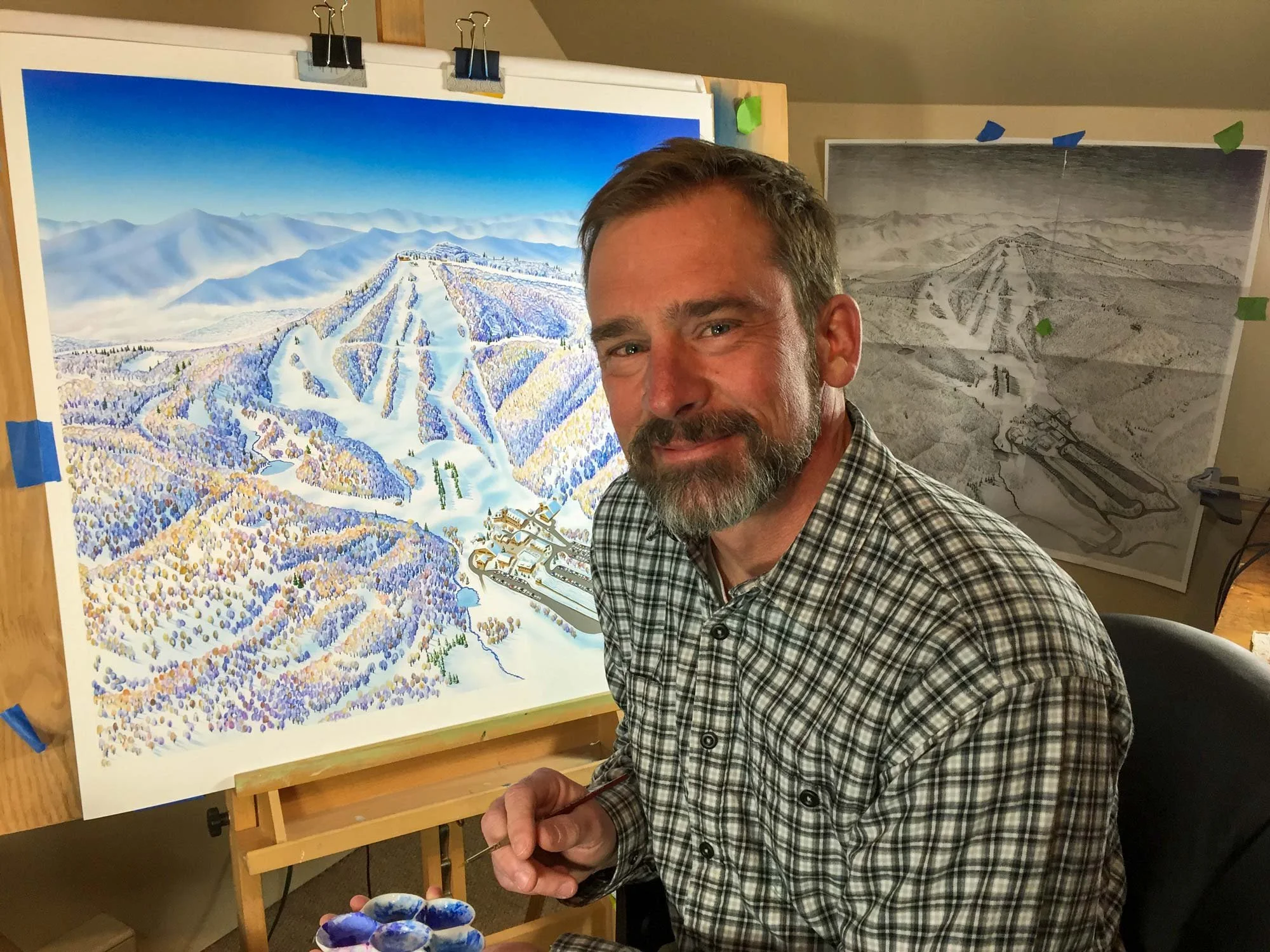
Rad Smith discovered the world of hand-painted ski maps when it dawned on him that the maps he’d relied on for years all came from one guy. Today, he is that guy. Photos courtesy of Smith.
The Most Useful Peer Network for Creative Professionals
Creative Factory is a private, highly-vetted leadership community for brand leaders. Join peers from Netflix, Meta, Amazon, Roblox, and more.

Ski map design is a highly visible yet obscure craft. There are about four guys throughout history who have created just about all the major ski resort maps: Hal Shelton, Bill Brown, James Niehues, and now Rad Smith.
A North Carolina native and avid skier now living in Montana, Smith learned the art from Niehues, who defined the timeless look of modern ski maps. As Niehues moved toward retirement, Smith became “the guy.”
The tradition dates back to World War II, when Shelton first developed the form and passed it on to Brown and then Niehues. “The body of work of those three is mind-boggling,” Smith said. “Niehues was the most prolific for trail maps, but they each had their own style, and you can see the carryover from one to the next.”
Smith’s maps are made entirely by hand, requiring hours of physical effort, drawing, and airbrushing. Recently, he finished a summer village map for Big Sky in Montana, and it looks just as good without 500 inches of snow as it does with. Beyond Big Sky, Smith has designed maps for Aspen, Keystone, Deer Valley, Alta, Lost Trail, and more.
Here, Smith shares his creative process, including translating aerial views onto paper, his eclectic studio soundtrack — from classical and bluegrass to murder mysteries and sci-fi — and why, in his work, he has to sweat the small details.
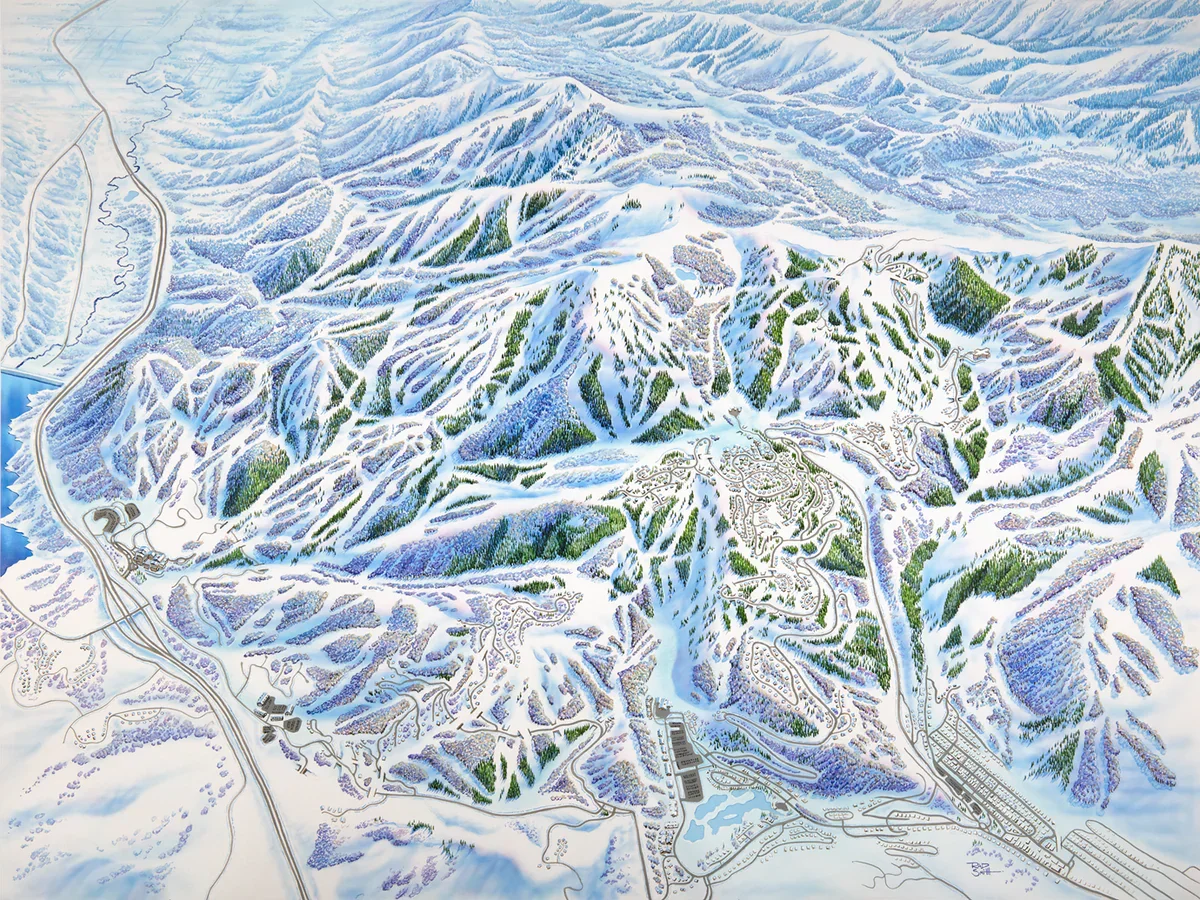
The demand for hand-painted ski maps is alive and well despite a rapidly advancing digital age. It’s easy to see why.
How do you spend your mornings?
There’s a lot of coffee involved, as I get to the studio early. I would love to sit down and draw or paint first thing in the morning, but I struggle with that. Deadlines sometimes force me to get right to it first thing, but generally, I like to ease into my mornings and start with emails and calls.
What do you wear to work?
J Crew T-shirts, pants, and flip-flops. In the winter, I wear fleece because I keep my studio cool. If I’m airbrushing, I crack open a window and run an exhaust fan, so on really cold days I’m bundled up.
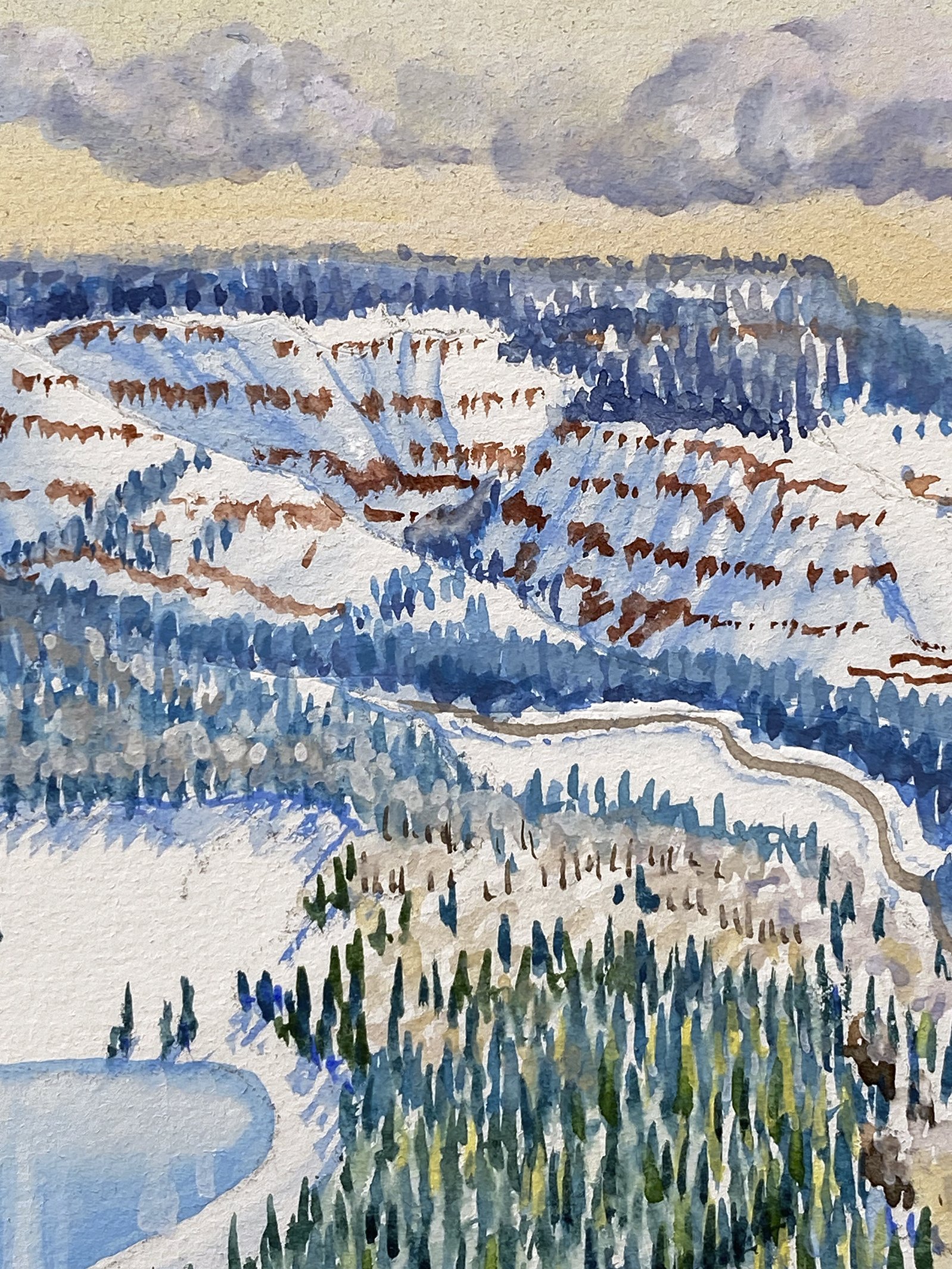
In the world of ski map design, you sweat the small details — but you can’t agonize over every single tree.
How do you structure your work day?
My dog is social and needy, so she hangs out with me in the studio and loves to go on early-lunch walks with me. I enjoy exercising during lunch, so I’ll go for a run or bike ride on the trail afterwards.
In the afternoons I dive into my creative work. I look at reference materials and start visualizing things, and that’ll sometimes transition into working on line drafts. I love to paint late into the evenings. My wife is a nurse, so she’s not home until 9:00 at night. I usually work until then, too. It’s a long workday, but I take a lot of breaks because I can’t sit for very long. I’ll hang out in the garden during the summer and weed for 20 minutes. I’m easily distracted.
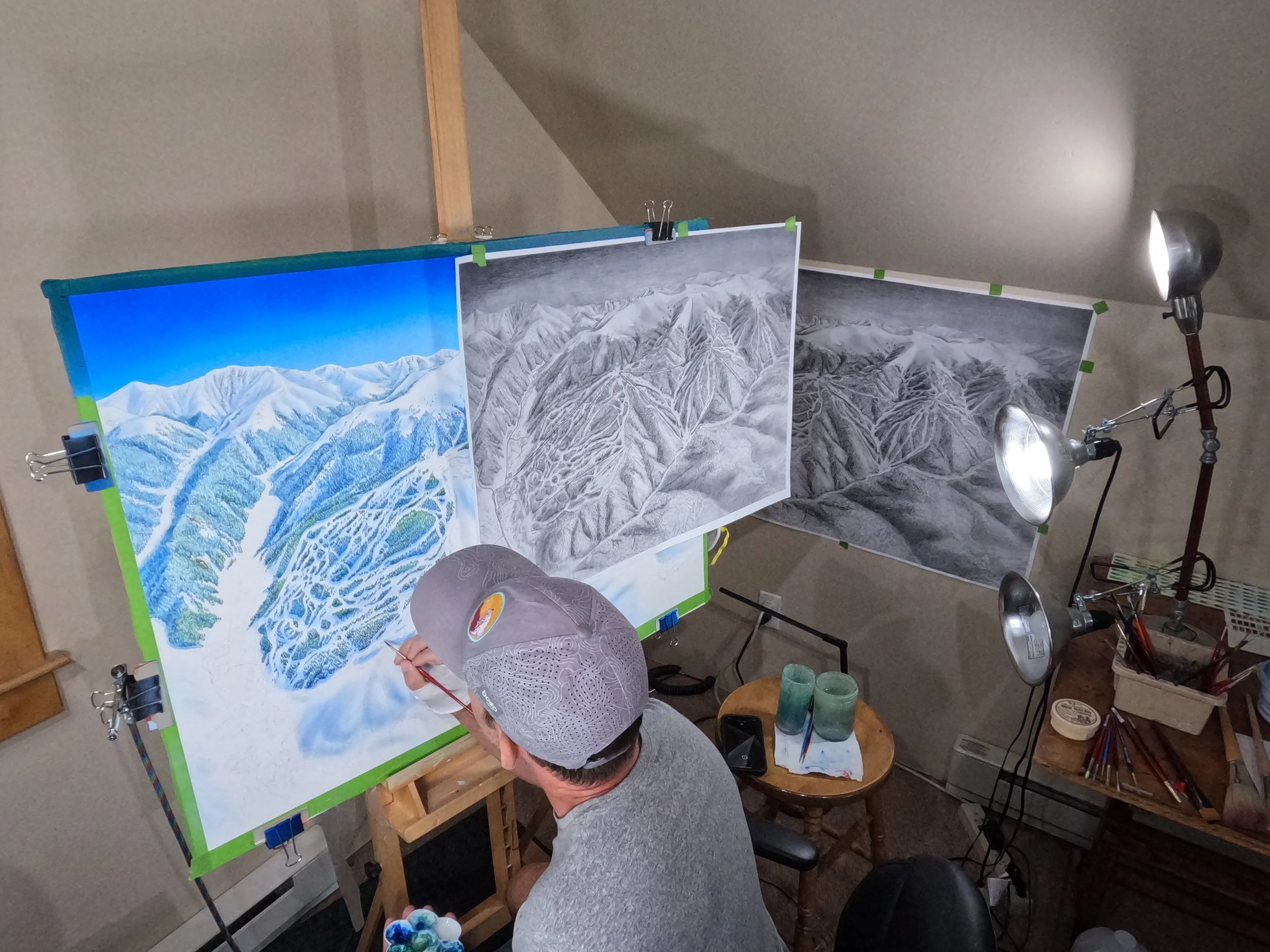
Key to Smith’s process is asking locals about the specifics of the mountain: problem areas, things that are confusing to visitors, safety issues… these are the details that make the pieces truly comprehensive map guides.
How does your routine look when you’re on-site?
When I visit a destination, I try to line up a pilot, though it’s so weather-dependent. A lot of the bigger ski areas have someone on staff with drone skills who can fly and photograph for me.
I usually ski on the mountains with someone from ski patrol or mountain operations who knows the mountain well. It’s important to get a sense of the surroundings and see it from the user’s perspective.
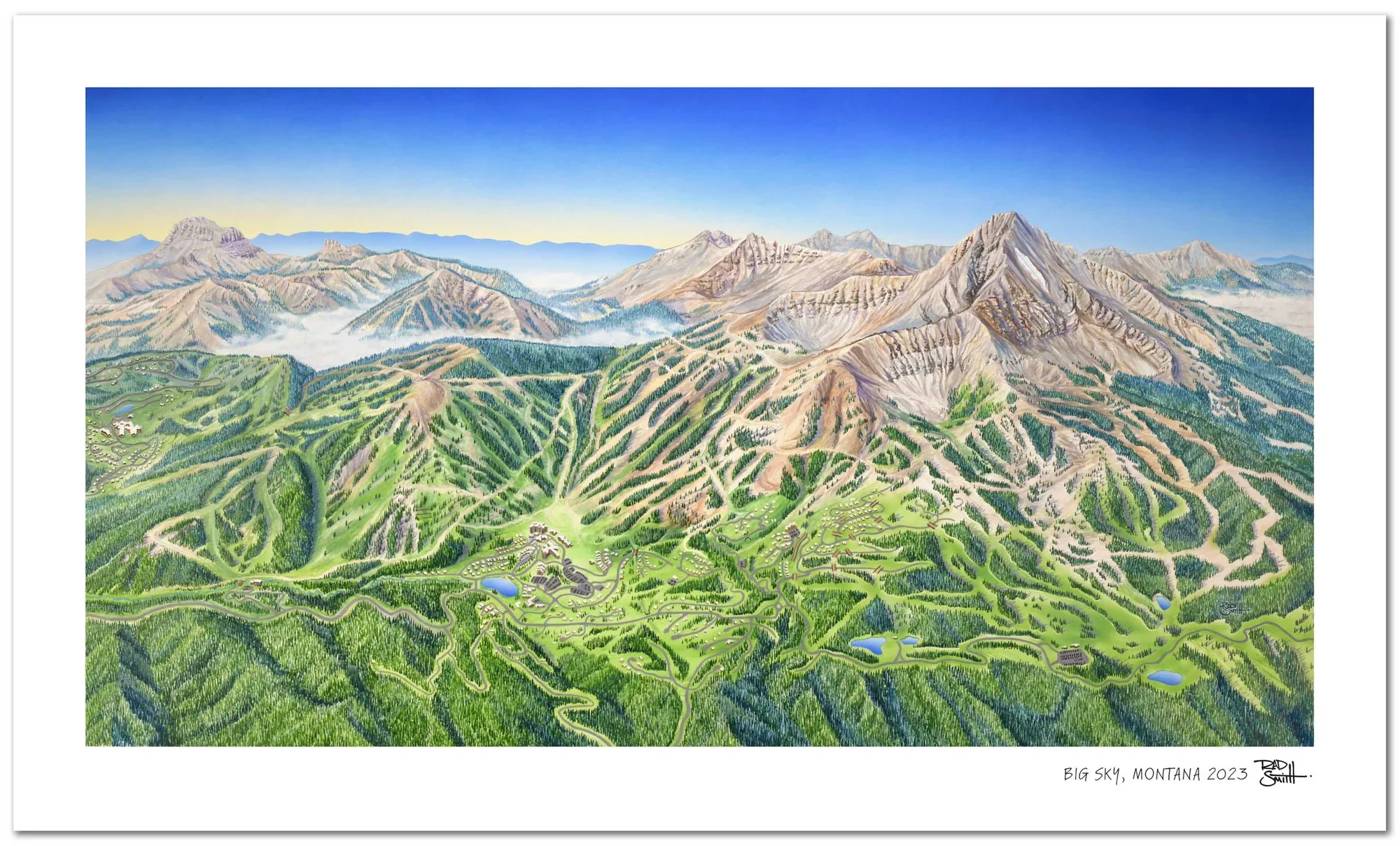
Big Sky is as pretty in the summer as it is covered in 500 inches of snow.
What are your tools of the trade?
Visual resources and aerial photographs. Airplanes. Drones. Pencil. Paper. Photoshop for developing the line drafts to get the major shapes correct and map out the relationship between different features in the landscape. A digital projector to project the line draft onto a full-size sheet of vellum. A 30x40” illustration board. Paint and paintbrushes, of course.
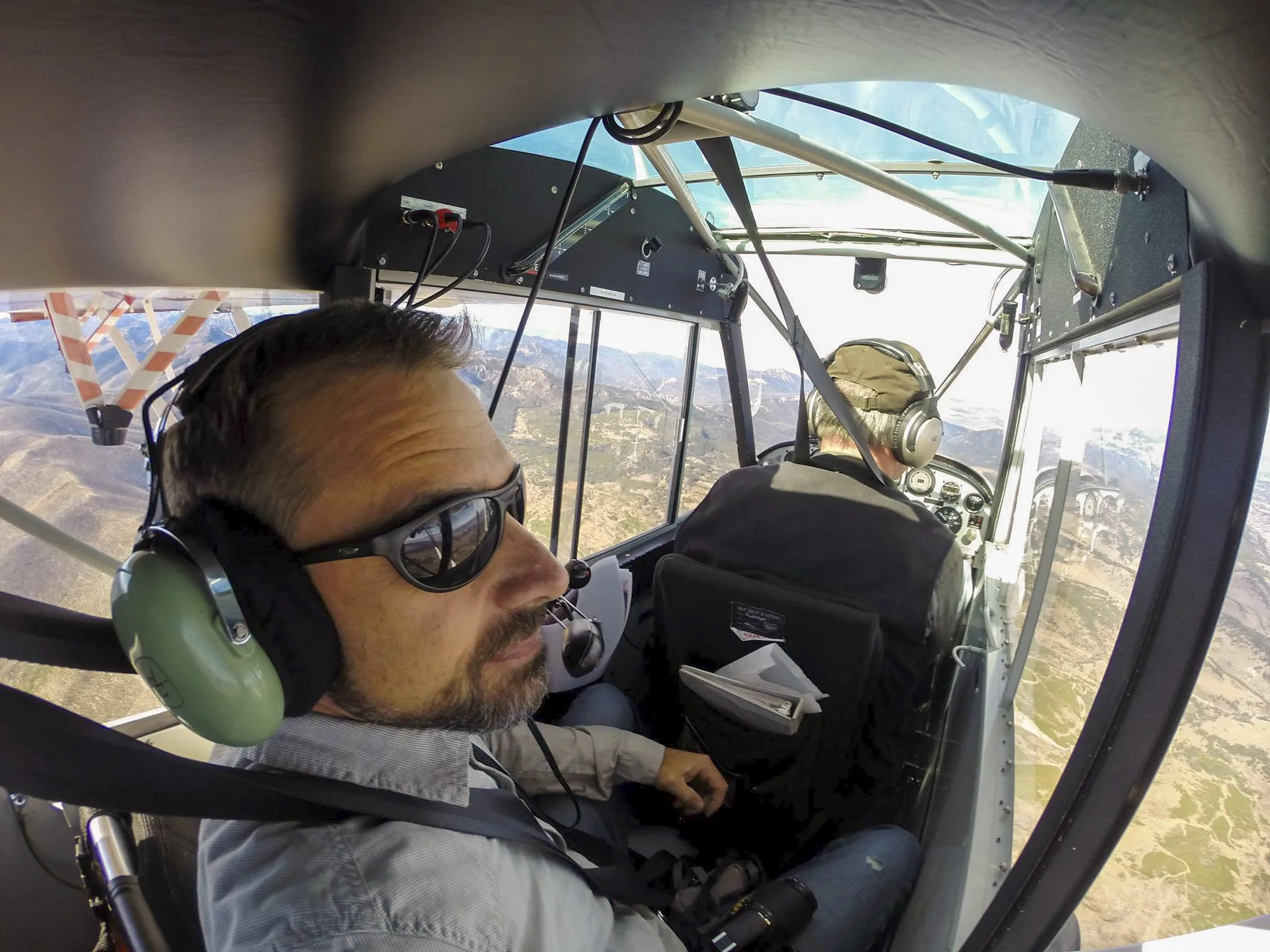
Even better than a drone is getting the aerial perspective yourself.
What are some of your playlist favorites?
Oh boy. I have a really eclectic music taste. Everything from classical to bluegrass to reggae to funk. Often I’ll put my songs on shuffle and take whatever is fed to me.
For audiobooks, I waffle between fiction, nonfiction, science, nature, and history. I listen to some pretty trashy murder mysteries sometimes — they’re like a soap opera for your brain. I also re-listen to the classics I read in school, like Frankenstein recently, which I hadn’t read in 35 years. Right now I’m listening to Shantaram, a heavy story set in India.
Describe your dream studio.
Floor-to-ceiling, north-facing windows and natural light. Big walls to hang my large landscapes, which are paintings I make just for myself. My studio now has vaulted ceilings, so I don’t have that wall space.
Montana is a beautiful place, and there are a few artists who have incredible studios here that capture the landscape well. Right now, I have some people come to my studio, but I would love it to be more welcoming; a space where people gather and hang out.
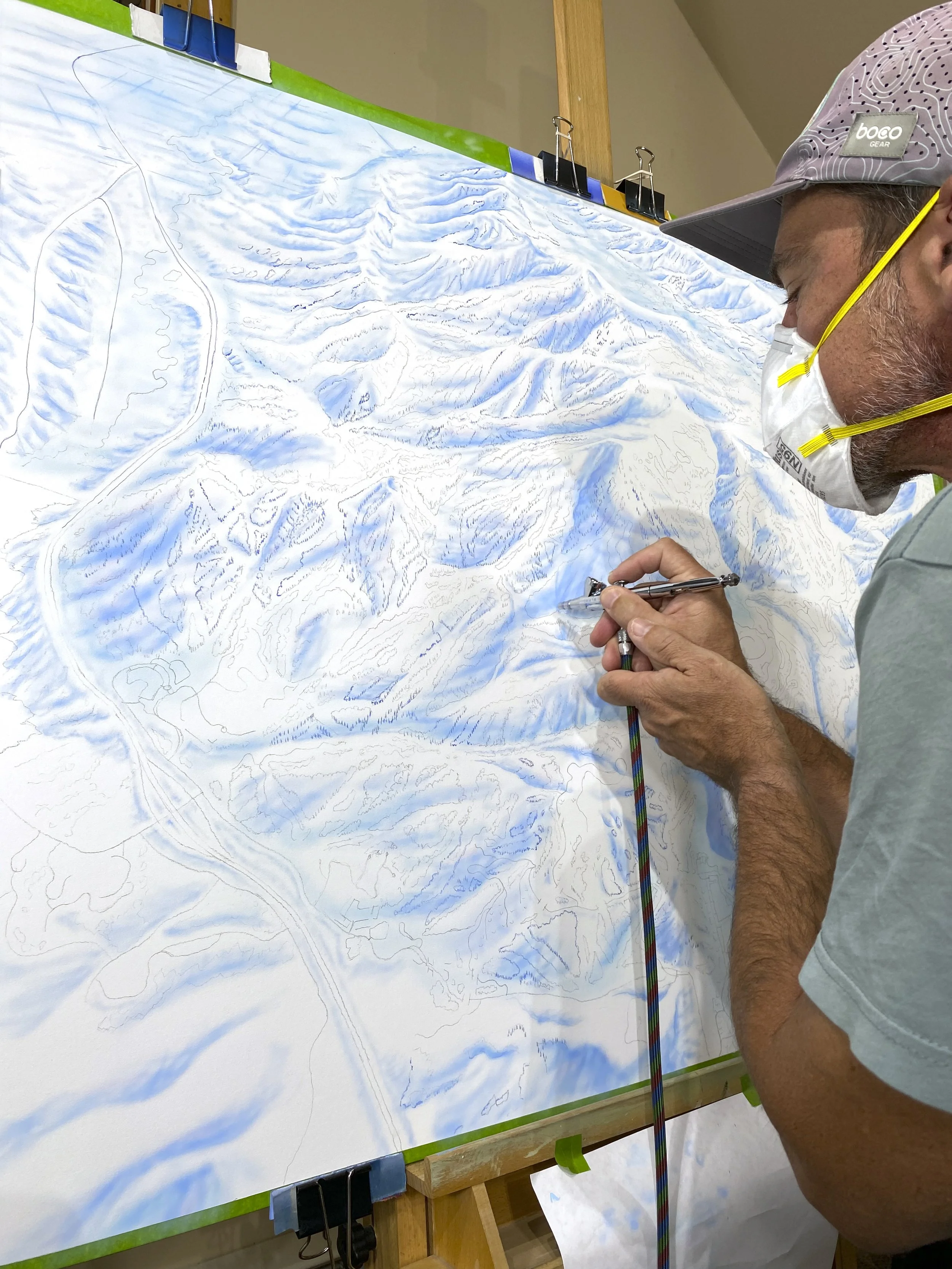
Each map accurately preserves the area’s character and topography while conveying the natural beauty of the landscape. It is painstaking work, taking a month or more for Smith to complete.
What’s one unique thing about your work process?
Coming from the digital environment, when I would draw a snow scene or a winter map, I’d build it up from the ground level (literally). The ground color, the shadows, the roads, the trees, and finally the buildings. I thought of it in layers. That’s also how the paintings are done. I’m not under-painting in the classic oil-painter sense, but I do all the shadows first — tree shadows, hill shadows — and that process is important for keeping the colors crisp and preventing a muddy look. That was James’s style, and his approach was very intuitive to me; it was like I kind of already knew it.
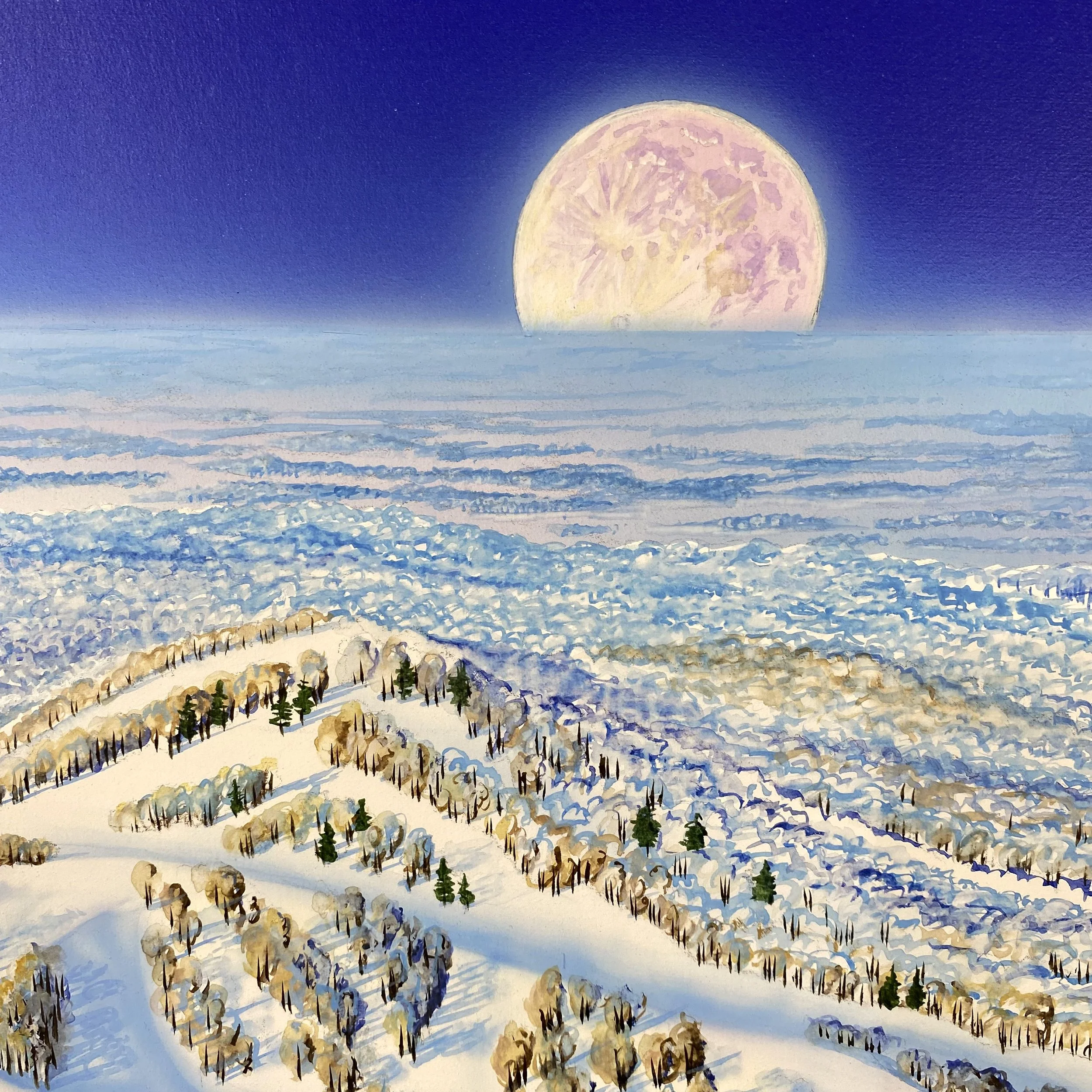
There were times, especially early on, when Smith questioned whether he had the skills and discipline to pull it off. Niehues’s encouragement is what kept him going.
Do you have a mantra?
Believe in the process. There are times early in a painting where you might lose a little faith in where it’s going, but you’ve got to keep moving forward and trust that it’s worked before, so it should work with this one. But you do have to sweat the small stuff, because the details are where it’s at in my work.

Join more than 50 leaders from top organizations, including Amazon, Netflix, Meta, Shake Shack, NASA, Hearst, Roblox, United Airlines, and Instacart.