Leading at the Speed of Culture: Inside the Creative Process of KIDZ BOP’s Michael Anderson
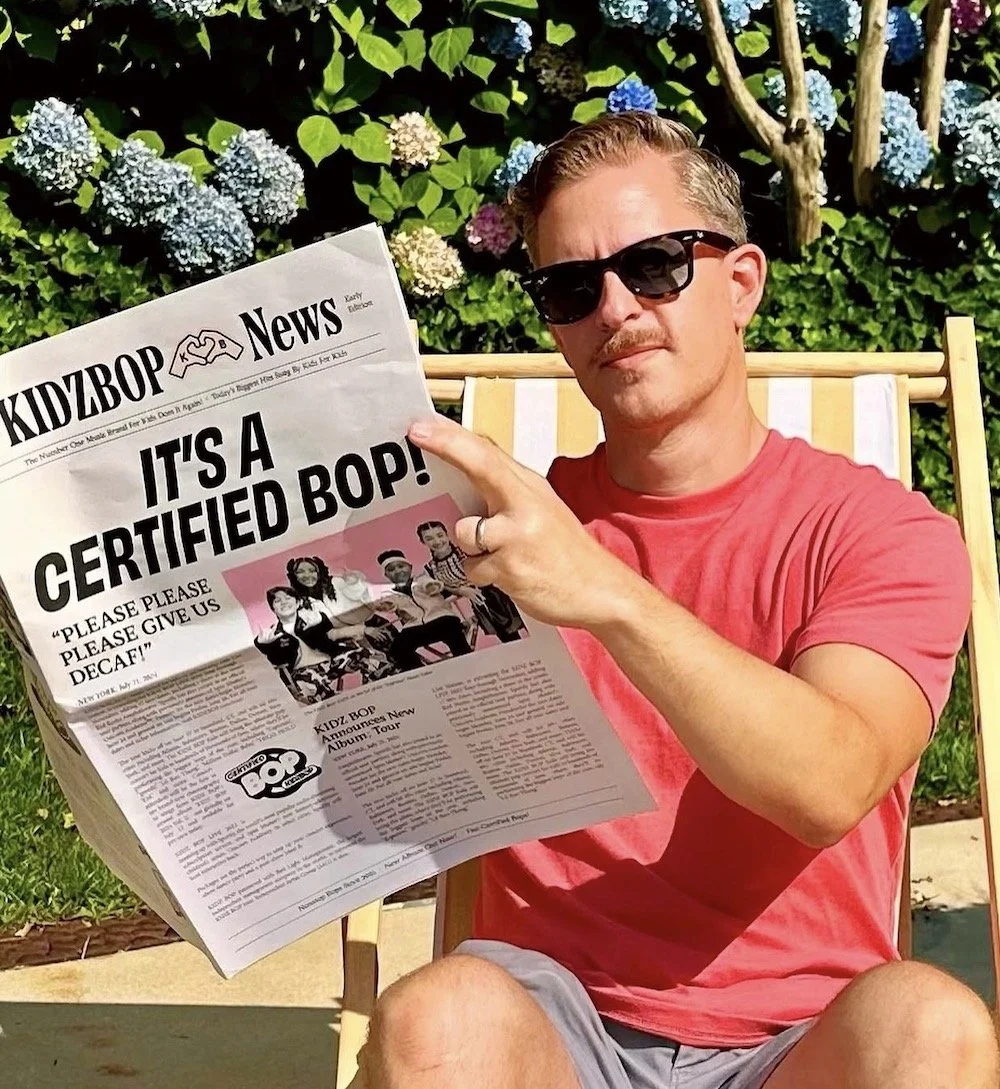
Read all about it! Michael Anderson is the creative force behind the hit songs from KIDZ BOP. Images courtesy of @mandergramm (Instagram).
The Most Useful Peer Network for Creative Professionals
Creative Factory is a private, highly vetted leadership community for brand leaders. Join peers from Netflix, Meta, Apple, Stripe, and more.
Michael Anderson holds one of the most unreplicable gigs in the entire creative world.
As the music mastermind behind KIDZ BOP for nearly three decades, he’s the secret architect flipping global hits like SHABOOZEY's “A Bar Song (Tipsy)” and Maroon 5’s “Girls Like You” into family-friendly bops that become stuck in everyone’s head for weeks.
KIDZ BOP is the #1 music brand for kids, featuring today's biggest hits "sung by kids for kids." Since 2001, the family friendly music brand has generated 14 billion streams and includes year-round music releases, music videos, in-school activations, global partnerships, a dedicated channel on SiriusXM and live tours.
But behind the massive concert tours and 24/7 radio channels is a surprisingly nimble, zero-bureaucracy operation fueled extensively by Anderson’s sharp gut instincts and hands-on craft. From starting out in a 1990s record company mailroom to serving as Senior Vice President, he opens up here about the art of deconstructing a chart-topper, keeping the work cool, and helping lead a lean team that moves at the speed of culture.
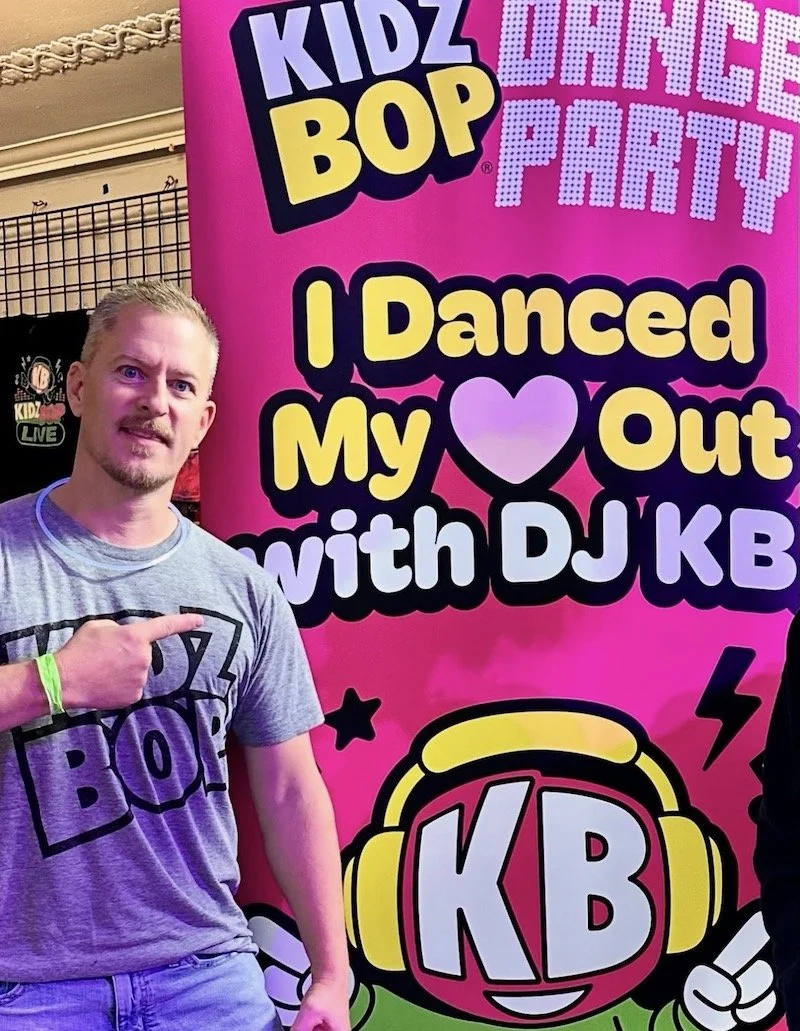
At KIDZ BOP, dance parties and good vibes come with the job.
You have one of those career arcs you usually only hear about with Hollywood agents back in the day – starting in the mailroom and rising all the way to the executive suite. Can you take us back to the beginning and share how your career started, and how it ultimately led to your role at KIDZ BOP?
It’ll actually be 30 years this December. I started on December 9, 1996, in the mailroom of a little record company on Sullivan Street in the West Village of New York called Razor & Tie. I was their 19th employee. The company was started by Cliff Chenfeld and Craig Balsam, two friends who met in law school and decided they didn’t actually want to be lawyers. In 1990, they put together a TV compilation called Disco Fever. It was ubiquitous, sold like crazy off direct response commercials, and put them on the map. They went from working out of their apartment to having an office in the Village.
Five years into their compilation business, I showed up in the mailroom as a 21-year-old with opinions and immediately started telling them what they should be doing with their compilations.
What made you feel qualified to do so?
I had always been obsessed with pop music and pop culture. I grew up the youngest of six kids in a three-bedroom house in Schenectady, New York. With eight people under one roof, all my siblings had completely different tastes in music. I was exposed to everything across the pop spectrum and became obsessed with how pop music reflects where we are as a society. By the time I was 11 or 12, I realized I had this distinct ability to hear a song once and just know whether it was going to be a hit or not.
I originally went to college for meteorology at SUNY Oswego, but after a few semesters, I realized it required a lot more advanced math than I possessed. I ended up doing landscaping for my brother-in-law for a while before moving to New York City, where I luckily landed that mailroom job.
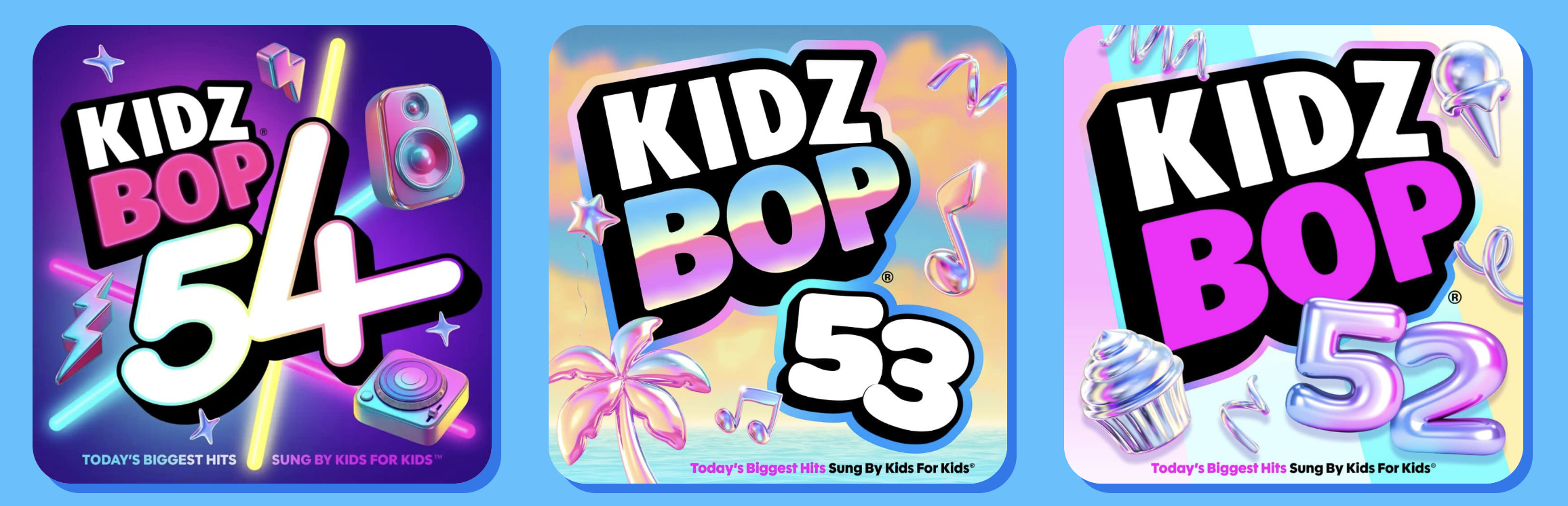
When you factor in the special editions and greatest hits, there have been more than 54 editions of KIDZ BOP albums.
When a concept becomes part of the cultural zeitgeist, it seems so obvious after the fact. But someone has to take the initial risk. What was the spark that made you say, “We need to take these current pop hits and reframe them specifically for kids?”
What people don’t realize – even the younger team members in our office today – is that KIDZ BOP was just one small project of many when it started. Back then, I was putting together all kinds of compilations, like Monster Ballads. I was producing low-budget TV commercials that aired at two in the morning. Initially, we were just selling CDs off late-night TV, but because those commercials got millions of eyes on them, we realized we could make money while advertising and then selling them at retail.
KIDZ BOP was just another compilation idea: take current pop songs, re-record them, and make them kid-friendly. In 2000, music was in the era of Britney Spears and Barney, and there was really nothing in between for kids. Cliff and Craig saw the opportunity because they were on the birthday party circuit with their own kids and realized there were zero music options that parents and kids could both enjoy listening to together.
How did you launch it?
We shot the first scrappy TV commercial in August 2000 at a day camp in Rockland County, New York. In the original commercial, the kids actually yelled, “Kidz Pop Rocks!” because it was originally titled Kidz Pop. But we then realized it was possibly a little too close to an existing title. We changed the name to KIDZ BOP because I could put the text over the kids in the commercial and fake it.
When we first put it on TV, it didn’t do particularly well, so we pulled it after a couple of weeks. But in January 2001, someone at Nickelodeon called Cliff and said, “Something fell through and I’ve got cheap ad inventory. Do you have anything to throw on?” He threw KIDZ BOP back on the air, and it took off. Twenty-five years later, here we are.
Walk us through your actual creative process. When you hear a track on the radio and realize it’s a hit, how do you sit down and deconstruct it to rewrite the lyrics?
Most songs already have clean versions that I can rely on, but I pull up the original lyrics on my laptop and flag any potential additional issues and make some small tweaks. I’ve done this for so long that where it used to take me 40 minutes to work through a song, I now have muscle-memory go-tos. A word like “damn” immediately becomes “yeah.” A word like “lover” immediately becomes “other.” A lot of times, if you just reframe the lyrics to be about dancing, it becomes fun, appropriate, and it works.
Of course, there are hard roadblocks. If a song is strictly about going out and getting wasted all night, I can’t cover it. Or if there’s an issue with the title itself, that creates a real hurdle. For two years, Shaboozey’s hit “A Bar Song (Tipsy)” was one of the biggest records in the country, but I couldn’t touch it because of the title. Eventually, Shaboozey’s team reached out to us directly, which gave us clearance to officially adjust the title to “A BOP Song (A Shaboozey Cover).” But unless I get direct permission from the original writers, I don’t alter song titles.
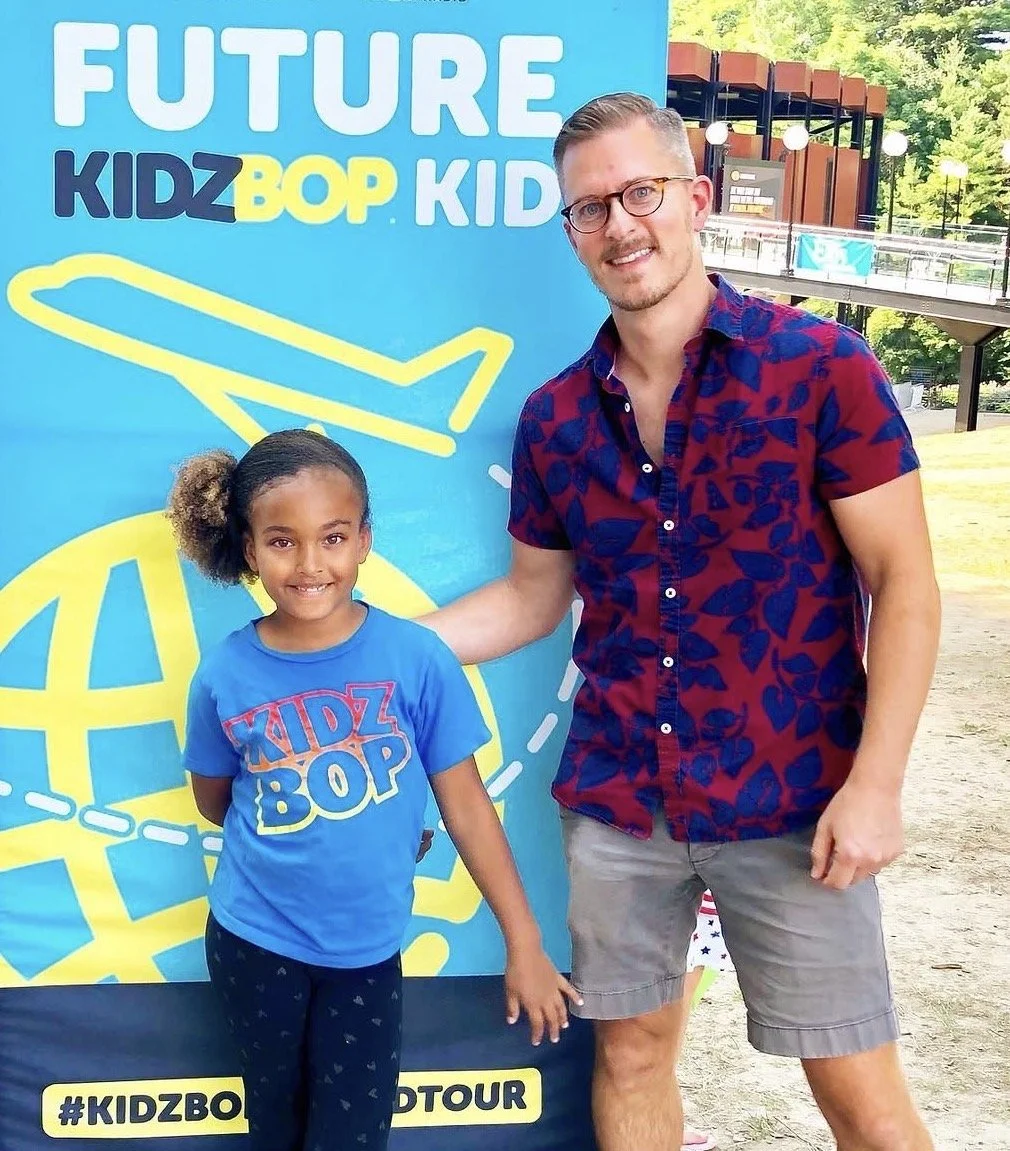
Anderson makes sure the music speaks authentically to children; his daughter has been a great point of reference for what connects with kids.
People often assume changing lyrics for kids is simple, but there’s a real craft to preserving the flow and energy of the original hit. How do you maintain that standard?
It drives me crazy when people parody KIDZ BOP and make the lyric changes juvenile, like singing about school buses and juice boxes. We never condescend to kids. KIDZ BOP is aspirational. It’s framed around what a cool 14-year-old would say, but tailored so it’s completely appropriate for a 5- or 6-year-old looking up to older kids.
People think it’s easy, but there’s a strict science to the cadence. You have to make sure the replacement word rhymes, but more importantly, it has to have the exact same syllable count. Even if it matches the syllables, sometimes it just doesn’t roll off the tongue naturally or loses the fundamental vibe of the original track.
What about navigating slang versions of words?
I have to stay hyper-aware of double meanings. Early on, in Maroon 5’s “Girls Like You,” there was a line that said, “Roll that Backwoods, babe.” I thought they were talking about going four-wheeling in the woods! Someone in the office luckily caught that it was a reference to a cigar wrapper being rolled into a blunt.
Now, Urban Dictionary is my best friend; I cross-check slang constantly. People love to imagine a corporate conference room of 12 executives sitting around dissecting lyrics, but really it’s just me on my laptop working through the puzzle.
KIDZ BOP is a global brand, but you operate with a lean, agile core team. How do you balance being a hands-on craftsman while directing executive-level strategy?
Our president, Sasha Junk, and I work hand in hand. I work closely on the creative vision and pick all the songs. My job is to predict what’s going to hit the top of the charts months in advance. I work with our producer to record the kids, coordinate with our in-house video team for music video shoots, and work with our team to align DSP distribution so that our single and YouTube video drop simultaneously right as the original track hits #1.
Because we do everything in-house with a lean team, there is zero game of telephone. In massive corporate environments, creative ideas get passed through endless middle-management layers. By the time a social post or creative concept gets approved by a central committee, the cultural moment has already passed.
At KIDZ BOP, everyone pitches in across disciplines. Our dedicated social media lead gives notes on music video cuts and comes on set to shoot content. Streamlining internal talent and keeping leaders directly connected to the execution is the only reason we can turn around fully produced, chart-ready tracks in a matter of weeks.
You lead both adult corporate teams and young creative talent. What is your core leadership philosophy when guiding creative people?
Whenever I bring someone onto my team, I tell them explicitly: “You are not doing this work to make me happy. You are here to do the best job you possibly can, and you are using me as a resource to help you achieve that.”
Whether leading adults or young performers, it comes down to mutual respect and protecting the joy in the process. If you lead with respect and bring genuine enthusiasm to the work every day, the team feels that joy and infuses it back into the final product.
Do you feel like your job is replicable? Or is this a one-of-a-kind role for this era?
I feel like it’s one of a kind. A million different people have tried to launch their own version of KIDZ BOP and have failed, but we started in an era where we were advertising heavily on Nickelodeon, and 89% of kids in the United States were seeing our ads at least once an hour. That is truly how we became a global juggernaut. We established ourselves during a specific window in time, which allowed us to grow into our Live Nation concert tours and our 24/7 SiriusXM channel.
I don’t think you could build this from scratch all over again today simply because it’s a completely different world. It’s nearly impossible to target kids at that scale now. Kids are watching a thousand different things or playing video games. There is no single channel where you can reach 89% of kids anymore, regardless of how much money you spend.
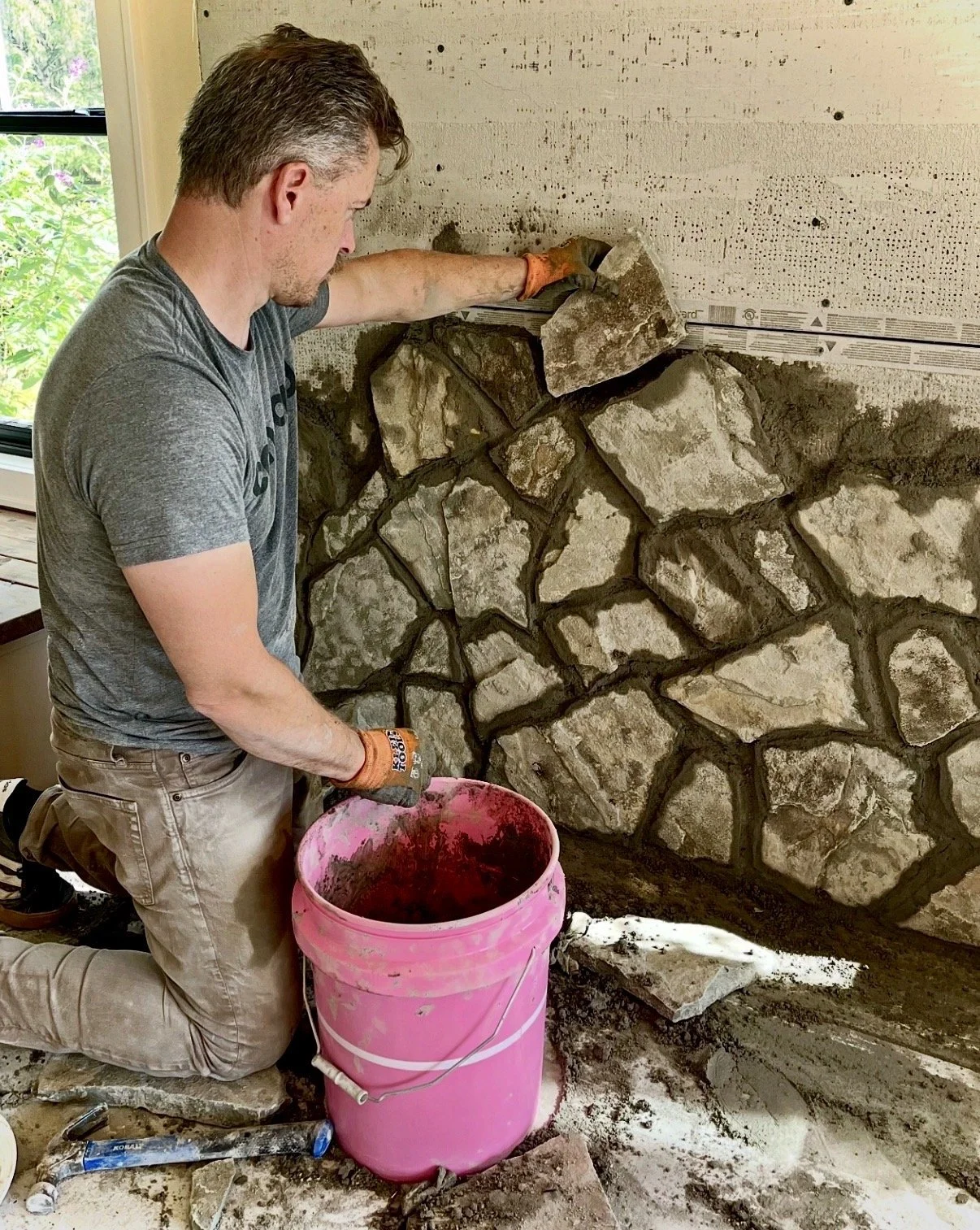
When he’s off the clock, Anderson likes to work with his hands — seen here building the stone wall in his house.
When you need to step away from music and refill your creative cup, what hobbies or pursuits do you turn to outside of the studio?
I currently have what looks like dirt under my fingernails, but it’s actually dried cement! This past weekend, I was physically building a stone wall behind the wood stove in my house.
I used to do a lot of house flipping, but we love our current place so much that I’ve finally decided to stay put. I spend my free time working with my hands, doing heavy landscaping, working on the yard, and building out structural projects around the house. Working with your hands on something physical gives your brain the exact space it needs to reset.
The Most Useful Peer Network for Creative Professionals
Creative Factory is a private, highly vetted leadership community for brand leaders. Join peers from Netflix, Meta, Apple, Roblox, and more.
If you’d like to read more from Creative Factor, find our latest stories here.